How and Why to Reorganize Your Kitchen with Clever Storage: A Complete Guide
(858) 413-2305 Request a quote- Recurring storage problems usually point to design, not habits.
- Decluttering first shows whether it’s clutter or a layout issue.
- Store-bought organizers can’t fix cabinets built to the wrong size.
- A whole-kitchen plan avoids one fix creating a problem elsewhere.
- Reorganizing first gives professionals a clear list of real problems.
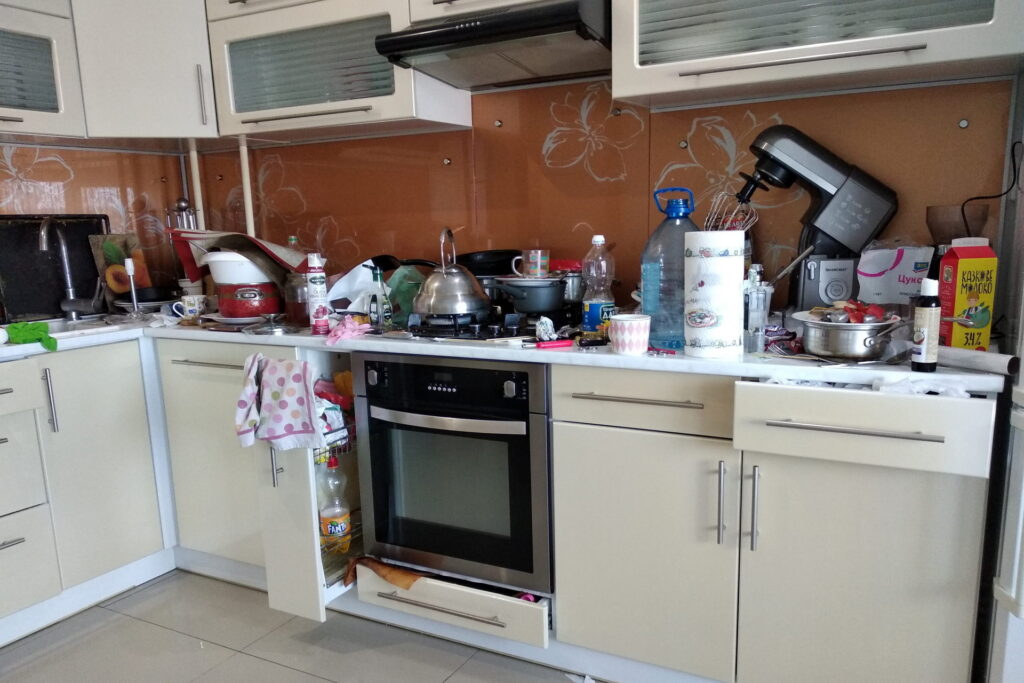
When kitchen cabinets are overflowing and countertops are constantly covered, the problem isn’t always clutter. In many homes, the real issue is that the kitchen was never designed around the way the household actually cooks, shops, cleans, and moves through the space. A deep corner cabinet may technically offer storage, but it isn’t useful if most of what’s inside it can’t be reached. A pantry might have plenty of shelves, yet poor spacing still leaves half of it wasted.
Basic organizing can improve these problems, at least temporarily. Decluttering, regrouping items, labeling shelves, and adding a few well-chosen inserts can make an existing kitchen easier to live with. But those fixes only work within the limits of the cabinetry and layout you already have. A design team looks past where individual items are stored and evaluates how the whole kitchen functions. If you’re considering kitchen remodeling in San Diego, these strategies can help you pinpoint where future upgrades would make the biggest difference.
Is your kitchen disorganized or poorly designed?
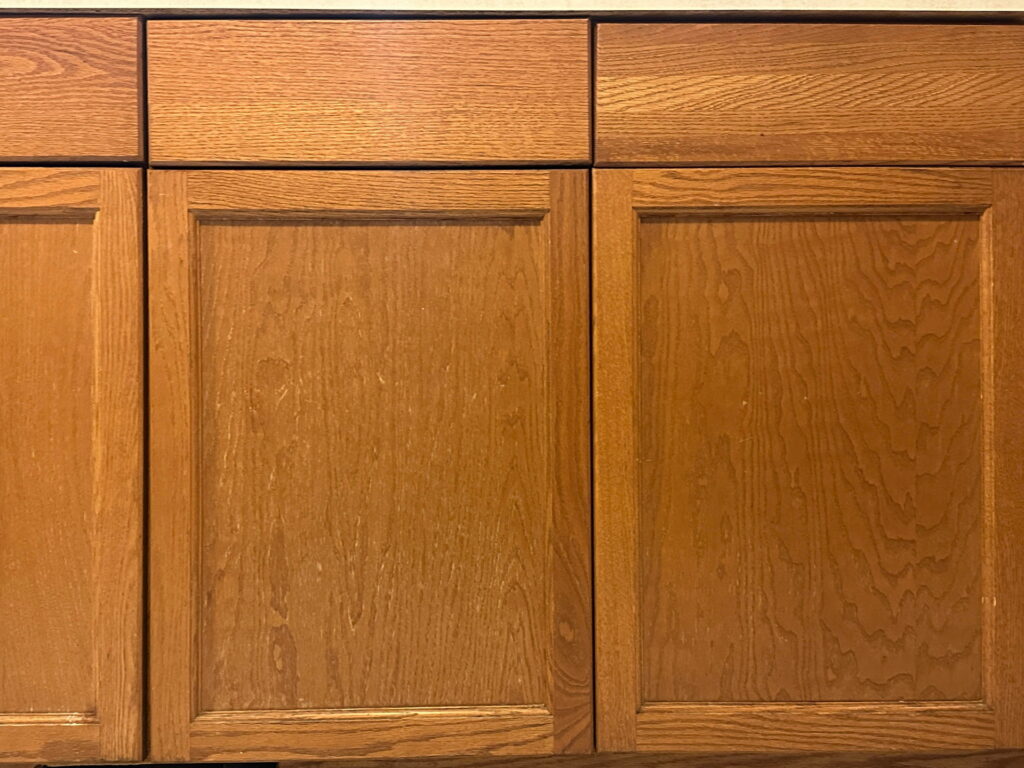
Before buying more bins, racks, trays, or organizers, it helps to understand why the clutter keeps coming back. A kitchen may just need reorganizing if the cabinets are structurally sound, everyday items already have a logical home, and the clutter mostly comes from keeping things you don’t really need.
The problem though is usually in the design
If you have these problems it might be time to contact licensed remodelers:
- Frequently used items have no convenient place to live
- Countertops have become permanent storage for small appliances
- Deep cabinets hide space that’s nearly impossible to reach
- The pantry can’t hold a normal week of groceries
- Storage stays inadequate even after a full declutter
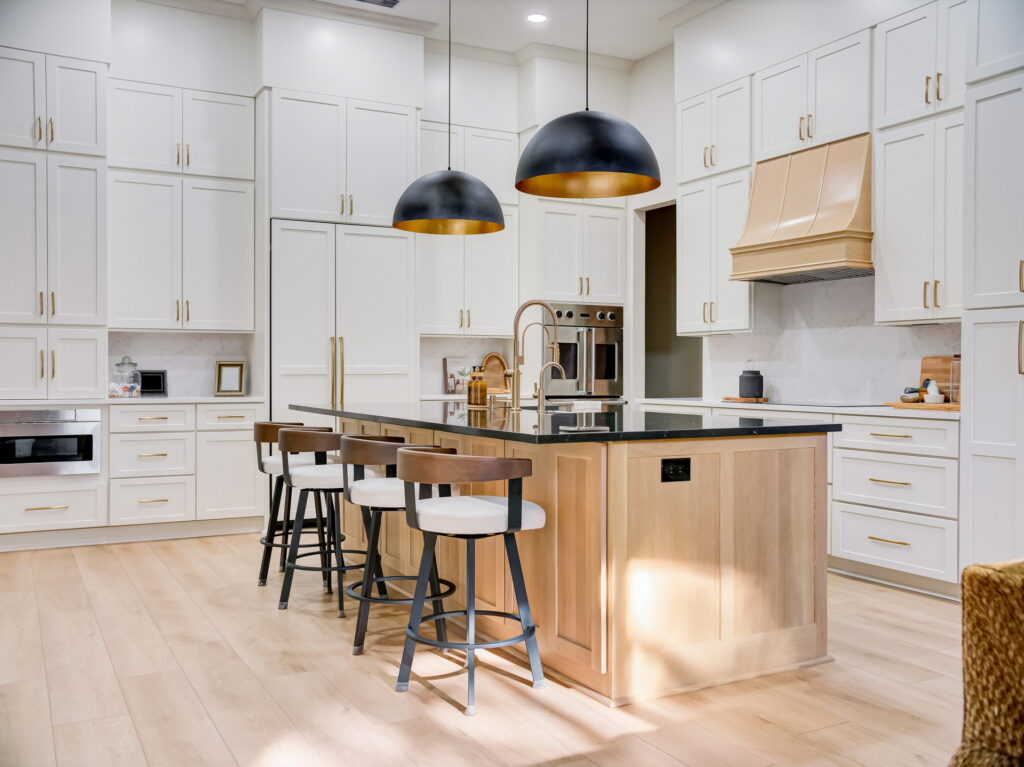
These aren’t usually problems organizing can fix. They’re signs that the cabinetry or the layout itself no longer supports how the household actually uses the kitchen, and no amount of rearranging changes what the space is physically able to hold. Professionals can tell the difference between storage that’s being used poorly and storage that was never planned well in the first place, which is often the difference between a weekend project and a renovation worth budgeting for.
How do I reorganize my kitchen for better storage?
The fastest way to reorganize a kitchen is to remove everything from the cabinets and drawers, sort it by how often it’s actually used, and put back only what belongs there. A short round of kitchen storage reorganization works well as a diagnostic: if the same problem keeps returning no matter how carefully you arrange things, that’s usually a sign the limitation is the cabinet, not your habits, which can be solved by contacting renovators and making a new plan for your kitchen.
Start with a full declutter
Before adding anything new, clear out what’s not working:
- Toss anything expired, broken, duplicated, or no longer needed
- Set aside items you haven’t touched in over a year
- Group what’s left by category: cookware, bakeware, small appliances, pantry goods
- Wipe down shelves before anything goes back in
If you’re setting items aside to donate, the IRS provides guidance on how to value donated household goods for a possible tax deduction.
Organize around how you actually use the kitchen
Once it’s empty, arrange by routine instead of habit: coffee supplies near the coffee maker, cutting boards near the prep area, everyday dishes within reach of the dishwasher and the table. Kitchen designers use this same logic on a larger scale, building dedicated zones instead of treating every cabinet as interchangeable.
Why does kitchen planning make such a difference?
Homeowners tend to evaluate storage one cabinet at a time. However, if you have a pro in your corner, they evaluate your space as a complete system: the relationship between cabinets, appliances, countertops, walkways, and the household’s daily routine.
How one quick fix can trouble you elsewhere
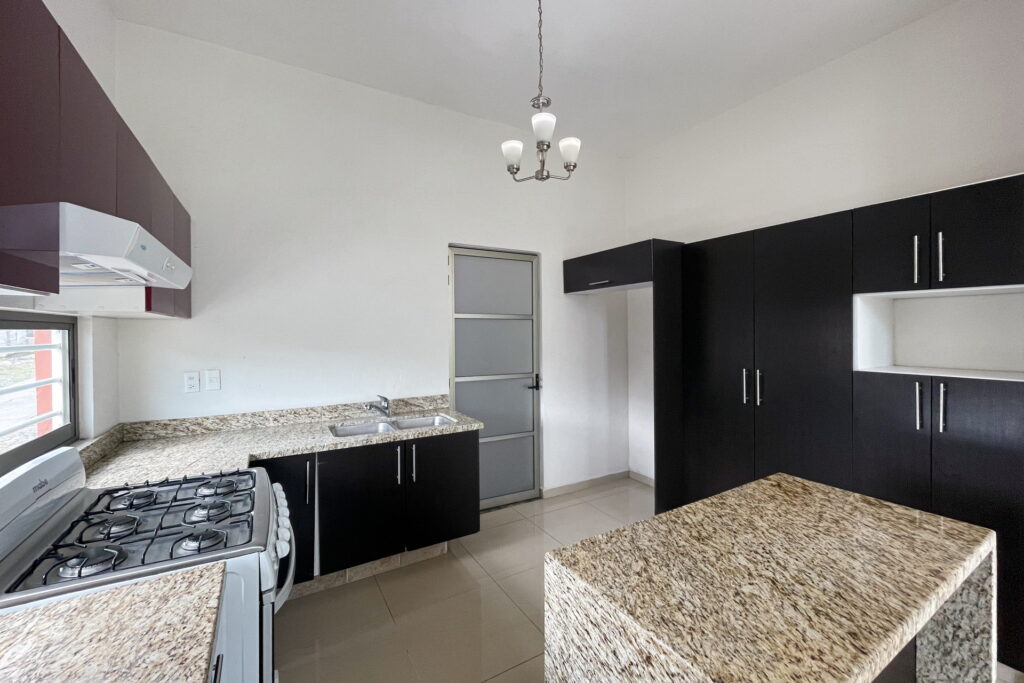
A fix in one spot can create a problem somewhere else. A bigger pantry cabinet might solve a food-storage problem but narrow a walkway. Expanding an island might add drawers but block the dishwasher door. Moving an appliance might improve the workflow but require changes to plumbing or electrical. Even something as simple as adding deeper drawers can shift where a dishwasher door swings or how close a walkway gets to the stove.
Why planning it with experts works better
Experts plan these pieces together, which is what lets a storage improvement actually stick instead of trading one inconvenience for another. It’s also why isolated fixes, like adding an organizer to a cabinet box that was the wrong size to begin with, tend to underperform: professional renovators can determine whether that cabinet should be reconfigured, resized, replaced, or relocated instead.
What can custom kitchen storage solve that off-the-shelf organizers can’t?

Store-bought organizers are built to fit a broad range of kitchens. Custom storage is designed around one particular home, which is why it tends to outperform anything sold off the shelf, especially in older houses where cabinet openings, corners, shelf depths, and door clearances rarely match standard dimensions.
Corner and vertical storage
Traditional corner cabinets often bury usable space toward the back, where items get pushed out of reach and forgotten. A Lazy Susan can make an existing corner more manageable, but a renovation opens up other options too, like pull-out corner trays, swing-out shelving, angled drawers, or a redesigned cabinet configuration that removes the dead corner entirely. Federal accessible design standards even set specific reach-range guidelines for kitchen storage, a good reminder of how much daily function depends on getting height and placement right.
Cabinet and drawer organization
Cabinet and drawer organization is usually the fastest visible fix. A few well-chosen inserts, like deep dividers, adjustable trays, tiered risers, and under-shelf baskets, can make a chaotic kitchen dramatically easier to use. But these products also reveal whether the cabinet itself is the real limit: if a pull-out shelf won’t fit because the opening is too narrow, or a drawer is too shallow for the cookware it’s supposed to hold, that’s a sizing problem no insert solves. Specialists can specify drawer and cabinet dimensions around what’s actually going to be stored inside them, a different starting point than fitting belongings into a box that was never sized for them.
Pantry organization system
A pantry organization system built during a remodel can go well beyond containers and labels. Depending on the space, an expert can recommend a full-height pantry cabinet, narrow pull-out storage, custom adjustable shelving, or a separate beverage station, options that simply aren’t available once cabinetry is already built and installed. Containers still help in the meantime: uniform, stackable bins make it easier to see what’s on hand, and rotating older items to the front when restocking helps prevent food from expiring before it’s used. For general guidance on how long pantry staples stay fresh, the FoodKeeper database from the USDA is a helpful reference.
Should I reorganize my kitchen or remodel it?
Reorganizing is worth trying first, and it’s genuinely useful: it clears out what’s not working and turns a vague sense that the kitchen feels wrong into a specific, useful list. If the cabinets are in good shape and the main issue is poor grouping, better organizing usually solves it. If the cabinets are the wrong size, the pantry can’t hold a normal supply, or appliances no longer fit their spaces, no amount of reorganizing changes that, because the layout itself is the problem, not what’s inside it.
That list is what makes a design conversation short and productive instead of a guessing game. Rather than saying a kitchen “feels cramped,” a homeowner walking in with specifics, pots that don’t fit the drawers, a pantry that’s overflowing by Thursday, a corner cabinet nobody uses, or a countertop buried in small appliances, gives the right professionals something concrete to solve.

Signs it’s time for professionals to take a look
- Cabinets are cracked, warped, unstable, or difficult to open and close
- The pantry stays overcrowded even after a full declutter
- Appliances no longer fit their designated spaces
- Walkways feel tight whenever cabinet or appliance doors are open
Many of these same signs show up in outdated bathrooms as well, so if these frustrations keep surfacing in more than one room, it’s less about storage and more about design that hasn’t kept pace with how the home is actually used.
Who offers the best kitchen remodeling in San Diego for custom storage solutions?
If you’ve reorganized every drawer and your kitchen still feels tight, it may be time for a design that’s actually built around how you live. This is where Remodel Works makes the difference. We bring more than four decades of experience turning kitchens with real storage problems into ones that actually work for the people using them.
Whether you’re near Balboa Park or elsewhere, our team has spent decades helping homeowners across the county with a kitchen design that’s actually built to fit their lives.
Ready to turn your storage frustrations into a kitchen that finally works for you? Call us today or request a free quote to start your renovation!
The Kitchen And Bathroom Countertop Showdown: Quartz, Quartzite, Porcelain, Or Granite?
(858) 413-2305 Request a quote- Quartz is usually the easiest countertop material to maintain because it is nonporous, does not require sealing, and works well for busy kitchens and bathrooms.
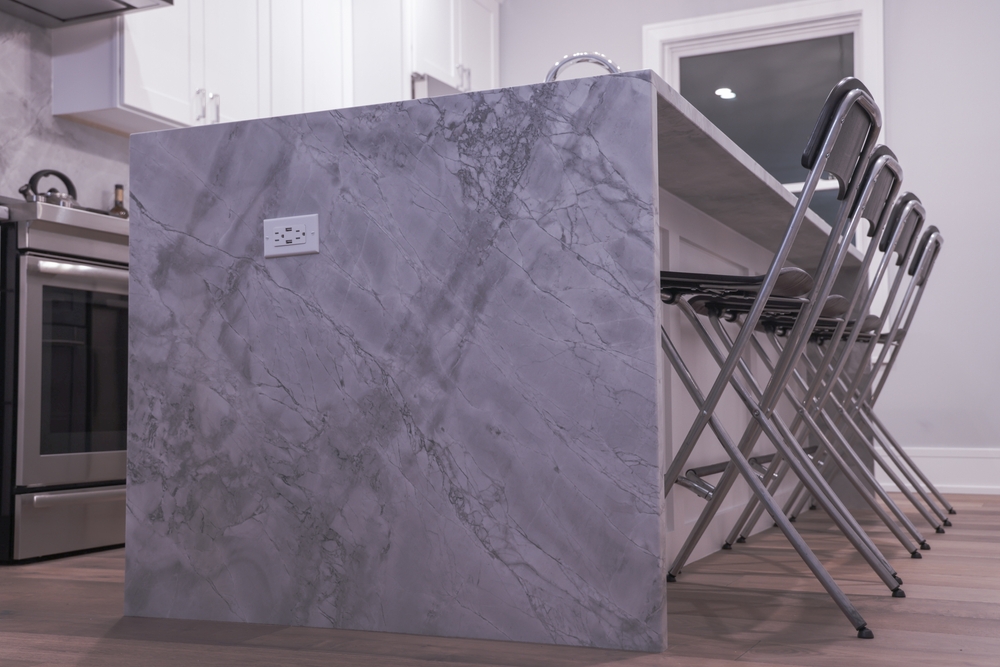
- Quartzite offers a more natural, one-of-a-kind look, making it a strong choice for statement islands, luxury vanities, and homeowners who want real stone movement.
- Porcelain is a sleek, low-maintenance option for modern kitchen and bathroom renovation projects, especially when homeowners want stain resistance and visual continuity.
- Granite remains a durable natural stone choice, but the final look and care needs depend heavily on the specific slab, pattern, and finish.
- The best countertop choice depends on how the space is used daily, so homeowners should compare maintenance, moisture exposure, heat habits, design goals, and overall luxury interior finishes before deciding.
Choosing a countertop can feel simple until every sample starts looking beautiful for a different reason. Quartz promises easy care. Quartzite brings natural movement. Porcelain feels sleek and modern. Granite still has that timeless stone appeal. For homeowners planning efficient home remodeling in Bonita, the right choice depends on more than color or price. It should support the way the room is used every day. If your next renovation includes new surfaces, it helps to compare design-build renovation options before choosing a slab. The best counter is the one that looks refined and lives well.
Why do countertop choices deserve more thought?
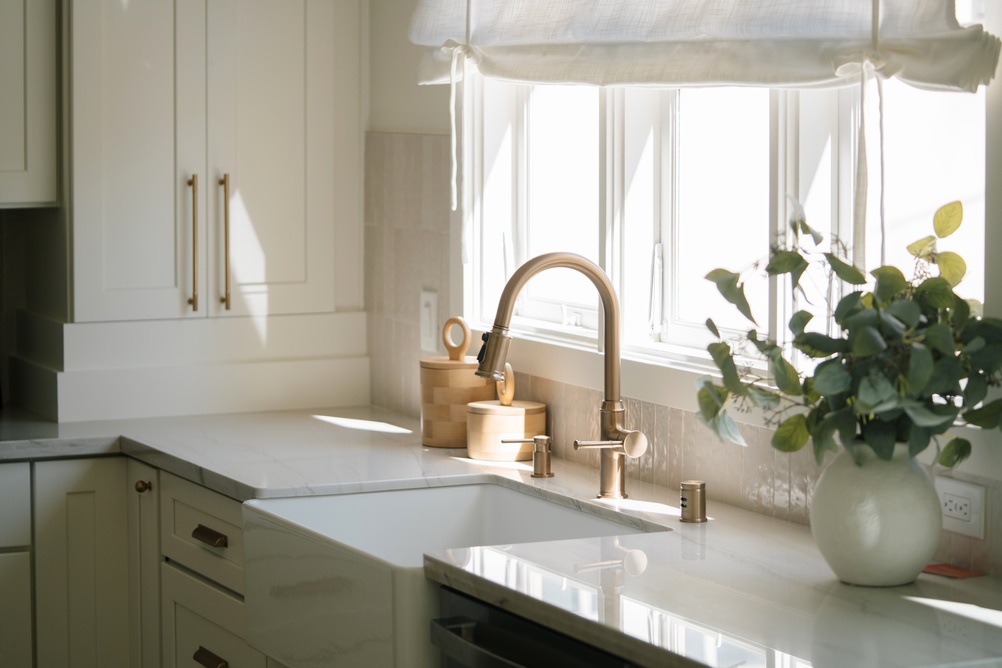
Countertops shape how a kitchen or bath looks, works, and ages. They sit at eye level, catch daily use, and influence almost every other finish around them. Cabinets, flooring, tile, fixtures, lighting, and hardware all respond to the surface you choose.
That is why countertop materials should not be picked as a standalone decision. A surface that looks striking under showroom lights may feel too busy beside patterned tile. A soft white slab may look perfect until a busy family starts using it daily.
A countertop is both a work surface and a design feature
The best counters do two jobs well. They support daily tasks and help define the mood of the room.
In a kitchen, that means meal prep, cleanup, hosting, coffee, groceries, and family routines. In a bath, it means moisture, skincare products, grooming tools, toothpaste, and daily wiping.
For many kitchen and bathroom renovation projects, the counter becomes the bridge between performance and beauty.
The four big questions to ask first
Before choosing between quartz, quartzite, porcelain, or granite, answer these questions:
- How heavily will the surface be used? A main kitchen island needs different durability than a powder room vanity.
- How much maintenance feels realistic? Some homeowners want low-maintenance countertops. Others gladly care for natural stone.
- Should the counter feel quiet or dramatic? Some surfaces support the room. Others become the main event.
- How long do you want the design to feel current? Timeless finishes often age better than trend-driven choices.
What is the difference between quartz and quartzite?
Quartz is engineered, while quartzite is natural stone. That one difference explains why they look, perform, and age differently. Their names sound similar, but they are not interchangeable.
1. Quartz is manufactured for control
Quartz counters are made with mineral content, resins, and pigments. This creates a more controlled surface with consistent color and pattern.
That consistency is a major advantage when a room needs balance. A homeowner can choose a soft white surface, a marble-inspired pattern, or a deeper tone with fewer surprises.
Quartz is also nonporous. It does not need sealing, which makes it one of the most popular low-maintenance countertops for busy households.
Best uses for quartz
Quartz works especially well for:
- Main kitchen counters
- Large islands
- Shared baths
- Laundry rooms
- Guest suites
- Family-friendly spaces
It also pairs beautifully with many luxury interior finishes, including custom cabinetry, natural wood, handmade tile, and statement lighting.
2. Quartzite is natural and one-of-a-kind
Quartzite is formed when sandstone changes under heat and pressure. The result is a hard natural stone with unique veining, tone, and movement.
No two slabs are exactly alike. That is part of its appeal.
Quartzite often attracts homeowners who want natural character without choosing marble. It can feel organic, elegant, and quietly dramatic.
For a high-end kitchen and bathroom renovation, quartzite can bring depth that manufactured surfaces may not fully match.
Best uses for quartzite
Quartzite is a strong choice for:
- Statement kitchen islands
- Primary bath vanities
- Bar areas
- Powder rooms
- Feature surfaces
- Designs with natural stone as the focal point
It works best when the homeowner understands the care needs before installation.
How quartz and quartzite compare
Here is the simplest comparison:
| Quartz | Quartzite |
| More consistent, easier to maintain, and usually better for daily family use. | More unique, more natural, and often better for a one-of-a-kind design moment. |
| Should be protected from direct heat because of resin content. | Generally handles heat better, but still benefits from trivets and common-sense care. |
| Great for predictable countertop material planning. | Great for natural variation and upscale character. |
How to choose between them
Use this quick decision path:
- Choose quartz if you want easy care first.
- Choose quartzite if you want natural beauty first.
- Choose quartz if you prefer consistent samples.
- Choose quartzite if you enjoy unique slab movement.
- Choose quartz if the room gets heavy daily use.
- Choose quartzite if the surface is part of the design story.
Which countertop material is easiest to maintain?

Quartz is usually the easiest surface to maintain. Porcelain is also a strong low-care option.
Ease of care matters because counters are not decorative objects. They are touched, cleaned, spilled on, leaned against, and used every day.
For many homeowners comparing countertop materials, maintenance is the detail that decides the final choice.
1. Quartz is the everyday winner for simple upkeep
Quartz is often the easiest option because it does not need sealing. Routine cleaning is usually enough for daily care.
A mild soap, warm water, and a soft cloth can handle most messes. This makes quartz especially appealing for anyone who wants low-maintenance countertops without giving up a polished look.
What to avoid with quartz
Quartz is easy, but it still needs basic care. Avoid:
- Placing hot pans directly on the surface
- Using harsh abrasive pads
- Cutting directly on the counter
- Leaving strong cleaning chemicals to sit
- Treating it as damage-proof
Quartz is forgiving, not invincible.
2. Porcelain is sleek and very low effort
Porcelain slabs are nonporous and highly resistant to everyday stains. They also handle heat well compared with many other options.
That makes porcelain appealing for modern kitchens, baths, wet bars, and feature walls. It can create the look of marble, concrete, limestone, or dramatic stone with easier upkeep.
For luxury interior finishes, porcelain can feel clean, architectural, and sophisticated.
The porcelain caution
Porcelain depends heavily on skilled fabrication.
Because it is hard and often thinner than stone slabs, corners, edges, and cutouts need experienced handling. A poor installation can make even a premium surface feel disappointing.
3. Granite is durable but may need care by slab
Granite remains popular because it is durable, natural, and available across many colors and patterns.
Some granite slabs are dense and may not need frequent sealing. Others benefit from periodic sealing to reduce staining risk. The specific stone matters.
Granite is not difficult to maintain, but it is not always as effortless as quartz or porcelain.
4. Quartzite care depends on the exact material
Quartzite can be durable and beautiful, but the care level varies.
Some slabs are very dense. Others are more absorbent and need sealing. That is why quartzite should be selected with guidance from a knowledgeable design and fabrication team.
For a kitchen and bathroom renovation, the question is not just “Do I like this slab?” It is “Will this slab fit my habits?”
How to keep any counter looking better
No matter which surface you choose, these habits help:
- Use trivets under hot cookware. Heat-resistant does not mean damage-proof.
- Use cutting boards for prep. This protects both the surface and your knives.
- Wipe spills promptly. This matters most for natural stone.
- Choose gentle cleaners. Harsh products can dull or damage some finishes.
- Ask about sealing before installation. Natural stone care should be clear from day one.
These small habits help protect low-maintenance countertops and higher-care natural surfaces alike.
What’s the best choice for kitchen countertops?
The best kitchen counter depends on how you cook, gather, clean, and entertain. A kitchen surface has to carry more than style. It supports the daily rhythm of the room.
1. Start with how the kitchen actually functions
Before looking at slabs, think about the zones in the kitchen. A kitchen usually includes:
- A prep zone
- A cooking zone
- A cleanup zone
- A serving zone
- A storage zone
- A coffee or beverage zone
- A casual dining zone
This is why layout and material selection should work together. When you plan kitchen zones around real cooking habits, the counter choice becomes part of a larger design strategy.
That matters for countertop materials because every area may face different use.
2. Best for active family kitchens: quartz
Quartz is often the strongest choice for a heavily used kitchen.
It is easy to clean, does not require sealing, and comes in many colors and patterns. It also works with both warm traditional designs and crisp modern spaces.
For families, frequent cooks, and busy households, quartz offers a practical balance. It feels elevated but does not ask for constant attention.
When quartz makes the most sense
Choose quartz when:
- You cook often
- You want simple cleaning
- You prefer predictable patterning
- You have kids or frequent guests
- You want low-maintenance countertops
- You want the backsplash or cabinetry to be the main feature
Quartz is especially helpful when the design already has several strong elements.
3. Best for a statement island: quartzite
Quartzite shines when the counter is meant to be noticed.
A dramatic quartzite island can anchor an open kitchen and make the space feel custom. It works beautifully with soft cabinetry, warm metal finishes, and layered lighting.
For luxury interior finishes, quartzite brings natural depth and individuality.
When quartzite makes the most sense
Choose quartzite when:
- You want a natural slab
- You like movement and variation
- The island is the focal point
- You are comfortable with stone care
- You want a surface that feels unique
- You value character over perfect consistency
Quartzite is not the best choice for everyone, but it can be stunning when selected thoughtfully.
4. Best for a sleek modern kitchen: porcelain
Porcelain is a strong choice when the design calls for clean lines and visual continuity.
It can be used for counters, backsplashes, waterfall edges, and vertical surfaces. That creates a refined, seamless look.
Porcelain can also mimic natural stone while offering easier cleaning. This makes it useful for homeowners who want drama without as much maintenance.
When porcelain makes the most sense
Choose porcelain when:
- You like a modern look
- You want large-format surfaces
- You want strong stain resistance
- You prefer sleek luxury interior finishes
- You want a coordinated counter and backsplash
- You have access to an experienced installer
Porcelain is a design-forward choice, but fabrication quality matters.
5. Best for classic natural stone appeal: granite
Granite still deserves a place in the conversation. It is durable, familiar, and available in many looks. Some slabs feel traditional, while others are quiet, simple, and current.
Granite can work especially well in kitchens that need natural stone without the softer care concerns of marble.
When granite makes the most sense
Choose granite when:
- You want natural stone
- You like mineral variation
- You want a durable work surface
- You prefer a familiar option
- You find a slab with the right pattern
- You do not mind basic stone care
The key is choosing a granite that fits the full design. Busy stone, busy backsplash, and ornate cabinetry can quickly compete.
Which material should you choose for bathroom countertops?
Bathroom counters need to handle water, grooming products, cleaning routines, and daily use.
They may not face hot pans or food prep, but they have their own challenges.
1. Bathrooms need moisture-friendly surfaces
Moisture is the big issue in bathrooms. Water splashes around sinks. Steam collects after showers. Products sit on counters. Cleaning happens often.
That is why countertop materials for baths should be chosen with both beauty and moisture behavior in mind.
2. Best for shared baths: quartz
Quartz is excellent for shared bathrooms because it is easy to clean and does not require sealing.
It works well around sinks, toothbrushes, soap, skincare, and everyday clutter. It also creates a calm finished look without adding maintenance.
For a family bath or guest bath, quartz is often one of the most practical low-maintenance countertops.
Use quartz when the bath gets daily traffic
Quartz is a smart fit for:
- Kids’ baths
- Guest baths
- Hall baths
- Secondary vanities
- Pool baths
- Frequently used powder rooms
It gives the room a finished look without adding another care task.
3. Best for spa-like primary baths: porcelain or quartzite
Primary baths often have more design flexibility.
Porcelain can create a clean spa-like effect, especially when repeated on walls or shower surrounds. Quartzite can bring softness and natural movement to a vanity.
Both can support elevated luxury interior finishes, but they create different moods.
Porcelain feels clean and architectural
Porcelain is a good choice when the bath design includes:
- Large-format tile
- Floating vanities
- Wall-mounted faucets
- Minimal grout lines
- Marble-inspired surfaces
- Clean contemporary lighting
It can make the entire room feel intentional.
Quartzite feels organic and elevated
Quartzite is a good choice when the bath design includes:
- Warm cabinetry
- Natural textures
- Soft stone movement
- Decorative mirrors
- Layered lighting
- A custom vanity moment
It feels especially refined when the rest of the room is edited and quiet.
4. Best for powder rooms: make a statement
Powder rooms can handle bolder choices. Because they usually see less water and less daily grooming, they are a great place to use a more expressive surface. Quartzite, porcelain, and dramatic granite can all work well.
A powder room is also a smart place to use memorable luxury interior finishes without overwhelming the rest of the house.
How to choose a bath counter step by step
Use this process before picking a slab:
Step 1: Decide how the bath is used
A primary bath, guest bath, and kids’ bath all have different needs.
Step 2: Choose the maintenance level
Decide whether you want simple cleaning or are comfortable with natural stone care.
Step 3: Review moisture exposure
Think about sinks, showers, ventilation, and daily humidity.
Step 4: Coordinate with the full palette
Look at cabinet color, tile, fixtures, flooring, and lighting together.
Step 5: Confirm fabrication details
Ask about seams, edges, overhangs, cutouts, and sealing needs.
This keeps the kitchen and bathroom renovation focused on both beauty and performance.
How to compare quartz, quartzite, porcelain, and granite side by side?
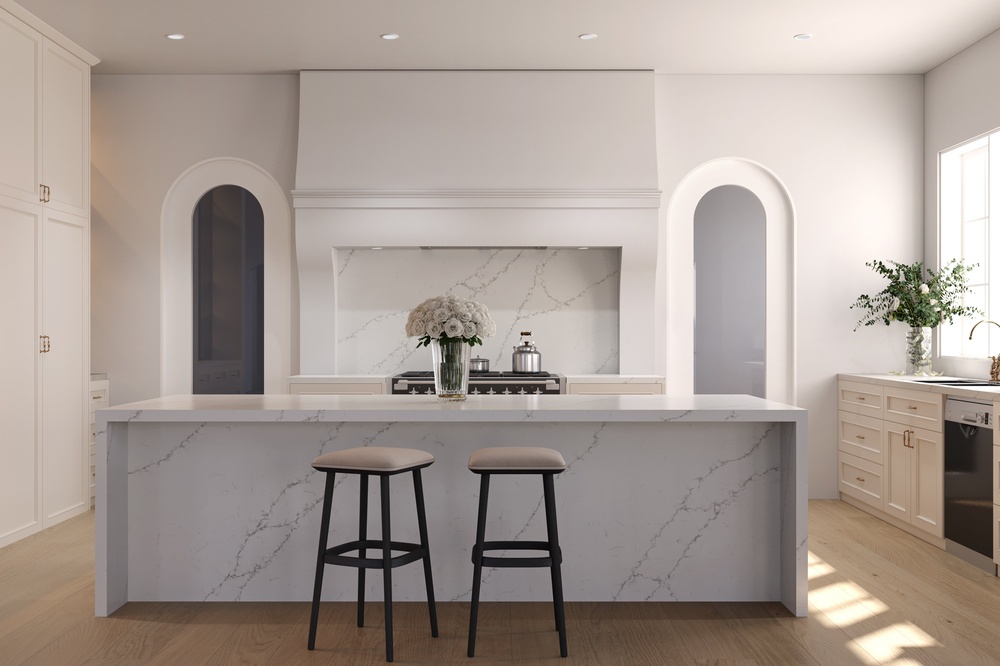
A side-by-side comparison makes the decision less overwhelming. Each option has strengths. The goal is to match those strengths to the room.
Quartz at a glance
Quartz is best for simple care and consistent design.
Pros
- Easy to clean
- No sealing required
- Many colors and patterns
- Good stain resistance
- Great for busy households
Cons
- Not ideal for direct heat
- Less unique than natural stone
- Can look too uniform for some tastes
Quartzite at a glance
Quartzite is best for natural beauty and visual movement.
Pros
- Unique natural slabs
- Strong design impact
- Good heat resistance
- Elegant stone character
- Excellent for focal points
Cons
- Often needs sealing
- Slab performance varies
- Usually requires more careful selection
- Can cost more than simpler options
Porcelain at a glance
Porcelain is best for sleek design and low porosity.
Pros
- Very low porosity
- Strong stain resistance
- Good heat resistance
- Works for counters and walls
- Excellent for modern designs
Cons
- Needs skilled fabrication
- Exposed edges can be vulnerable
- May feel less substantial to some homeowners
Granite at a glance
Granite is best for durable natural stone with classic appeal.
Pros
- Durable
- Natural variation
- Strong heat resistance
- Wide range of colors
- Familiar and proven material
Cons
- Some slabs need sealing
- Busy patterns can feel dated
- Quality and look vary widely
How to make the final countertop decision?
The best decision comes from matching the material to the room, not chasing the most popular option. A successful kitchen and bathroom renovation should feel personal, practical, and cohesive.
1. Use this simple decision guide
Choose based on your top priority:
- Least maintenance: Quartz
- Most natural movement: Quartzite
- Sleekest modern look: Porcelain
- Classic stone durability: Granite
- Best family-friendly option: Quartz
- Best statement surface: Quartzite or porcelain
- Best powder room drama: Quartzite, porcelain, or bold granite
- Best all-around bath vanity: Quartz
2. Think about the rest of the space
Counters should work with everything around them. Before approving the final slab, compare it with:
- Cabinet samples
- Flooring
- Wall tile
- Backsplash options
- Plumbing fixtures
- Hardware finishes
- Paint colors
- Lighting temperature
This is especially important with luxury interior finishes, where small mismatches can make expensive materials feel disconnected.
3. Avoid choosing from a sample alone
Small samples can be misleading.
A tiny piece may not show large veining, color shifts, mineral deposits, or pattern repetition. Whenever possible, view full slabs before making a final decision.
This is especially true for quartzite and granite. Natural stone changes across the slab, and that variation is part of the final design.
4. Ask these questions before signing off
Before installation, ask:
- Does this material need sealing?
- How should it be cleaned?
- Can it handle daily heat exposure?
- Where will seams be placed?
- What edge profile works best?
- Is the slab suitable for the planned overhang?
- How will cutouts affect strength?
- What happens if the surface chips or stains?
These questions help make countertop materials easier to compare beyond appearance.
Where do moisture, cleaning, and longevity fit into the decision?
Long-term performance depends on the room as much as the material.
Bathrooms need ventilation. Kitchens need smart work zones. Both need surfaces that support real use.
For baths, moisture control is especially important. The EPA notes that managing moisture helps reduce conditions that allow mold growth, which makes ventilation and material selection part of the same planning conversation.
For kitchens, cleaning habits matter just as much. Even low-maintenance countertops last longer when homeowners use trivets, cutting boards, gentle cleaners, and quick spill cleanup.
Countertops should make daily life easier
The right counter should not make you nervous. You should be able to cook, host, get ready, clean up, and live normally. A surface that looks beautiful but feels stressful may not be the right fit.
That is the real value of thoughtful design. The final space should feel elevated without becoming precious.
Who delivers efficient home remodeling in Bonita and the surrounding area?
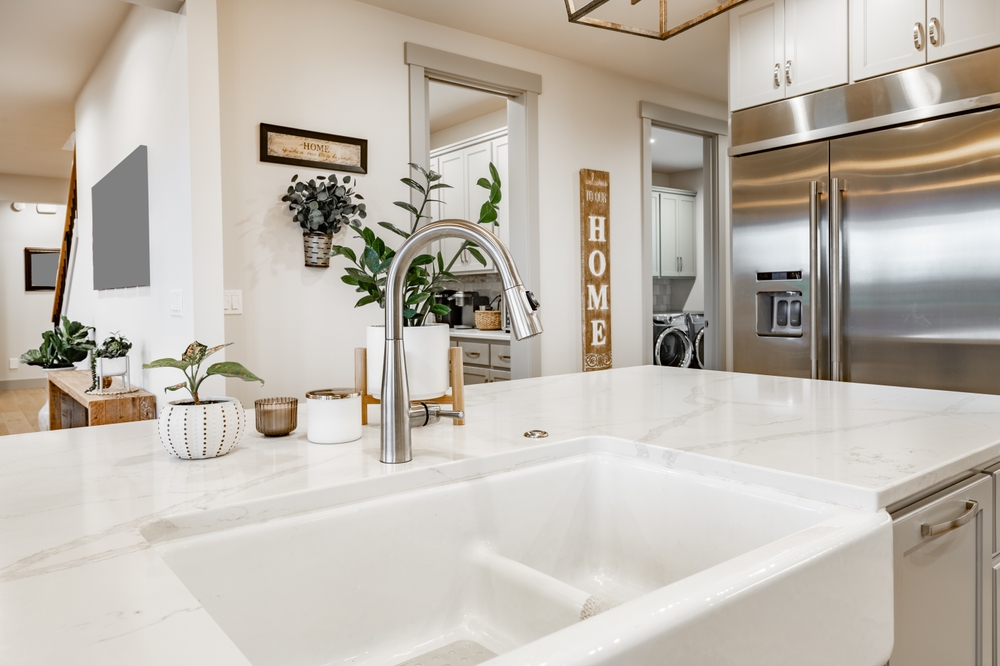
Remodel Works helps homeowners make confident design choices for kitchens, bathrooms, and full home updates with a process built around planning, product guidance, and skilled project management. Our team brings award-winning experience, premium material selections, 3D design support, fixed pricing after final design, and a 5-year workmanship warranty to each project.
From Sweetwater Regional Park to the rest of Bonita, we’re here to help. Whether you are comparing quartz, quartzite, porcelain, or granite, we can help you choose surfaces that fit both your style and daily routine. Reach out to us to start planning your remodel.

Kitchen Zones: How To Design A Kitchen Around The Way You Actually Cook
(858) 413-2305 Request a quote- Design kitchen zones around how meals, dishes, and storage actually move.
- Keep prep tools, cookware, dishes, and pantry items near their task areas.
- Use five zones to organize food storage, daily items, prep, cooking, and cleanup.
- Plan appliance placement around habits, traffic flow, and long-term performance.
- A work triangle can reduce steps between the sink, fridge, and cooking area.
A kitchen can have beautiful cabinets, new appliances, and stylish finishes, but still feel frustrating if the layout does not match the way you cook. If you have to cross the room for spices, prep food with too little counter space, or unload the dishwasher into cabinets that are too far away, the issue is not just storage. It is the way the space is organized.
That is where the use of zones becomes useful. Instead of planning the room around looks alone, a zone-based layout separates it into practical areas for storage, prep, cooking, cleanup, and everyday use. For homeowners considering custom kitchen remodeling in San Marcos, this approach can help create a cooking space that feels more natural, efficient, and easier to use every day.
In today’s blog, we’ll cover what kitchen zones are, how the main working areas should function, what the work triangle means, and how the right layout can make cooking and cleanup feel smoother, so keep reading to learn more!
What are the kitchen zones?
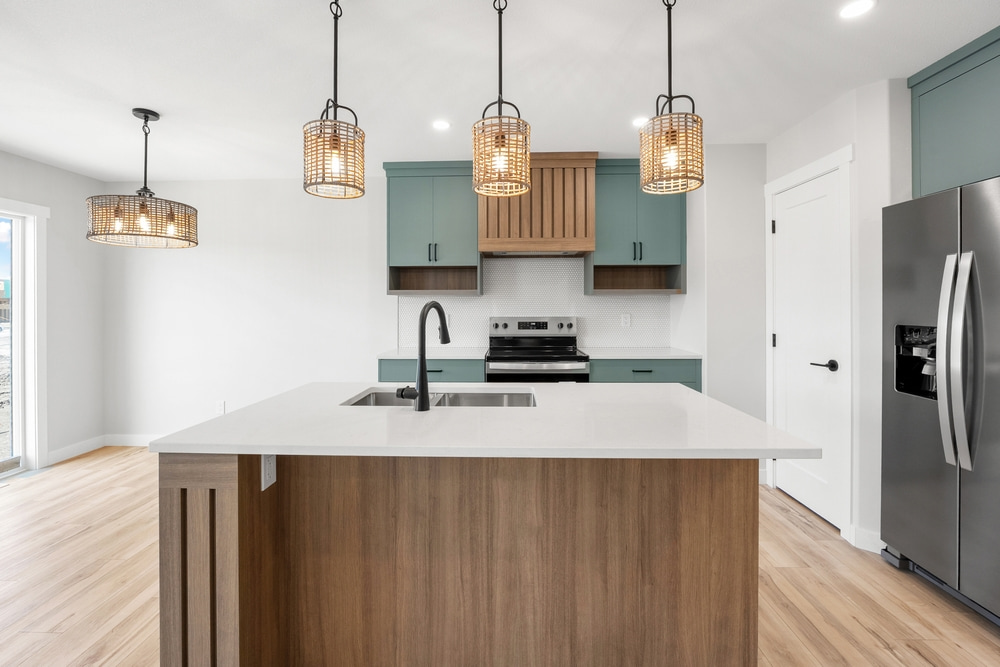
Kitchen zones are task-based areas that organize the room around how people cook, clean, store items, and move through the space. Instead of treating the entire room as one large workspace, zoning gives each routine a clearer place to happen.
How separation into zones works
Each zone should have the storage, tools, counter space, and lighting needed for the task it supports. A prep area, for example, works best when knives, cutting boards, mixing bowls, trash, and open counter space are all within easy reach.
Kitchen zones and layouts also reduce unnecessary movement. If pots are near the cooktop, plates are near the dishwasher, and pantry items are easy to reach, the whole cooking space feels more practical during weekday dinners, school mornings, and holiday prep.
There is no single zone plan that works for every home. Someone who bakes often may need more counter space and tray storage, while a family with kids may want snack storage away from the main cooking path. As you plan for kitchen remodelling, you should look at how the space works now and where the layout slows you down during normal meals, cleanup, or storage.
What are the main working areas in the kitchen?
Most cooking spaces are easier to plan when you think of them as connected work areas instead of one large room full of cabinets. Each area has a job, but the real value comes from how those areas relate to one another. A strong layout usually comes down to five main zones.
Pantry & refrigerator zone
This is where food storage starts. It includes the refrigerator, freezer, pantry, dry goods, snacks, and everyday ingredients. Ideally, this area should be easy to reach when groceries come into the home, so putting food away does not turn into extra trips across the room.
This zone works better when ingredients are easy to see and grab. Pull-out pantry shelves, deep drawers, tall cabinets, and clear storage areas can help keep items from getting lost in the back of a cabinet.
Dishes, glasses & daily storage zone
This area is for the items used every day, like plates, bowls, glasses, serving pieces, food containers, utensils, and small appliances. These pieces should be stored where they make sense for daily use, not wherever there happens to be extra cabinet space.
When possible, daily dishes should be near the dishwasher, dining area, or serving space. If unloading the dishwasher means carrying clean plates across the room, the layout is adding work to a task that should be simple.
Prep counter zone
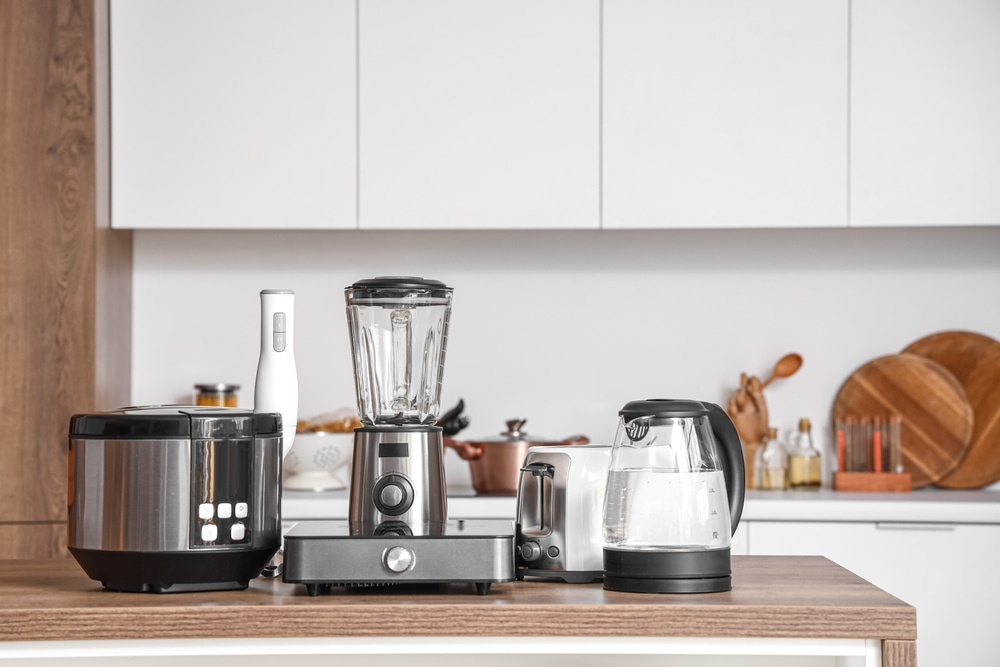
The prep counter zone is where chopping, mixing, sorting, and assembling usually happen. It needs open counter space, good lighting, trash access, and nearby storage for knives, cutting boards, bowls, measuring tools, and prep utensils.
Kitchen zones organization makes a big difference here. When the prep space is close to the sink, trash, food storage, and cooking area, meal prep feels less scattered and easier to manage.
Range & cooking zone
The cooking zone should pick up naturally from the prep area. It includes the range, cooktop, oven, microwave, cookware, oils, spices, cooking utensils, and ventilation. The goal is to move food from prep to heat without crossing the room or searching through faraway drawers.
For a smoother layout, keep these items near the cooking area:
- Pots and pans
- Cooking utensils
- Spices and oils
- Baking sheets
- Oven mitts
- Heat-safe counter space
If the stove is in one spot and everything needed to cook is somewhere else, even a simple meal can feel more complicated than it should.
Sink & cleanup zone
Cleanup should feel like the natural last step, not a separate obstacle. This zone includes the sink, dishwasher, trash, recycling, cleaning supplies, and nearby dish storage. It should make rinsing, loading, unloading, and wiping down surfaces feel simple.The cleanup area also benefits from durable surfaces, enough space around the sink and dishwasher, and proper airflow. If cooking odors, steam, or moisture tend to linger, improving ventilation in your home can make the space feel more comfortable during everyday use.
What is the ideal layout of a kitchen work area?
Creating the ideal work area depends on the room’s size, shape, traffic flow, and daily routines. A strong layout should reduce wasted movement while still providing enough room for storage, prep, cooking, and cleanup.
The most common layouts
- L-shaped layouts: With two connected walls, an L-shaped plan can keep the main work areas close while leaving the rest of the room more open. In a larger space, that open area may allow for an island, a breakfast table, or easier traffic flow.
- U-shaped designs: This option surrounds the cook on three sides with storage, counter space, and appliances. It can be highly efficient for someone who wants everything within reach, but the center aisle needs enough breathing room so the space does not feel tight.
- Galley arrangements: A galley setup can make a narrow room feel purposeful instead of limiting. The key is placing storage, prep, cooking, and cleanup in a sensible order so the two parallel walls support a smooth routine.
- Island-centered plans: An island can become the main prep surface, a casual seating area, or extra storage, depending on how it is designed. The important part is clearance. Without enough space around it, the island becomes an obstacle instead of a useful feature.
- Peninsula setups: Think of a peninsula as a space-saving alternative to an island. It can add counter space, create a light division between rooms, and give people a place to sit without requiring open circulation on all four sides.
- Open-concept spaces: Open plans connect the cooking area with nearby dining or living spaces, which can be helpful for families and entertaining. They still need thoughtful zones, though, or the room can quickly turn into one large traffic path with no clear place for prep, serving, or cleanup.
Each one can work well when it matches the way the household uses the room.
Plan appliances around real routines
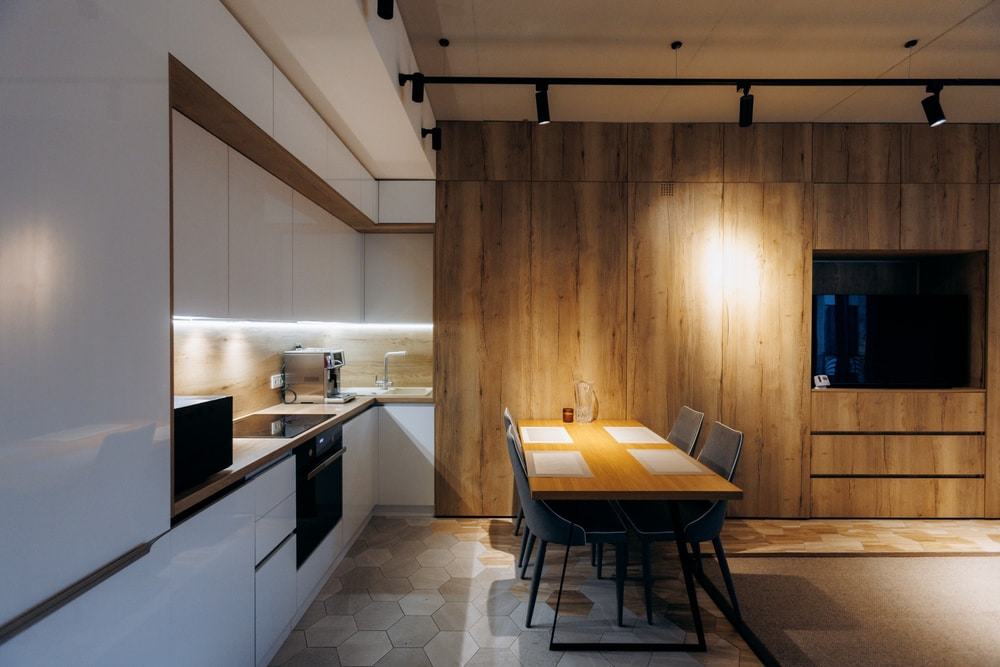
The best appliance placement depends on how the space is used. A coffee station may work best outside the main cooking path. A microwave drawer may make sense near an island. A second oven may help someone who hosts often, while a larger refrigerator may matter more for a busy family.
Those choices also affect performance over time. When the layout includes new appliances, it is worth thinking about daily habits, utility costs, and more efficient kitchen appliance use before finalizing the plan.
Leave enough surface space for daily tasks
Appliances are often the first to grab your attention when you walk into the room, but counter space is what makes the area usable. You need a place to set groceries near the refrigerator, prep ingredients near the sink, and place hot dishes near the oven or cooktop.
The surface material also affects how the space holds up over time. If durability, maintenance, and daily use are part of the decision, it can help to compare countertop materials for your kitchen before making a final selection.
What is a kitchen working triangle?
The working triangle is a planning concept that connects the sink, refrigerator, and stove or cooktop. These are usually the three busiest points during meal prep, so their placement affects how many steps you take while cooking.
Where the work triangle came from
The idea grew out of early studies on movement and efficiency in the home. Lillian Moller Gilbreth, an industrial psychologist and engineer, studied how people moved while doing everyday tasks and applied that thinking to the kitchen. Later, the work triangle became a common planning tool for organizing the main cooking areas in a more practical way.
Today, the concept is still useful, but it is not the only rule that matters. Many homes now include islands, beverage stations, larger pantries, secondary sinks, and more than one person cooking at a time. A good plan should still keep the sink, refrigerator, and cooking area connected, but it should also leave enough space around kitchen work areas so the room feels comfortable instead of crowded.
How does the work triangle improve kitchen efficiency?
The kitchen work triangle layout improves efficiency by keeping the sink, refrigerator, and cooking area within a practical distance of each other. When those three points are placed well, meal prep takes fewer steps, traffic is easier to manage, and storage decisions become more logical.
How the working triangle helps
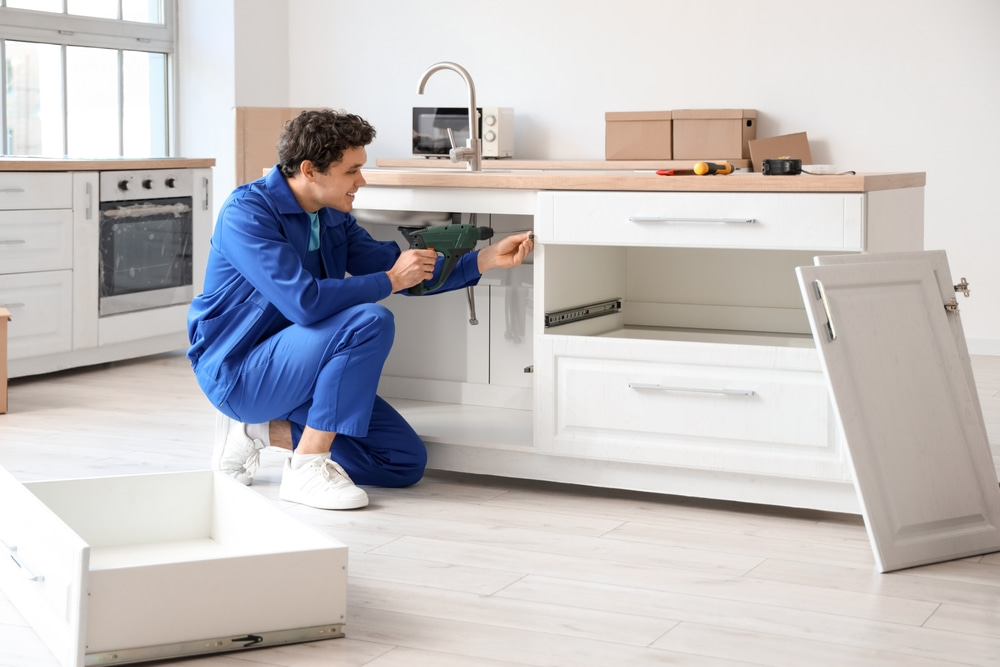
- Fewer steps during meal prep: Keeping food storage, washing, and cooking areas connected means you are not constantly crossing the room to grab ingredients, rinse produce, or move food to the stove.
- Clearer traffic flow: A good triangle helps keep the busiest cooking path from becoming the main walkway for kids, guests, pets, or someone unloading the dishwasher.
- Smarter storage placement: Once the main work path is clear, cutting boards can go near prep space, pots and pans near the cooktop, and dishes near the dishwasher.
- Better use of islands and open layouts: In larger or open spaces, the triangle helps prevent an island, seating area, or appliance placement from interrupting the way the room is actually used.
Who can I turn to for custom kitchen remodeling near me in San Marcos?
If your kitchen feels like it was designed around someone else’s routine, we can help you change that. At Remodel Works, we look at how you cook, where storage falls short, how the room connects to the rest of the home, and which design choices will make the space easier to use long after the remodel is finished.
Since 1984, we’ve helped San Diego County homeowners create spaces that feel more personal, practical, and polished. Whether you live near San Elijo Hills or elsewhere in San Marcos, our designers, project managers, and craftsmen are ready to help you plan the next step. Call today or request a quote on our website to get started!

Latest Posts
How and Why to Reorganize Your Kitchen with Clever Storage: A Complete Guide
The Kitchen And Bathroom Countertop Showdown: Quartz, Quartzite, Porcelain, Or Granite?
Kitchen Zones: How To Design A Kitchen Around The Way You Actually Cook
Get your in-home free estimate today!
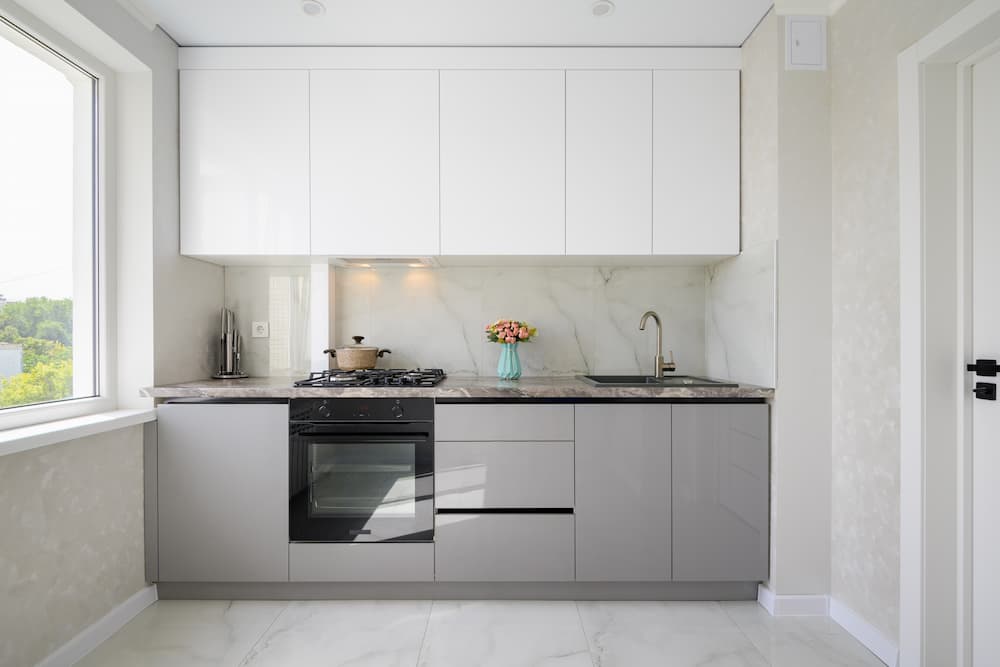
- Small kitchens feel bigger with efficient layouts and less clutter.
- Light, reflective surfaces help open up the room visually.
- Streamlined appliances make the kitchen feel more continuous.
- Smart storage improves access without making the space feel cramped.
- Vertical storage adds function without taking up more floor space.
Small kitchens can feel limiting, especially when storage is tight and the layout doesn’t support how you actually use the space. That’s a major reason why many homeowners choose kitchen remodeling in Chula Vista in the first place. But not every remodel involves knocking down walls or expanding the footprint.
So what if you’re working within the same space? How can you make the most of a small kitchen without changing its size? With the right design approach, even a compact room can feel open, efficient, and comfortable to work in. By focusing on layout, storage, and visual clarity, you can create a space that functions better while also feeling significantly larger. Read on to learn how!
How do I make a small kitchen feel bigger and more functional?
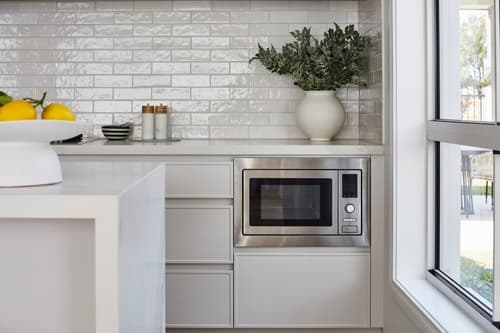
A small kitchen feels larger when the layout is efficient, there’s no visual clutter, and every element is designed to serve a purpose. Rather than trying to fit more into the space, the goal is to make better use of what’s already there. Improving functionality and openness often starts with a few key design decisions that influence how the entire space is experienced.
Key ways to make a small kitchen feel larger
Creating a more open and functional kitchen doesn’t require a complete overhaul. In many cases, a few well-planned design decisions can significantly change how the space looks and feels. The following strategies focus on improving flow, reducing visual weight, and making the most of every element in the room.
1. Keep the layout open & efficient
A well-planned layout ensures that movement between cooking, prep, and storage areas feels natural rather than restricted. A kitchen work triangle is always a good idea, but no matter which setup you choose to keep the pathways clear and efficient can make a noticeable difference in how spacious the room feels.
2. Use light & reflective surfaces
Lighter cabinetry, countertops, and backsplashes help reflect light and reduce visual heaviness. This creates a more open atmosphere, especially in kitchens that don’t get a lot of natural light.
3. Minimize visual clutter
Too many contrasting materials, colors, or exposed items can make a small kitchen feel crowded. Keeping finishes consistent and reducing countertop clutter helps maintain a clean, cohesive look.
4. Choose integrated or streamlined appliances
Appliances that blend into cabinetry or have a lower visual profile reduce interruptions in the design. This helps your cooking area feel more continuous and less segmented.
5. Improve lighting layers
Relying on a single overhead light often creates shadows that make the space feel smaller. Adding under-cabinet lighting and properly placed fixtures brightens the room evenly and enhances depth.
How can I maximize storage in a small kitchen?
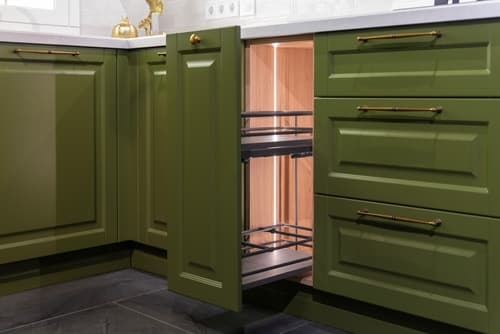
Maximizing storage in a small kitchen doesn’t have to mean adding more of it, but instead making every element work harder. Thoughtful organization and well-designed cabinetry can dramatically improve both functionality and appearance. When storage is planned properly, it reduces clutter and makes the space feel more open.
Smart storage solutions for small kitchens
Maximizing storage isn’t always about adding more cabinets. In some cases, there simply isn’t enough space, and in others, adding more can actually make the kitchen feel cramped or less functional. Instead, the focus should be on smarter systems and specialized features that improve access, organization, and overall efficiency.
Some of the most effective solutions include:
- Pull-out pantry systems: These allow you to access items easily without needing deep, hard-to-reach shelves.
- Deep drawers instead of lower cabinets: Drawers provide better visibility and organization, making it easier to store cookware and utensils efficiently.
- Corner cabinet solutions: Features like rotating shelves or pull-out units help eliminate wasted space in corners.
- Hidden storage options: Toe-kick drawers, appliance garages, and built-in organizers keep items out of sight while remaining accessible.
- Multi-functional islands or peninsulas: Even a small addition can provide extra storage and workspace if designed correctly.
Why custom storage planning makes a difference
Standard cabinetry often leaves gaps in functionality, especially in smaller kitchens where space is limited. A professionally planned layout takes into account how you use the space, so the results include storage that’s tailored to your needs. This kind of approach not only improves usability but also prevents overcrowding, which directly impacts how large the space feels.
How can I use vertical space in a small kitchen?
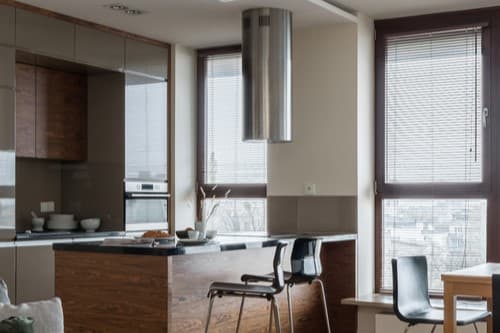
You can use the vertical space to increase the capacity of your small kitchen without sacrificing floor space. Vertical space is one of the most underutilized areas in many spaces, but using it effectively can make the layout much more open and functional.
Practical ways to use vertical space
Once your base storage is optimized, the next step is to look upward. Vertical space offers a significant opportunity to expand storage without taking up additional floor area, which is especially valuable in smaller kitchens.
Here are some practical ways to take advantage of it:
- Full-height cabinetry: Cabinets that extend to the ceiling provide additional storage while creating a more streamlined look.
- Open shelving used strategically: A few well-placed shelves can make frequently used items accessible without overwhelming the space.
- Wall-mounted racks or rails: Hanging utensils or cookware keeps essentials within reach while clearing countertops.
- Stacked appliances: Positioning appliances vertically can free up valuable workspace.
- Tall pantry units: Narrow, vertical storage solutions can hold a surprising amount without taking up much room.
Balancing vertical storage with visual openness
While using vertical space is effective, it’s important not to overload the walls, because too many upper elements can make the kitchen feel closed in. But a balanced approach that combines closed storage with some open areas helps maintain a sense of openness while still improving functionality.
What design choices make a small kitchen look bigger?
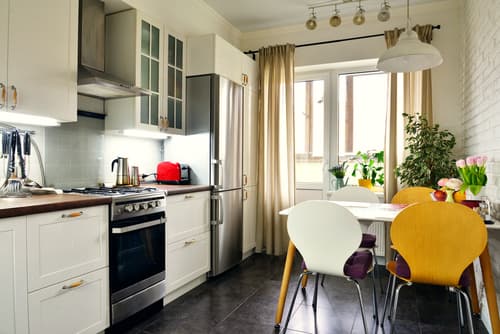
The choice of materials, finishes, and visual continuity in a kitchen play a major role in how large the space appears. Even small design adjustments can have a significant impact when applied consistently.
Materials & finishes that open up a space
Choose lighter cabinetry tones, subtle patterns, and reflective surfaces to help expand the visual boundaries of the kitchen. Continuous flooring throughout the space also prevents visual breaks that can make the room feel smaller. Backsplashes with a slight sheen or larger-format tiles reduce visual fragmentation and contribute to a cleaner and more open look.
Layout decisions that improve flow
In a small kitchen, clear sightlines matter most. To help the space feel more cohesive, remove unnecessary barriers, align the cabinetry, and keep all design elements consistent. When the eye can move freely across the room, it’ll naturally feel larger.
Who should I turn to for small kitchen remodeling in Chula Vista?
If your kitchen feels limited by its size, the right design approach can completely change how the space works and feels. With over four decades of experience, Remodel Works helps homeowners transform compact kitchens into functional, visually open spaces through a streamlined design-build process. From layout planning to final finishes, our team focuses on making every inch count.
And if you’re considering other improvements, we bring the same level of care to our seamlessly integrated home additions, affordable bathroom remodels that still feel high-end, and any other project that comes to mind. Whether you’re located near Chula Vista Marina or elsewhere in Chula Vista alevel bathroom on a budget, we focus on delivering high-end results through a transparent design-build process that removes the stress and uncertainty. Reach out today, and see how forty years of craftsmanship can help you find the perfect, cost-effective solutions for your space.
Latest Posts
How and Why to Reorganize Your Kitchen with Clever Storage: A Complete Guide
The Kitchen And Bathroom Countertop Showdown: Quartz, Quartzite, Porcelain, Or Granite?
Kitchen Zones: How To Design A Kitchen Around The Way You Actually Cook
Get your in-home free estimate today!
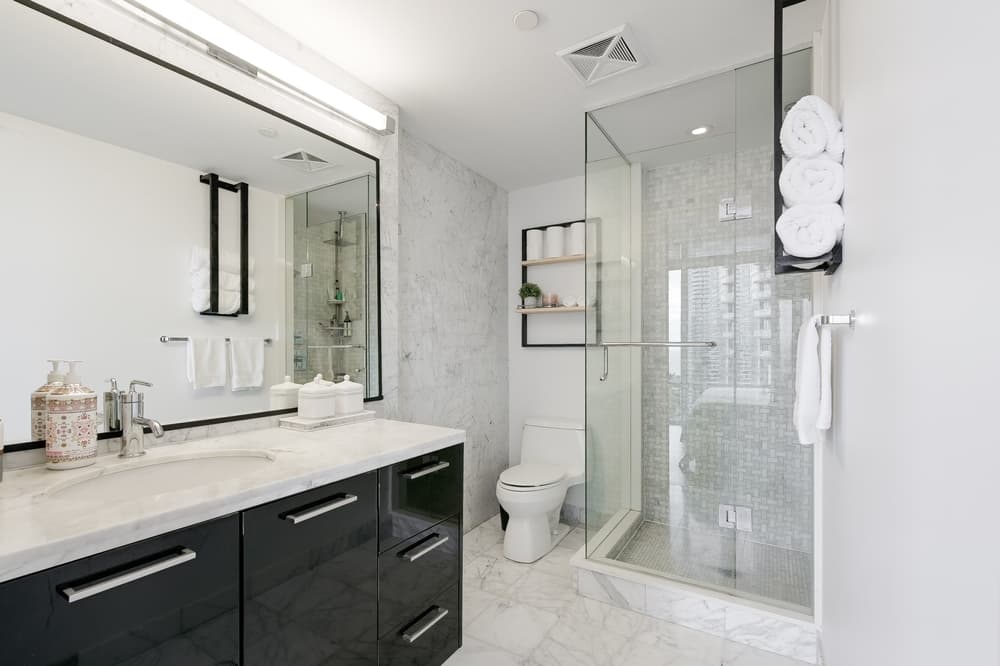
- Expert materials create luxury at lower costs
- Focus on professional lighting and custom hardware
- Choose durable engineered stone over natural marble
- Modernize vanities to shift the room’s aesthetic
- Select high-end finishes for a cohesive design
Creating a high-end bathroom without a massive price tag is entirely possible when you focus on strategic updates and professional material choices. Many homeowners believe that luxury requires a gut renovation, but often the most impactful changes come from refining the details and hiring experts who know where to save.
This guide explores how to balance your budget with premium aesthetics to ensure your space feels like a spa through professional yet affordable bathroom remodeling in Chula Vista. We’ll highlight some upgrades that can make the most of your bathroom at a relatively low price. Read on!
How can I make my bathroom look high-end on a budget?
You can make a bathroom look expensive by focusing on high-impact visual elements like professional lighting, designer hardware, and cohesive color palettes. When you prioritize the things people touch and see first, the perceived value of the room increases significantly with a relatively low investment. A value-driven remodel does not mean cutting corners on quality; it means spending your money where it is most noticeable under the guidance of a design team.
1. Swap out the hardware and fixtures
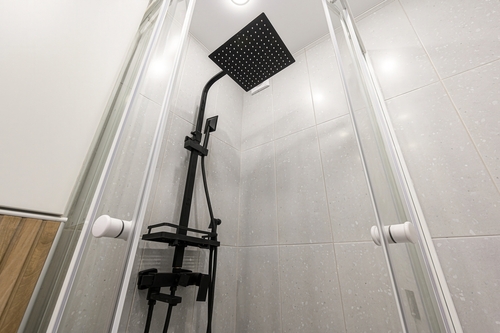
Updating your cabinet pulls, towel racks, and faucets is one of the fastest ways to modernize a space without a full teardown. Professional installers can ensure finishes like brushed gold, matte black, or polished nickel are fitted perfectly for a contemporary look. Ensuring all your metals match creates a unified and intentional design that feels custom-made.
2. Focus on layered lighting
Standard overhead lighting can feel clinical and flat, often detracting from the overall design. To fix this, a contractor can add wall sconces on either side of the mirror or install a dimmable LED fixture. Soft, warm light mimics the atmosphere of a luxury hotel and hides minor imperfections in older tiles that you might choose to keep.
3. Apply a fresh coat of “spa” paint
Colors like soft greys, muted blues, or creamy whites can make a room feel larger and cleaner. Using a professional-grade semi-gloss or satin finish helps reflect light and protects the walls from moisture over the long term. This is one of the most effective low-cost bathroom upgrades available when performed as part of a larger professional refresh.
4. Frame your builder-grade mirror
Many older bathrooms have a simple, frameless sheet of glass over the vanity that feels unfinished. Having a contractor install a custom wood frame around the edges instantly turns a basic utility into a design centerpiece. This simple addition provides a bespoke look for a fraction of the cost of a new designer mirror.
Can a small bathroom look luxurious without a full remodel?

A small bathroom can look incredibly luxurious by maximizing vertical space and using consistent textures to prevent visual clutter. With a clever designer, you do not always need to move plumbing or knock down walls to change the energy of the room. Small spaces actually allow you to splurge on higher-quality materials since you need fewer of them to cover the square footage.
Steps to elevate a small bathroom
- Integrate built-in storage: Ask your remodeler to install recessed wall niches or floating cabinetry to keep the floor clear and maintain a clean aesthetic.
- Install a glass shower enclosure: Replacing a traditional curtain with a fixed or sliding glass panel opens up the line of sight and makes the room feel twice as large.
- Use oversized floor tiles: Larger tiles have fewer grout lines, which creates a seamless look that tricks the eye into seeing more floor space.
- Modernize the vanity: Swapping an old floor-mounted cabinet for a floating vanity creates a sense of openness and adds a modern architectural element.
- Refine the shower floor: Using pebble tile or a custom mosaic in the shower pan provides a tactile sense of luxury that defines the wet area.
What materials look expensive but cost less in a bathroom?
Using engineered materials like luxury vinyl plank and quartz remnants allows you to mimic the look of stone and wood without the high price or maintenance. The total remodel cost often skyrockets when you choose natural marble or solid hardwood, but modern alternatives are nearly indistinguishable to the untrained eye.
Cost-effective material alternatives
- Luxury Vinyl Plank (LVP): This flooring is 100% waterproof and can look exactly like oak or walnut. It is much warmer underfoot than stone and significantly cheaper for a professional to install.
- Quartz Remnants: Remodeling companies often have access to leftovers from larger projects. You can often find a beautiful piece of quartz for a small vanity at a massive discount compared to ordering a full slab.
- Porcelain over Marble: Porcelain tiles are printed with high-definition marble patterns. They are harder than real marble, do not require sealing, and cost a fraction of the price per square foot.
- Acrylic Tub Liners: If your tub is structurally sound but looks dated, a professional liner installation can make it look brand new for significantly less than a full replacement.
Understanding the cost breakdown
When planning your project, it is helpful to consult professionals for a cost breakdown of where your investment goes. By choosing materials that are streamlined for installation, like click-lock flooring or pre-assembled vanities, you can reduce the hours a team needs to spend on-site. This allows you to allocate more funds toward affordable upgrades that have a high visual impact, such as a rain showerhead or a modern backlit mirror.
Does matching hardware make a bathroom look more expensive?
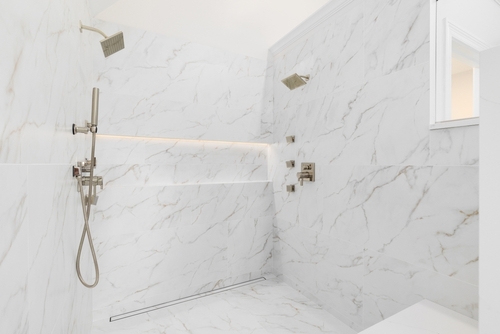
Yes, coordinating your hardware finishes is one of the simplest ways to make a bathroom feel intentional and designer-quality. When towel bars, cabinet pulls, faucets, and light fixtures all share the same finish, the room reads as a cohesive, considered space. Most homeowners underestimate how much mismatched metals quietly undermine an otherwise well-designed bathroom. If you’re remodeling on a budget, matching hardware is the best option for achieving a high-end finish.
How to coordinate your bathroom hardware
- Pick one finish and commit to it. Brushed nickel, matte black, and brushed gold are the most popular choices right now because they hide water spots and hold up well over time.
- Audit every metal surface in the room. This includes towel rings, toilet paper holders, the shower door frame, drain covers, and even cabinet hinges.
- Replace in stages if the budget is tight. Start with the most visible items like the faucet and towel bar, then work outward toward the smaller accessories.
- Avoid mixing more than two finishes. If you want contrast, pair one dominant finish with one accent, such as matte black fixtures with brushed brass cabinet pulls.
A professional installer can also ensure every piece is mounted level and securely, which matters just as much as the finish itself for achieving a polished result.
What flooring looks high-end in a bathroom?
Large-format tiles and wood-look luxury vinyl plank are the two flooring options that most reliably deliver a high-end appearance at an accessible remodel cost. The key is choosing a material that minimizes visible grout lines and complements the overall color palette of the room. Flooring covers more surface area than almost any other element, so getting this choice right has an outsized impact on the finished look.
Best high-end bathroom flooring options by budget
- Large-format porcelain tiles (24×24 or bigger): Fewer grout lines mean a cleaner, more seamless appearance. These are available in stone and concrete looks that photograph beautifully and require very little maintenance.
- Luxury vinyl plank (LVP): Fully waterproof and significantly warmer underfoot than stone, LVP is an excellent choice for families. Modern printing technology has significantly closed the visual gap between LVP and real hardwood.
- Honed stone-look porcelain: A matte, honed finish feels more tactile and upscale than a high-gloss tile. It also shows fewer smudges and watermarks between cleans.
- Heated tile floors: Adding in-floor radiant heating beneath your tile is a relatively affordable upgrade during a remodel and is one of the features buyers consistently associate with luxury.
A quick tip on installation
The way flooring is laid matters as much as the material itself. A diagonal or large-format straight lay with minimal grout lines will always look more intentional and upscale than a standard grid pattern with thick grout joints.
Where to find affordable bathroom remodeling near me in Chula Vista?
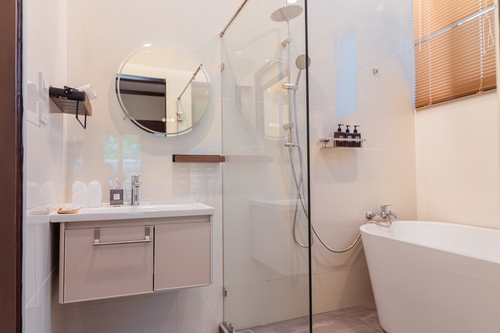
Are you ready to stop dreaming about a spa-like retreat and finally start your project? With over four decades of award-winning expertise, the team at Remodel Works has built a reputation for the kind of precision and care that local homeowners deserve. Whether you’re located near the Chula Vista Center or in the surrounding communities, we bring a seasoned perspective to every renovation we touch.
Whether you’re looking to craft smart storage solutions for your kitchen or create a spa-level bathroom on a budget, we focus on delivering high-end results through a transparent design-build process that removes the stress and uncertainty. Reach out today, and see how forty years of craftsmanship can help you find the perfect, cost-effective solutions for your space.
Latest Posts
How and Why to Reorganize Your Kitchen with Clever Storage: A Complete Guide
The Kitchen And Bathroom Countertop Showdown: Quartz, Quartzite, Porcelain, Or Granite?
Kitchen Zones: How To Design A Kitchen Around The Way You Actually Cook
Get your in-home free estimate today!

How to Plan a Kitchen and Bathroom Remodel at the Same Time
(858) 413-2305 Request a quote- Updating both kitchen and bathroom at the same time is a challenging but rewarding project.
- Benefits include cost savings, faster completion, and design consistency.
- Challenges include disruptions, complexity, and higher initial costs.
- Hiring a skilled contractor and creating a detailed plan ensures success.
- Prepare for potential issues and consider temporary living arrangements.
Updating your kitchen and bathroom at the same time is an exciting yet challenging project. These two rooms are essential to your home’s functionality and aesthetic, making them top priorities for many homeowners. But when it comes to tackling them simultaneously, careful planning and coordination are key to ensuring everything runs smoothly.
Home remodeling in Del Mar offers a fantastic opportunity to create the layout of your dreams, but with major renovations comes the need for thoughtful organization. From setting a realistic budget to selecting materials and managing timelines, every step must be strategically planned. In today’s blog, we’ll discuss how to approach upgrading both spaces at once, the benefits of updating your layout, the unique challenges, and expert tips to make your kitchen and bathroom remodel a success. Keep reading to learn more!
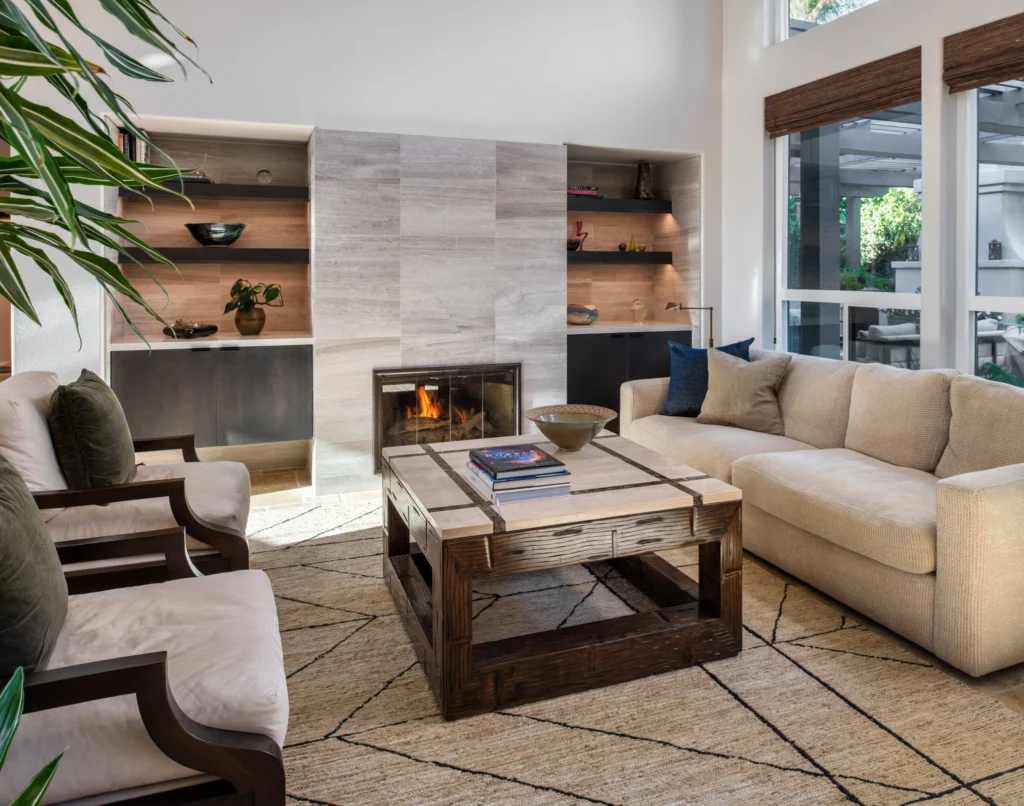
Should I remodel my kitchen and bathroom at the same time?
When thinking about updating both of these rooms simultaneously, it’s important to evaluate the impact this decision could have on your time, budget, and overall stress level. While the idea of getting everything done in one go is appealing, managing these two major projects can be complex. Here are a few things to think about before jumping in.
The benefits of updating both at once
Renovating both the cooking and bath area at the same time offers several advantages. By tackling these two projects together, you can streamline the process and enjoy multiple benefits. Here are some key reasons why many homeowners choose to update both spaces at once:
- Cost savings & efficiency: Purchasing materials in bulk and negotiating contractor rates can save you money when remodeling two spaces. If you can combine efforts, suppliers and contractors may offer discounts or better deals.
- Faster project completion: Working on both rooms at once can reduce the total time of disruption. Instead of splitting the projects into separate phases, you can consolidate the effort into one larger, more focused project.
- Consistent design: Updating both spaces together offers an opportunity for design consistency. Whether you’re going for a sleek, modern look or a cozy, traditional feel, you can ensure that both the kitchen and bathroom complement each other.
- Better coordination: Having one contractor or design-build firm overseeing both projects ensures that there’s no miscommunication between contractors. This can help prevent any overlap in work and ensure that both projects stay on track.
The challenges of taking on both at the same time
While the benefits are clear, there are also challenges that come with managing both projects simultaneously. Coordinating two large-scale updates requires attention to detail and can be disruptive. Here are some challenges you might face when renovating both spaces at once:
- Disruption to daily life: Both the kitchen and bathroom are essential spaces. Going without them for an extended period can affect your routine, making daily tasks like cooking, eating, and personal care much more difficult.
- Increased complexity: Managing multiple construction tasks at once can be overwhelming. With plumbing, electrical, and structural changes involved in both areas, you’ll need a highly skilled team to make sure both projects are completed on time and to code.
- Higher initial costs: While you may save money in the long run, the upfront cost for materials and labor can be higher. For example, you’ll need to pay for both projects’ materials, permits, and labor at the same time, which can strain your budget.
- Logistical challenges: Coordinating schedules and deliveries for both projects can be complicated. You’ll need to make sure the right materials arrive at the right time, and subcontractors can work in tandem without delays.
How to successfully pull it off
If you decide to go ahead with updating both spaces at once, there are several steps you can take to make sure everything runs smoothly. Here’s how to approach a successful dual project:
Hire a professional design-build contractor
One of the best ways to ensure both projects go well is to hire a full-service contractor. A company experienced in both kitchen and bathroom updates can manage both projects, handle any unforeseen issues, and keep everything on schedule. They’ll also assist with material selection, permits, and inspections.
Create a detailed plan
Before starting, sit down with your contractor to create a thorough plan for both spaces. Define your goals for each room, such as layout changes, desired features, and material preferences. This plan will keep everyone aligned throughout the process. You may also want to consider how specific features will fit into your updated space, such as deciding whether a walk-in shower or a bathtub is the better option for your needs.
Set realistic expectations for time and budget
Setting a clear and realistic timeline and budget for both updates is crucial. Include potential delays and extra costs in your planning. It’s always helpful to have contingency plans in place for unexpected issues that may arise.
Ensure proper communication
Communication with your builder is key. Be sure to have regular updates on the progress of both projects and stay involved in decision-making to ensure everything is on track and meets your vision.
Consider temporary living solutions
During the project, you may need to set up temporary arrangements. Consider using a microwave or portable cooking setup, or accessing a nearby gym or family member’s home for bathroom use. This can avoid the inconvenience of not having full access to both spaces.
Be prepared for unexpected challenges
As with any major construction work, things may not go exactly as planned. From unexpected plumbing issues to delays in materials, make sure you’re prepared for the possibility of complications. A good contractor will help mitigate these issues and work to resolve them quickly, but it’s always best to anticipate potential setbacks.
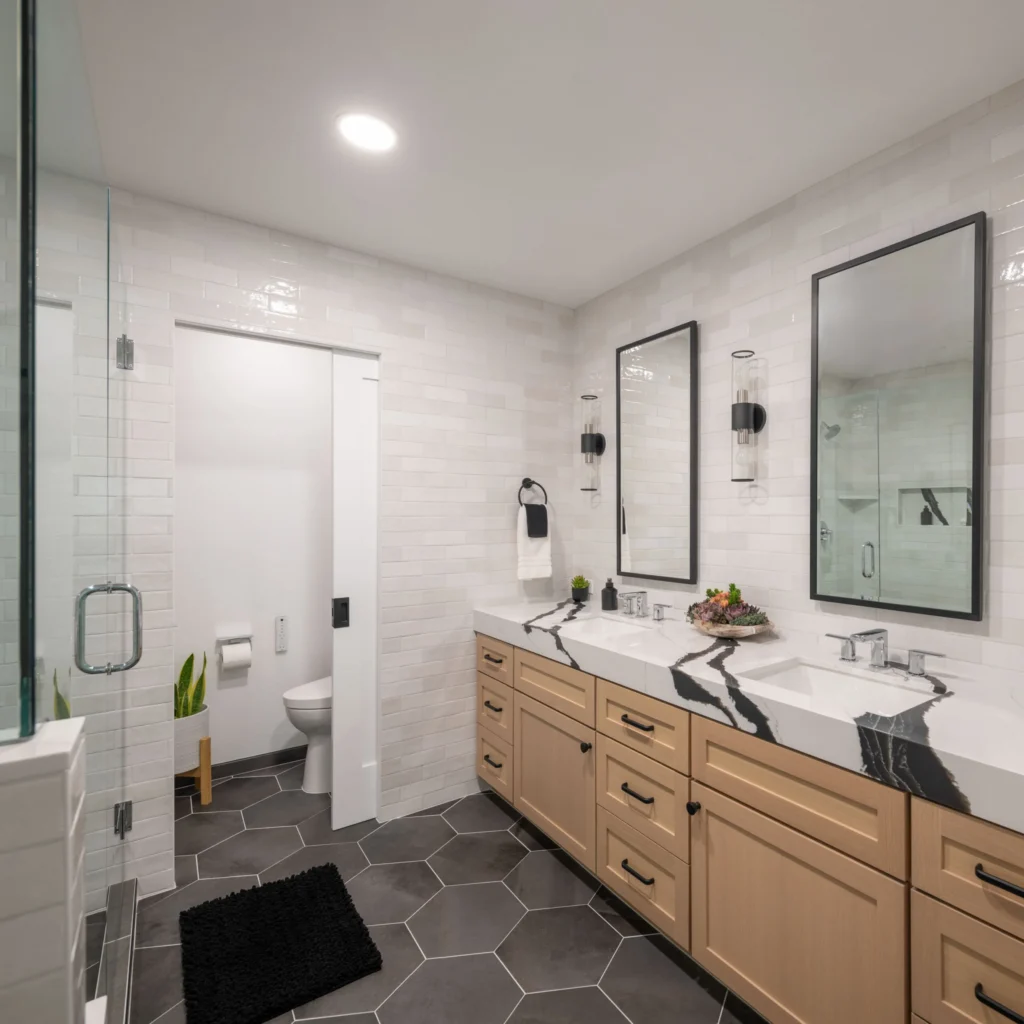
Who can I contact for reliable home remodeling near me in Del Mar?
If you’re looking for trusted professionals to help you with updating your house in Del Mar, Remodel Works is here to streamline the process. We’ve been providing high-quality, award-winning services for over 40 years, with a focus on customer satisfaction and quality craftsmanship. We understand the complexities involved in renovating both spaces at once and are ready to help you navigate the process with ease.
Serving homeowners near iconic locations like the Seagrove Park, our design-build process ensures your projects are completed on time and on budget, with beautiful results you’ll love. For your next project, contact us today to schedule a consultation, and let us be your trusted partner in creating the kitchen and bathroom of your dreams.
Latest Posts
How and Why to Reorganize Your Kitchen with Clever Storage: A Complete Guide
The Kitchen And Bathroom Countertop Showdown: Quartz, Quartzite, Porcelain, Or Granite?
Kitchen Zones: How To Design A Kitchen Around The Way You Actually Cook
Get your in-home free estimate today!
Walk-In Showers vs. Bathtubs: What’s Best for Your Home?
(858) 413-2305 Request a quote- Homeowners in Del Mar must decide between walk-in showers and bathtubs for their bathroom.
- Walk-in showers offer modern design, accessibility, and space efficiency, ideal for small bathrooms.
- Bathtubs provide relaxation, family-friendly use, and versatility in design options.
- A combination of both may work best for those needing the benefits of each.
- Consider factors like bathroom size, lifestyle, accessibility, maintenance, and resale value.
When upgrading a bathroom, homeowners in Del Mar often face a key decision: should they choose a walk-in shower or a bathtub? Both options offer unique benefits, and the best choice depends on your lifestyle, the available space, and your design preferences.
Working with bathroom remodeling professionals can help guide you through these options, ensuring your final choice balances functionality, style, and long-term satisfaction. Understanding the differences between walk-in showers and bathtubs can make the decision easier and help you achieve the bathroom you’ve always envisioned.
Is it better to have a walk-in shower or a tub?
The answer isn’t one-size-fits-all. It depends on your household needs, your bathroom layout, and how you use the space. Here’s a breakdown of what to consider:
Walk-in showers
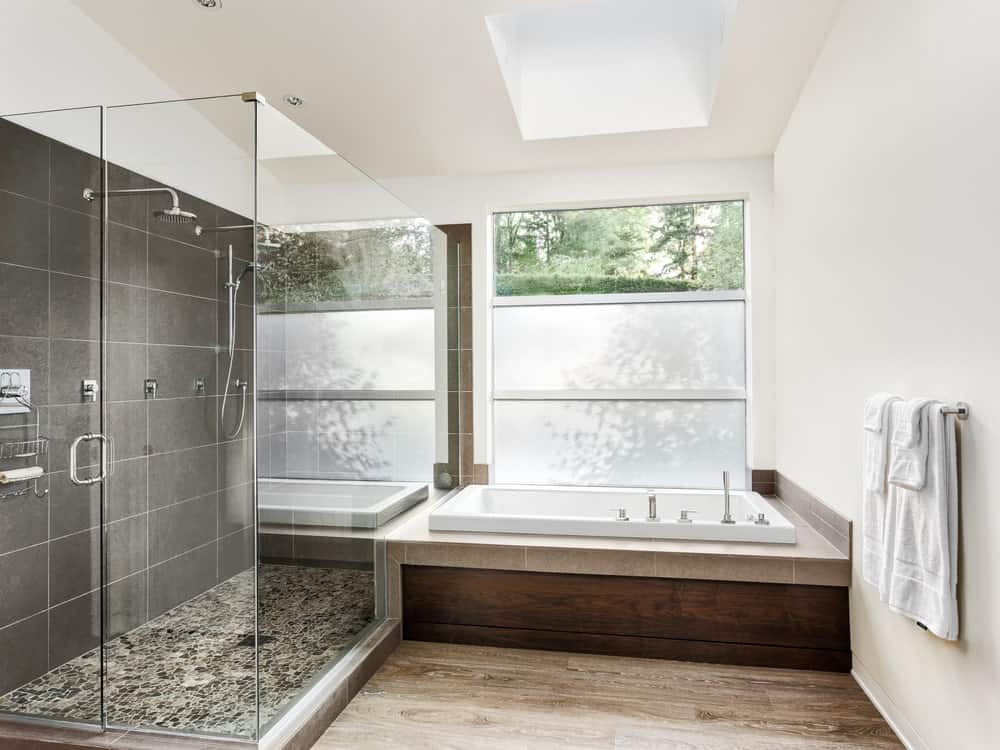
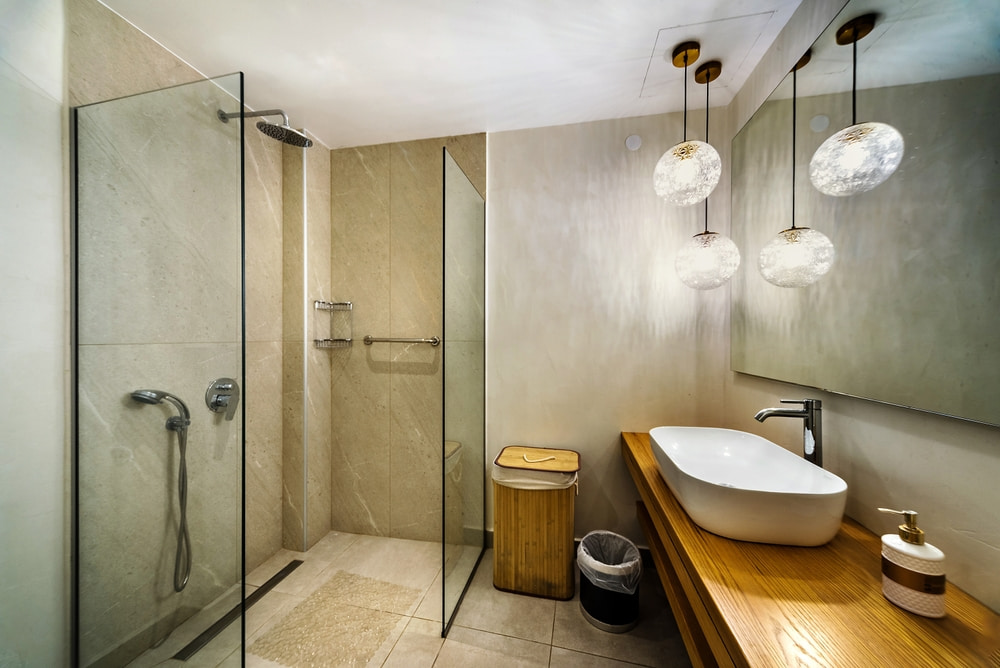
Walk-in showers have gained popularity in modern homes for several reasons. They typically offer a sleek, open design, which can make smaller bathrooms feel more spacious. These showers can be customized with glass doors, multiple shower heads, built-in benches, and even rainfall-style fixtures.
Some of the key benefits include:
- Accessibility: Walk-in showers are easier to enter and exit, making them ideal for people with mobility concerns or for elderly family members.
- Space efficiency: They can fit into tighter areas than a bathtub, which is especially helpful in smaller bathrooms.
- Maintenance: Cleaning a shower is often simpler than scrubbing a tub, and there are fewer surfaces for soap scum and grime to build up.
- Design flexibility: You can use various tile patterns, frameless glass, and integrated shelving to create a modern, personalized look.
Walk-in showers are especially appealing for homeowners who prioritize efficiency, quick showers, and contemporary design aesthetics.
Bathtubs
Bathtubs remain a classic bathroom fixture for good reason. They offer a relaxing soak, which is perfect for unwinding after a long day. Families with young children often find tubs more practical, as they make bath time simpler and safer.

Key advantages of tubs include:
- Relaxation: Nothing beats soaking in a bathtub for stress relief and muscle relaxation.
- Family-friendly: A tub is essential if you have small children or pets, making daily routines easier.
- Resale value: Many homebuyers expect at least one bathtub in a family home, so including a tub can make your property more appealing.
- Versatility: Freestanding tubs, clawfoot designs, and combination tub-shower units offer design options for both traditional and modern spaces.
Combination options: best of both worlds
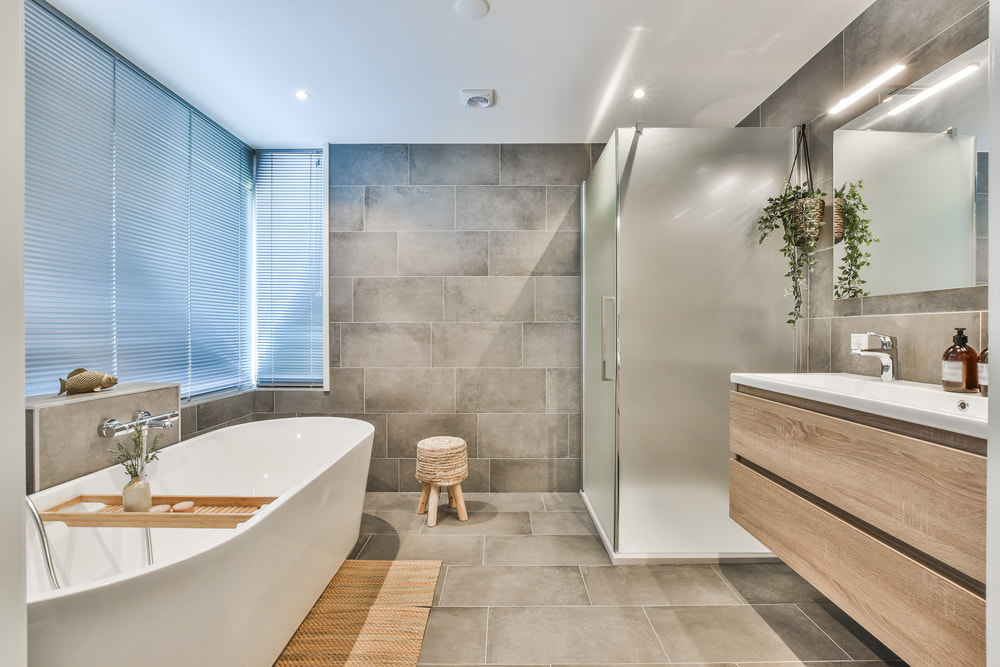
If your bathroom has enough space, you might consider installing both a walk-in shower and a bathtub. Many homeowners choose this approach to accommodate diverse needs: a quick morning shower in the walk-in and a long soak in the tub during evenings or weekends. These dual improvements setups can maximize functionality and appeal, especially in master bathrooms.
Other factors to consider
- Bathroom size: Walk-in showers often work better in smaller bathrooms, while tubs require more floor space.
- Lifestyle: Consider how you and your family use the bathroom daily. Quick showers or long soaks? Young children or elderly residents?
- Accessibility: Walk-in showers are easier for people with limited mobility, reducing the risk of slips and falls.
- Maintenance: Walk-in showers can be easier to clean, while tubs may require more frequent scrubbing.
- Resale value: If resale is important, consider including at least one bathtub, as many buyers prefer the option of a soak.
Design and aesthetic considerations
A walk-in shower can give your bathroom a sleek, modern appearance. Frameless glass panels, rainfall showerheads, and large-format tiles can make a small space feel luxurious. On the other hand, a freestanding bathtub can serve as a statement piece, adding elegance and charm to the room. Tile, color schemes, and fixture finishes can further enhance the overall look of either option.
Safety and accessibility
Safety is an important consideration when choosing between a tub and a walk-in shower. Walk-in showers reduce the need to step over a high edge, making them safer for older adults and children. Non-slip tiles, grab bars, and built-in seating can further enhance safety. Tubs can be equipped with anti-slip surfaces and handrails, but they generally require more care when entering or exiting.
Budget considerations
The cost of installation can vary widely depending on materials, fixtures, and labor. Walk-in showers may require professional waterproofing, tile work, and custom glass panels, which can add to the expense. Bathtubs, especially freestanding models, can also be pricey, particularly when paired with luxury fixtures. A professional team can help balance your budget with your desired design and functionality.
Choosing between a walk-in shower and a bathtub ultimately comes down to lifestyle, household needs, and personal preference. Walk-in showers are ideal for modern, space-conscious designs, offering convenience and ease of use. Bathtubs provide comfort, relaxation, and family-friendly functionality. In some cases, incorporating both elements can deliver the best of both worlds.
By working with experienced contractors, you can evaluate your space, weigh the pros and cons, and create a bathroom that fits your life perfectly. Whether you choose a walk-in shower, a luxurious bathtub, or both, a well-planned renovation ensures long-term satisfaction, safety, and beauty.
Who are the best bathroom remodeling Del Mar professionals?
With Remodel Works, one of the best kitchen & bathroom remodelers in San Diego, your vision can be brought to life with precision and style. Their expert team guides you through every step—whether planning layouts, selecting materials, or integrating the latest design trends in high-quality ADUs—ensuring your space is both functional and beautiful.
Feel free to find inspiration at Del Mar Antiques + Art + Design Show – Wikipedia, and we’ll combine experience, creativity, and reliability to transform your vision into a home you’ll truly love. Call us today and make your remodeling a unique creation.
Latest Posts
How and Why to Reorganize Your Kitchen with Clever Storage: A Complete Guide
The Kitchen And Bathroom Countertop Showdown: Quartz, Quartzite, Porcelain, Or Granite?
Kitchen Zones: How To Design A Kitchen Around The Way You Actually Cook
Get your in-home free estimate today!

Accessory dwelling units, or ADUs, are secondary, self-contained units built on the same lot as the primary residence. The most common types of ADUs are converted spaces like attics, garages, and basements, and detached stand-alone garden cottages used as additional dwelling or working spaces. They’ve surged in popularity throughout the country in the last decade or so, and with its mild weather and high property values, San Diego is no exception.
Accessory dwelling units are a cost-effective and practical way to add housing and/or commercial space without moving, especially in areas where the demand is high and buildable land is limited. An ADU can generate rental income, provide a comfortable living space for aging parents or adult children, and boost property value by adding functional square footage that can appeal to prospective buyers.
Since they represent a significant investment in terms of time, effort, and finances, choosing the best ADU builders is crucial. From planning, procurement, and permitting to design, construction, and on-site problem-solving, partnering with highly-rated ADU companies can save you a lot of money and stress. To help you pick the best Accessory Dwelling Unit contractors in San Diego, we take a look at 5 reliable companies that stand out:
- Remodel Works
- Snap ADU
- JDB Builders
- YNK Construction
- Nestadu
Since each of these businesses has its strengths and weaknesses, we’ll take a look at their pros and cons to help you get a sense of how well they are suited to your needs.
Pros & cons of the top-rated Accessory Dwelling Unit companies in San Diego
| Company | Pros | Cons | Price range | Best for |
|---|---|---|---|---|
| Remodel Works |
|
May face longer scheduling in times of peak demand | All price ranges | Homeowners looking for quality, longevity & style |
| Snap ADU |
|
|
Moderate to premium range | Clients hunting for clear pricing & streamlined delivery |
| JDB Builders |
|
|
They do not include a full pricing table or published cost ranges | Property owners searching for custom ADUs with design-build support |
| YNK Construction |
|
|
Pricing available only through a quote request | Clients interested in premium finishes & specific design goals |
| Nestadu |
|
|
Value to premium range | Homeowners keen on flexible prefab or site build options |
1. Remodel Works
Boasting over 40 years of experience in home remodeling and ADUs, Remodel Works has a reputation as one of the best accessory dwelling unit builders in San Diego. As a family-run business with local roots, they’ve become synonymous with budget discipline, firm focus on on-site safety, and full regulatory compliance. From sophisticated, fully personalized bathroom remodels to all types of home renovation projects, Remodel Works is strongly committed to on-time delivery.
Whether you’re looking for an in-law unit to keep family close while maintaining privacy, a smartly-designed space for a home office, or a converted garage to boost your income sources, Remodel Works can deliver attached, detached, and junior ADUs (JADUs) that maximize your livable space and project cost-effectiveness. With a full-service design-build process, their approach takes care of every aspect of the project, from the first blueprints and design solutions to the finishing touches and the final walkthrough.
Pros
- Over 40 years of industry experience: Their team of skilled craftspeople, creative designers, and dedicated project managers brings experience and skill, long-term market insight, honed process, and deep practical insight into local procurement opportunities. What’s more, 80% of their team has been with the company for 5+ years.
- Fully integrated design & construction: Design and construction are handled under one roof to improve coordination, reduce handoff issues, minimize costly redesigns, and keep projects moving through stages with fewer delays and communication problems.
- Honest & predictable pricing: Projects are priced using a fixed-cost model that provides a transparent budgeting structure, giving homeowners clear financial expectations upfront and minimizing the risk of overdrafts. Once the final design is approved, the price doesn’t change.
- Hands-on project oversight: Each client is paired with a dedicated project manager who keeps track of scheduling, daily workflows, on-site safety, timeliness, state regulatory adherence, and ensures quality standards are maintained at every stage of the project.
- Proven track record of meeting timelines: Established workflows and experienced crews deliver consistent scheduling, while maintaining workmanship quality and keeping things on track within agreed timeframes.
- Well-stocked showroom: With one of the most impressively stocked showrooms anywhere in the country, Remodel Works lives up to its reputation as one of the best ADU companies in San Diego. Clients can browse through a rich selection of materials, finishes, and design options for easier decision-making and more personalized choices.
- Comprehensive final inspections & warranties: They promise a detailed walkthrough after project completion, followed by some of the best warranty protections in the industry. Their full 5-year workmanship warranties on every project illustrate their confidence in the long-term quality of their work.
Cons
- Scheduling may be extended during high-demand: Don’t waste precious time scheduling because project start days may require additional lead times during peak construction season.
- Methodical design-build approach: May not be the best option for clients looking to work with an independent architect or add significant late-stage changes to the project.
2. Snap ADU
As a highly-rated ADU contract in San Diego, Snap ADU is a woman-owned turnkey provider specializing in stick-built and prefabricated models. From large guest houses and two-story units to garage conversions and multi-unit models, they have 117 ADUs built or under construction across San Diego County at the time of writing. They offer free browsing of their project library, letting clients draw inspiration and choose different floor plans from their long list of projects.
Pros
- End-to-end project delivery: They position themselves as an all-in-one team handling design, permits, and construction, streamlining handoffs and communication.
- Highly specialized ADU expertise: They advertise as 100% focused on ADUs with a sizable project portfolio, both completed and underway.
- Pre-approved design plans: They have a big database of build-ready plans, which can significantly speed up the early project stages.
- Access to ADU-focused lenders: They partner with companies specializing in ADU loans, giving their clients more financing options to choose from.
Cons
- Restricted service area: Their services are heavily centered around the San Diego area, meaning that owners outside the central city zone may be left out.
- Pre-approved plans may need adjustments: ‘Pre-approved’ status can be too location-specific—even the best laid plans sometimes need tweaking when confronted with reality on the ground.
- Relatively limited number of reviews: Their limited number of testimonials makes it hard to get a detailed picture of how their former clients see their work.
3. JDB Builders
Marketed as a provider that takes care of designs, permitting, construction, and final finishes, JDB Builders is one of the top-rated ADU companies in San Diego, serving Arizona and Texas besides California. They specialize in custom homes, ADUs, renovation projects, and fire restoration. With a dedicated design team and 3D rendering, they take on both residential and commercial builds, primarily in retail, office, and small-scale industrial facilities.
Pros
- Unified design & construction team: They market an integrated setup with in-house design and construction expertise, simplifying the process and ensuring smooth coordination.
- Licensed to operate across multiple states: Besides being one of the top ADU builders in San Diego, they operate in competitive Arizona and Texas markets, too.
- End-to-end project management: Like the previous two companies we’ve outlined, they also boast dedicated hands-on project management for each client.
- Early-stage visualization & planning: They highlight permit procurement and 3D renderings as an important part of their pre-construction process.
Cons
- No publicly available pricing: Their site pushes ‘free estimates’, so clients need to engage in consultation before understanding the total project cost.
- Limited customer review visibility: Publicly available review sources list a small number of testimonials, making it hard to evaluate their services.
- Experience may differ by location: Operating across 3 states can be a plus in terms of procurement, but it can also lead to varying service quality across locations.
4. YNK Construction
With a mission to “make remodeling and design easy and worry-free for homeowners,” YNK is founded on principled transparency, professionalism, and a respectful approach to clients. Besides being known as one of the best ADU contractors in San Diego, YNK Construction deals in house additions, kitchen, bathroom, and whole-house remodels. They can also step in for build-only projects when the plans are already in place, which is an interesting option that is not usually offered by high-end contractors.
Pros
- Fully integrated design-build services: They cover planning, documentation, permitting, material selection, and full build, so you won’t have to juggle vendors and contractors.
- Strong reputation for seamless communication: A family-owned setup that prioritizes open communication channels to speed up decisions and feedback flows.
- Budget-conscious design & planning: They emphasize their ability to work within constrained budgets and avoid ballooning costs.
Cons
- Pricing provided only through consultation: It’s hard to assess their pricing structure since they don’t provide a transparent pricing list on their website.
- Limited ADU-specific reviews: With barely more than 30 reviews on Google at the time of writing makes it difficult to evaluate a company that’s been in the business for more than 7 years.
- Short baseline warranties can be a deterrent: They offer only 1-year warranties, subject to optional extended coverage, which can feel discouraging compared to industry norms.
5. Nestadu
Nestadu is a highly-rated ADU company in San Diego specializing in modular prefab and site-built custom accessory dwelling units. Partnering with Nestadu, you can expect a guided process that includes everything, from site assessment and design through permitting and construction. They specialize exclusively in ADUs with an emphasis on process, transparent pricing, and high-end craftsmanship. As a locally-based contractor, Nestadu is committed to giving back to the community, with 10% of profits going to house the homeless.
Pros
- Wide range of prefab models & custom build support: They offer a large variety of both site-built and factory-built ADUs, giving you great choice flexibility.
- Transparent pricing with entry-level options: They have a clear pricing structure outlined for several styles and prefab models, helping clients set expectations early.
- Full permitting support included: They handle all the necessary documentation, form plan submittal, through communication with the municipality and relevant local authorities.
Cons
- Initial prices may increase significantly with project scope: While their site advertises ‘starting from’ pricing, some reviews report higher than expected per-square-foot costs.
- Prefab units may face site requirements constraints: Certain local laws and municipal ordinances can add uncertainty and affect what you’re allowed to build.
- Custom ADU costs determined after evaluation: Unlike their prefab models that are transparently priced, clients may need to wait for a full project evaluation before learning the full costs.
Now it’s up to you to make an informed choise
If you’re looking for a top ADU contractor who can navigate tight site constraints, take care of the permitting, ensure high-quality utility connections, and coordinate trades on a realistic schedule, Remodel Works ticks all your boxes. As a local team of highly-rated ADU builders, Remodel Works can eliminate the need for costly redesigns, minimize the risk of delays, and do it all within the agreed budget and timeframe.
If you want to keep the family close while preserving privacy, add a supplemental revenue stream, or boost productivity by moving your office into your backyard, a high-quality ADU is the most cost-effective and convenient solution for you. Call us today, and let’s start working together on a more functional and comfortable future for you and your loved ones!
Latest Posts
How and Why to Reorganize Your Kitchen with Clever Storage: A Complete Guide
The Kitchen And Bathroom Countertop Showdown: Quartz, Quartzite, Porcelain, Or Granite?
Kitchen Zones: How To Design A Kitchen Around The Way You Actually Cook
Get your in-home free estimate today!
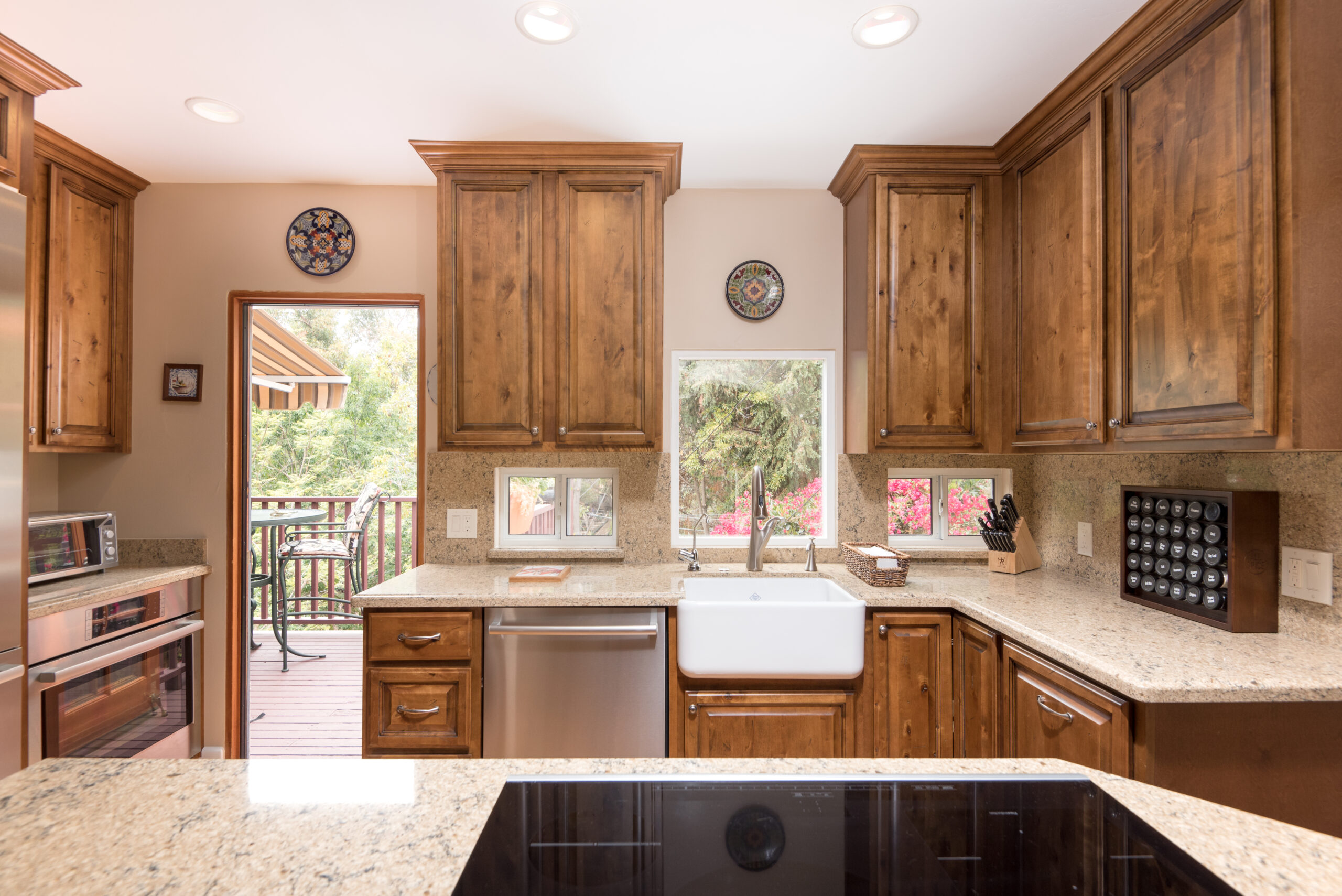
Top 5 Kitchen & Bathroom Remodeling Companies in San Diego
(858) 413-2305 Request a quoteIn almost every home, the kitchen and bathroom are the spaces that most influence daily comfort, functionality, and overall property value. If you’re planning a remodel, doing it right starts with choosing the right contractor.
To help you find professionals whose work best fits your style, budget, and renovation goals, we’ll take a closer look at five of the top-rated kitchen and bathroom remodeling companies in San Diego:
- Remodel Works Bath & Kitchen
- Armstrong Builders, Inc.
- K-Co Construction, Inc.
- Eco Minded Solutions
- VanBerg Design & Remodeling
We’ll compare their strengths, potential limitations, areas of expertise, and the types of projects or homeowners they’re best suited for. Each one of them brings something unique to the table, so let’s see how they stack up.
Quick comparison of the top five
| Company | Pros | Cons | Price range | Best for |
|---|---|---|---|---|
| Remodel Works Bath & Kitchen |
|
Occasionally, longer scheduling times during peak demand | All ranges | Homeowners interested in quality, design-focused kitchen and bath remodels |
| Armstrong Builders, Inc. |
|
|
High-end / Luxury | Clients wanting custom builds or highly detailed remodels |
| K-Co Construction, Inc. |
|
Limited service area (~5-mile radius) | Mid to high | Homeowners in Clairemont and nearby areas who value neighborhood expertise |
| Eco Minded Solutions |
|
|
Luxury / Boutique | Clients who prioritize modern, eco-friendly design |
| VanBerg Design & Remodeling |
|
|
Mid to High | Homeowners who want a low-stress, highly organized remodeling experience |
1. Remodel Works Bath & Kitchen
With over 40 years of experience, Remodel Works Bath & Kitchen is now recognized as one of the best home remodelers in San Diego. Founded in 1984 and still family-owned, the company has completed thousands of projects across the county, from La Jolla and Scripps Ranch to Chula Vista and beyond.
Their model is comprehensive but straightforward: with a full-service design-build approach, they take each project from the first design sketch to the final walkthrough. They have a reputation in the world of kitchen and bathroom remodeling that rests on a blend of reliability, transparency, and skilled design.
Pros
- Comprehensive services: Remodel Works offers full design-build remodeling for kitchens and bathrooms, as well as ADUs, home additions, and more.
- Predictable costs: The company’s fixed-price guarantee locks in the total cost before construction begins. Homeowners know exactly what they’ll pay, which makes budgeting straightforward and stress-free.
- Experienced team: Over 80% of the staff have been with the company for five years or more, so their workflow and craftsmanship stay consistent across projects.
- Smooth projects: Every remodel is coordinated by an in-house team that handles design, permits, and construction. Clients get paired with a project manager who oversees every detail and keeps the process streamlined.
- Results on display: Their showroom in Poway features fully built kitchens and bathrooms, so clients can come and view layouts, finishes, and materials firsthand.
- Proven reliability: Remodel Works backs all work with a 5-year workmanship warranty and has a strong record of awards, which includes multiple Angie’s List and Best of Houzz honors.
Cons
- Lead times for start dates: Since they’re one of San Diego’s most established remodelers and cover a comprehensive range of services, homeowners may need to book in advance during busy seasons.
- Standardized process: They have a defined step-by-step process that keeps projects organized, but that means they may not be the right fit for homeowners looking for a spontaneous experience.
2. Armstrong Builders, Inc.
Founded by Tom Armstrong in 1980, Armstrong Builders is known for their strong focus on high-end residential construction in the Greater San Diego and Orange County areas. In their work, the company blends elegant design and quality construction to create custom kitchens, baths, and other spaces. But the area where they really shine is full-home and large-scale projects and custom builds.
Their work often attracts clients who prioritize design and collaboration. Company leadership directly oversees all work, and their process follows a design-build approach that guides projects from concept to completion.
Pros
- Dependable process: Since they unite design and construction under one roof, you can count on Armstrong Builders for clear communication, predictable budgets, and a streamlined experience.
- Owner involvement: Leadership personally oversees projects to make sure every detail is delivered with attention to detail and up to the highest quality standards.
- Luxury craftsmanship: Their projects often showcase distinctive materials and architectural detail. The focus is on premium options.
- Reputation for professionalism: Clients often mention punctuality, cleanliness, and responsiveness when talking about their service.
Cons
- Premium cost: Armstrong Builders is rarely the lowest bidder, since their focus is more on craftsmanship and longevity.
- Selective focus: Their primary market is custom, luxury, and large-scale remodels, so their work may not fit smaller projects or modest budgets.
3. K-Co Construction, Inc.
For homeowners looking for a remodeler with a personalized, community-driven approach, K-Co Construction stands out as one of San Diego’s most neighborhood-focused remodeling firms. Established in 1995 by Dave “ K ” Konstantin and now led by his stepson Chad Gardner, the company has built its entire model around serving the neighborhoods near its Clairemont office.
Instead of expanding citywide, K-Co still concentrates its efforts within a five-mile radius deliberately, as part of their “Economy of Geography” strategy. This focus allows them to respond quickly, keep oversight consistent, and use the deep knowledge of the area’s housing styles. After nearly three decades, they have remodeled hundreds of homes and are respected for their transparency and friendly professionalism.
Pros
- Strong local expertise: Since they’ve only been remodeling homes in central San Diego, they are exceptionally familiar with local floor plans, materials, and quirks common to the region.
- Community commitment: The team is deeply involved in local events, schools, and charities, which just reinforces their local reputation.
- Consistent quality: K-Co relies on a tight network of subcontractors and long-term trade relationships, so their quality stays consistent from project to project.
- End-to-end support: They manage projects from design to completion, offering assistance with permits and inspections through long-standing relationships with local authorities.
- Skilled craftsmanship: Homeowners often praise the team’s attention to detail and courteous service during kitchen and bathroom renovations.
Cons
- Geographic limitation: K-Co’s self-imposed service radius means they can stay efficient, but also that availability is restricted for homeowners outside their core neighborhoods.
- Smaller scale: While quality-focused, their operation is not structured for very large or multi-property projects.
4. Eco Minded Solutions
Eco Minded Solutions (EMS) was founded in 2010 by three friends with backgrounds in architecture, landscaping, and construction, and has since grown into one of San Diego’s most distinctive design-build firms. One of their most standout features is a holistic philosophy: they generally unite architecture, interior remodeling, and landscape design under one roof.
EMS is also right at the forefront of sustainable design, and they cater to homeowners who want luxury with a smaller environmental footprint. Their portfolio includes everything from minimalist kitchens that maximize light and space to expansive whole-home remodels and additions that are as stunning and contemporary as they are eco-friendly.
Pros
- Unique dual focus: EMS is a rare company that combines home building and landscape architecture.
- Sustainability leader: They prioritize energy-efficient materials, water-saving features, and eco-conscious finishes without sacrificing luxury aesthetics.
- Boutique experience: Clients work directly with project managers who coordinate design and construction, so both their process and results are very personalized.
- Strong aesthetic identity: EMS projects are recognizable and known for clean lines, modern finishes, and skillfully blending indoor and outdoor spaces.
Cons
- Luxury pricing: Their focus on high-end design and sustainability typically places them at the upper end of the price spectrum.
- Variable experiences: Some clients have noted inconsistencies in communication and finishing details on complex projects.
5. VanBerg Design & Remodeling
Since 1988, VanBerg Design & Remodeling has been quietly setting a standard for consistency and professionalism in the San Diego remodeling scene. Founded by cousins Jeff and Robert Jertberg, the company was born out of a desire to “right the wrongs” of an industry that’s unfortunately known for unpredictability and lack of communication.
Now, VanBerg stays true to that mission and delivers remodels that prioritize proper planning, organization, and trust. They focus on kitchens, bathrooms, exteriors and outdoor spaces, and more, where they make every step smooth through a signature process designed to completely remove stress and uncertainty from the remodeling experience.
Pros
- Structured process: Their proprietary “VanBerg System” puts a strong focus on pre-construction steps like building a team, inspections, and planning for every outcome.
- Strong communication: They keep homeowners fully informed from demolition to final walkthrough with weekly calendars, progress reports, and open channels of contact.
- Award-winning quality: VanBerg has earned recognition from Qualified Remodeler Magazine, NARI, and San Diego Home/Garden for design excellence.
- Aftercare services: The company also offers a Home Care Concierge program for ongoing maintenance with periodic checkups and on-call assistance to keep homes looking and functioning their best.
Cons
- Smaller firm: As a smaller firm committed to personal oversight, VanBerg can only take on a select number of projects each year, which can mean longer lead times for new clients.
- Lower visibility: They have a modest marketing presence and fewer online reviews, so initial research can be hard for new clients.
Making the best choice for your next remodel
Each of these remodelers contributes something exceptional to San Diego’s thriving home improvement community.
- Remodel Works is a reliable full-service partner ideal for homeowners who value complete transparency, a process-driven approach, and design versatility across all project scopes and budget levels.
- Armstrong Builders is best for clients pursuing higher-end remodels centered on architectural detail, especially large projects or custom builds where kitchens and baths are just part of the story.
- K-Co Construction is a trusted, locally focused option, perfect for homeowners in Clairemont, Bay Park, and nearby areas who prioritize personalization and neighborhood expertise.
- Eco Minded Solutions is a solid choice for homeowners who view sustainable design and eco-friendly methods as top priorities and who want those values integrated at a luxury level.
- VanBerg is ideal for those who want structure, predictability, and a low-stress experience, thanks to their systematic approach and focus on delivering smooth, organized projects.
What makes a remodeler the “best” depends on your priorities, whether that’s budget, design style, sustainability, or the level of guidance you prefer during the process.
But if you’re looking for balance, Remodel Works Bath & Kitchen sets the standard. With us, homeowners enjoy the strength of a large, coordinated team combined with the personal touch of a family business. Whether you’re kitchen remodeling to maximize space, still deciding between a bathtub and a shower, or planning a complete kitchen-and-bath remodel, you can count on results tailored to your home and lifestyle.
Our company is known for its versatility, clear communication, and proven results, and we take immense pride in being one of San Diego’s most dependable choices for kitchen and bathroom remodeling today. Interested? You can take the first step today. Request a free quote or contact us, and let’s get started!