If you are contemplating re-doing your kitchen, you may be wondering how to prepare for a kitchen remodel. Good news, surviving a kitchen renovation can be painless with the right tips and tricks to utilize during your remodel. If you want to come out of this process with the kitchen of your dreams and continue to live somewhat normally throughout the remodel you need to have an organized strategy before you begin. Below is a guide of tips and tricks to help you continue living efficiently and survive this process with ease.
Before You Begin the Kitchen Remodel Process
When you begin a kitchen remodel, you may want to jump straight to picking finishes and décor, but there are several important steps you need to take before you begin to choose final touches. The first step you need to take before beginning the kitchen remodel process is to determine what your overall goal of the remodel project is.
Do you want to upgrade the style and finishes? Do you want an entirely new configuration, with a new, different kitchen cabinet material? Do you need more storage? What are the must-haves? What are the desirables? By determining up front what your goals of the kitchen remodel are, you are setting yourself up to have a successful kitchen remodel that runs quickly and ends with the kitchen of your dream.
During the Kitchen Remodel Process

One of the most daunting challenges to undertaking a kitchen remodel is losing access to your kitchen appliances and counter space during the remodel process. Coming up with temporary kitchen ideas may seem complex, but with a little foresight and planning, you can have a safe temporary kitchen during remodel that allows you to maintain a modified version of your normal routines. How to function best during a kitchen remodel looks different for each individual and family, so it is important to find the realistic steps that will work best for you and your family to make sure you have a temporary kitchen during renovation, are able to still relax and enjoy your home.
The first step of a kitchen remodel process is for your construction and design team to introduce you to everyone who will be working in your home. This will mitigate the potential feeling of unfamiliar people being in your home and encroaching on your personal space. If you know them and feel comfortable being in your home while they are there, then your kitchen remodel will flow much smoother and be more comfortable throughout.
This is an important step and a great remodel team will ensure you are comfortable with every person who will be working in your home. With this step done, the next task is to find a way to continue to cook during the renovation.
Temporary Cooking Space

Losing access to your traditional kitchen space and appliances during the kitchen renovation can be challenging, but it in no way means that you need to eat out for every meal and go weeks without cooking the meals you love. There are many ways that you can continue to make delicious, healthy food without access to your normal kitchen space.
The first step is to find a temporary space to use as a makeshift kitchen during the renovation. This could be a small patio, your existing backyard grilling area, or even your garage. It may also just be a table in the dining room, living room, or even laundry room, but no matter what space you choose make sure you have access to outlets and a flat surface on which you can prep food. Gather a few bins to store silverware, plates, and cooking utensils and store it in your temporary kitchen space during the renovation.
Once you have designated a temporary space to function as your kitchen during the remodel, then consider when the best times to cook will be based on the schedule of the renovations. If the remodel is taking place from 8:00-4:00pm each day, then it would be best to make breakfast at 7:00am and dinner after 5:00pm. This allows for buffer time to clean up or if work schedules run over.
Adjust your routine schedule to work around the remodel schedule so that you are not trying to cook dinner at the same time cabinets are being installed. In addition to a daily work schedule, it is important to know the overall schedule of the remodel. When will your dishwasher be disconnected, or will it be disconnected at all? What about your refrigerator?
Will you have access to your microwave or oven? By working with your design-build team to ascertain the day-to-day and overall schedule of the remodel, you can successfully plan your habits around the schedule and prepare accordingly. Remodel Works Bath and Kitchen is one of the only design-build firms in San Diego that offers clients a detailed day-to-day schedule of all activities that will be occurring during the remodel. This knowledge allows homeowners to offset much of the potential frustration that could occur by utilizing proper planning.
If you are doing a kitchen remodel that disconnects the refrigerator, dishwasher, or appliances for a portion of the time, then you will need to find an alternative method to store and cook food and clean the resulting dishes. If you know you will be without these appliances, be sure to set up a microwave, crockpot, toaster oven, or camp stove to cook your food. All of these options still allow you to make a delicious meal without needing access to your full scope of kitchen appliances. To clean the dishes, simply use a sink in the garage, laundry room, or bathroom. This is a temporary solution and all you really need to wash a dish is water, soap, a sink, and a sponge.
If you are storing refrigerated goods, invest in a cooler and only buy single serving portions of meat during the kitchen remodel to avoid letting food spoil. In addition to finding ways to cook during the kitchen remodel, you can take this renovation as a time to dedicate yourself to trying restaurants you have been considering. This will save you the effort of washing dishes and will be a treat to enjoy as you finish up your kitchen remodel.
Enjoying Your Dream Kitchen

Surviving a kitchen remodel may seem like a stark challenge at the beginning, but with the right strategy, information, tips, and tricks, you can be cooking in your dream kitchen in no time. All of the planning, research, time, energy, and money will be worth it when you get to see your creative vision come to life and you are able to enjoy the kitchen you have always. Keep this end goal in mind during the remodel as you feel yourself to stay focused on the most important facet of the renovation: achieving your ideal kitchen.
With Remodel Works, we make the entire kitchen remodel process easy for you. You will receive a daily schedule of all construction plans and tasks and will be updated throughout the entire process. In addition, your team will be on time everyday and will clean up the workspace at the end of each day.
We want to keep your space as clean as possible during the construction process and minimize the disruption to your home. Our design and construction team includes every specialty possible, so there will be no delays and everything is done with expert level. We are here to help you create and build the kitchen of your dreams. Call Remodel Works today to learn more about our kitchen design-build process!

Latest Posts
Exploring the Pros & Cons of Kitchen Islands
Open vs. Closed Kitchens: Which Layout Works Best for You?
Top Bathroom Vanity Styles to Consider for Your Remodel
Get your in-home free estimate today!
The process of remodeling your kitchen takes a lot of planning, time and effort. And there are many different moving pieces. One of the most significant elements of any kitchen remodel is the installation of the kitchen cabinets. Here’s how long it takes to install new kitchen cabinet doors , as well as some other frequently asked questions about kitchen cabinet installation.
Steps of Kitchen Cabinet Installation
To understand the process of “how long does it take to install kitchen cabinets,” it’s helpful to first get an understanding of the timeline of the process, and get a sense for how long each individual phase takes before choosing your kitchen cabinets . Here are the major steps of kitchen cabinet installation.
1. Plan Your Design
The first step of any redesign or remodel process is to gather inspiration and plan out the design. Depending on how many changes you are planning to make, and how long you’ve been thinking about executing the remodel (or the kitchen cabinet installation), the timeline of this step can vary greatly: anywhere from 2 weeks to 6 months. This timeline shortens considerably if you enlist the help of an interior designer, who can help provide a vision and assistance on what specific kitchen cabinet options will best suit your desired look and feel.
Here are all the elements that you will need to consider as you map out your new kitchen cabinet installation:
Will you refinish, resurface, or replace your cabinets?
Depending on your budget, and exactly how great of a change you are looking to make in your existing cabinet setup, you may find you’d rather refinish or resurface your existing cabinets, instead of completely replacing them.

For the most part, refinishing or resurfacing cabinets is a cheaper option than installing brand new cabinets, and it can be significantly less complicated as well. If you are pleased with the functionality, size, and setup of your current kitchen cabinets, then an aesthetic upgrade by refinishing or resurfacing may be a better solution.
If you want to “start over” and rework the layout of your kitchen cabinets, or if your current cabinets are very old, then replacing them will be your best option. Decide which option will work best for you, and then you can begin to design and plan accordingly.
Do you need some design help?
If you are planning to do a full scale kitchen remodel, or a major kitchen cabinet rework, then it may make sense for you to enlist some extra help. This can be as simple as heading to your local home improvement store, perusing their selection of cabinetry, and striking up a conversation with one of their design team members.
You can also choose to seek out and hire the services of an interior designer, if you have the budget. This will cost you some extra money, but the benefit is that you will get recommendations that are completely customized to you and your space.
A third option is to work with a company that specifically deals with and specializes in remodels, whether in the kitchen, the bathroom, or other key areas of the home. If you’re interested in this option, you can always strike up a conversation, ask questions, and then get a quote for your project, no strings attached. You can even repeat this process with several remodeling vendors to compare quotes and price points – in fact, it is highly recommended that you do!
2. Decide on Your New Cabinets
Once you’ve determined which option between a new kitchen or a cabinet refinish will work best for you, decided if you are going to get some professional help with your remodel, and have locked down your initial design plan, it’s time to select your kitchen cabinet materials. This process will take about 1-2 weeks, depending on how quick of a decision maker you are.
Here are the elements you will need to consider as you decide on your new cabinets:
What material do you want your cabinets to be made out of?
There are many benefits and drawbacks associated with different types of kitchen cabinet materials. Hardwood is luxurious and durable, but expensive. Particleboard is affordable but can be weak and susceptible to sagging. At the end of the day, you’ll probably end up choosing a mix of materials, and if you decide to go with stock cabinets, your decision will be incredibly easy.
Do you want stock, custom, or semi-custom cabinets?
For the most part, kitchen cabinets can be purchased in three varieties: stock, custom or semi-custom. Stock kitchen cabinets are the most readily available to homeowners, and can be shopped for at your local hardware and home improvement store, or online. These types of cabinets are completely “buy as is,” and your installation team will install them directly. Stock cabinets are the most affordable option.
If you want something truly unique, and you have a sizeable budget, then you can consider custom cabinetry. Depending on how custom you want to get, you can even build cabinets completely from scratch with this option. But, it will cost you.
A great middle-ground option between stock and custom is semi-custom, which, as you can expect, is a more customized type of stock cabinet that you can choose to install in your home.
Take the time to decide what level of customization you need in your cabinets, and what fits in your price range.
What other aesthetic elements are important to you?
Your kitchen cabinets take up quite a bit of space in your kitchen, so you need to make sure you like the way they look. After deciding on material and your level of customization, think about any other aesthetic elements that you want to manipulate in the design and building process. For example, if you want to paint your cabinets a certain color to match your design aesthetic, or if you want to install custom fixtures for a special touch.
3. Hire Your Team
While it is probably possible for you to install your kitchen cabinets on your own it will be much more time efficient for you to hire a team of professionals to complete the installation process.
Reach out to family and friends, use review sites, and talk with your local home improvement vendors to find a contractor or cabinet installation specialist who can assist you with your specific needs. Depending on the level of specification you need, this process can take 2-7 days to find the right contractor for you.
Once you hire your team, make arrangements with them for when the installation will begin
4. Demo Day
Depending on which option you move forward with (refinishing, resurfacing, or replacing), you may have to completely remove your existing cabinet setup in order to install your new cabinets.
Fortunately, this is a pretty quick part of the process. Most demolitions for kitchen cabinet installation take less than a day, although it can take longer than a day if you are doing a full-scale kitchen remodel, and need to remove other pieces around the cabinets.
5. Install or Treat Your New Cabinets
Depending on which new cabinet option you’ve selected, you can expect a slightly different “installation” timeline for each.
How Long Does it Take to Install New Cabinets?
After you’ve done all the planning and prep work, the last step in the kitchen cabinet installation process is to actually install your new cabinets. Depending on the level of customization, and the unique setup of your kitchen, the length of time it actually takes to install your kitchen cabinets can vary. For the most part, it takes a week on average (usually closer to three working days) to complete a new kitchen cabinet installation.
If you are just installing new kitchen cabinets’ doors, through either refinishing or resurfacing, then you can expect this process to take a much shorter amount of time. You won’t have to make nearly as many design choices. You won’t have to worry about ordering new cabinets at all. And you won’t have to worry about new materials.
How Long Does it Take to Refinish Cabinets?
If you’re opting to refinish your cabinets, you have the easiest task in front of you. On average, refinishing it takes about 3-5 days to complete, according to Ehow.com. This timeline involves: preparation, stripping, sanding, and finishing with paint. Of all those steps, sanding takes quite a lot of time and varies greatly on the type of wood or material of your cabinet doors. Painting, or finishing the application, should be expected to take at least two days.
How Long Does it Take to Resurface Cabinets?
If you’re opting to resurface your cabinets, you have a similar timeline ahead of you to refinishing. In almost all cases, it is recommended that you enlist the help of a professional to complete resurfacing your new kitchen cabinet doors. According to Home Advisor, “most refacing can be done in 2-4 days,” although this does depend on the size and efficiency of the company working on your installation. This 2-4 day timeline does not include any time you need to spend planning or ideating your ideal design.
Other Elements That Impact Timeline of Kitchen Cabinet Installation
In addition to the steps listed out above, here are some other elements that can potentially impact the timeline of your kitchen cabinet installation.
Do you need to order your cabinets?
If you find your perfect cabinet set, and you need to order them either online or in-store, you might need to add in some time for delivery.
How busy is your contractor?
If you are dead-set on a certain contractor, you will have to be flexible with their schedule and wait until they have availability to work on your specific project. If time is more important to you than who your contractor is, then be sure to ask that question during the vetting process.
Are you making any major layout changes?
If you’re opting for a stock cabinet tear-down and install, that’s fairly simple. But, if you’re looking to adjust the layout of your kitchen, and install a differently-shaped kitchen cabinet setup, then you can expect for this to take more time.
Are there any additional changes you want to make?
The process of completing a kitchen cabinet installation or remodel takes a lot of time and effort, so you might as well make any other changes you’ve been considering for a while during the process. For example, if you want to install new flooring, or a new backsplash, or upgrade your appliances, you can easily enlist the help of a contractor to perform that work in addition to your kitchen cabinet upgrades.
Plus, the kitchen cabinet installation process is messy – you can expect lots of dust and exposed walls during the process. Capitalize on this teardown period to create the kitchen you’ve always dreamed of. Otherwise, it will probably be a long time until you’re ready to go through the process of hiring a contractor, demo-ing your space, and overturning your daily routine, all over again.
In Summary: How Long Does it Take to Install Kitchen Cabinets?
While the process of physically installing new kitchen cabinets can take about a week, the process of ideating your design, selecting materials, demolishing your existing setup, and fine-tuning details can take anywhere from two weeks to six months.
Either way, this is a decision that shouldn’t be rushed. Regardless of your worries around “how long does it take to install cabinets,” take your time to decide which styles, materials, and price options work best for you and your family. Do your best to enjoy the process, and keep the kitchen remodel process a positive one, where you are happy with the end result. Kitchen cabinets are truly an investment, so you want to make sure you completely love the final product. To learn more about kitchen and bathroom remodels, please contact our San Diego renovation experts at Remodel Works today.
Sources:
https://www.ehow.com/info_8317132_long-refinish-cabinets.html
https://www.houzz.com/discussions/2693597/how-long-should-cabinet-install-take
https://sebringdesignbuild.com/how-long-does-a-kitchen-remodel-really-take-a-realistic-schedule/

Latest Posts
Exploring the Pros & Cons of Kitchen Islands
Open vs. Closed Kitchens: Which Layout Works Best for You?
Top Bathroom Vanity Styles to Consider for Your Remodel
Get your in-home free estimate today!
It can be exciting and stressful when you’re preparing to redesign your kitchen. The room is such an important part of your daily life, so you likely have worries about how you will survive the remodel. You may also be wondering how you will decide which kitchen layout is right for you and your family.
No matter how big your room is, it’s important to utilize your entire kitchen layout. You want to maximize your storage area and meal prep space while also creating an inviting area for family dinners and entertaining. One of the best ways to do this is by implementing an L-shaped kitchen design in your home.
We are experts in remodeling kitchens, so we have a wealth of tips and tricks to help you make the most of your kitchen space. In this blog, we will go over the main features and of an L-shaped kitchen and offer popular L-shaped kitchen design ideas to show you the different ways you can fully maximize your space.
What is an L-Shaped Kitchen?
As you might have guessed from the name, this type of kitchen layout is shaped like the letter L. Two adjoining lengths of cabinets and countertops make up the legs of the L.

Depending on the design of the kitchen, the cabinets and counter space can be on two full walls, or one of the legs can be a half wall. It is common to have appliances for cooking and cleaning on one side of the L and storage on the other. This means that your stove and sink may be separated from your refrigerator. Many kitchens with enough space also feature an island in the middle of the room to add more storage and cooking area for food prep.
Due to the versatile nature of an L-shaped kitchen design layout, it is an excellent choice for small and large kitchens. Simply by varying the floor plan and the length of each leg of the L, you can likely make this popular style work in your home.
The Pros and Cons of L-Shaped Kitchens
There is a good reason why the L-shaped kitchen layout design is so popular. With help from an expert, this type of interior design creates an efficient and organized workflow by maintaining the kitchen work triangle, making everything from cooking to cleanup a breeze. The kitchen triangle refers to a kitchen that has an efficient relationship between the sink, stove, and refrigerator. Additionally, this layout allows you to separate your kitchen into work zones, which is perfect for families that need to accommodate multiple cooks at the same time.
Although cooks and bakers love L-shaped kitchens, they are good for so much more than meal prep and cleanup. Because they often open into a larger room or living area, this eat-in kitchen layout is perfect for entertaining. You can carry on a conversation with your guests or family members while you prepare delicious treats and meals, keeping you from feeling isolated from everyone else.
Another benefit of the L-shaped kitchen design is versatility. The style is perfect for many different lifestyles and tastes. Whether you’re looking for something to accommodate your family in a dining area or a space that is ideal for entertaining, an L-shaped kitchen can work for you. You can also achieve entirely different looks simply by switching up the cabinets, backsplash, appliances, hardware, colors, and patterns.
L-shaped kitchens are known for using two adjacent walls to create the versatile shape. While some kitchens place upper and lower cabinets on both sides of the L, some designs only feature lower cabinets and an open countertop. This type of layout opens up the kitchen to a neighboring room and provides a more-open flow for your home, but it has one distinct disadvantage. You lose the extra storage space that is found in the upper cabinets. However, this problem can often be solved by adding an island.
When this type of kitchen has a sink in the island, it can create another issue. This layout can add more space for cleanup and meal prep, but it often means that you have to reconfigure the plumbing. Doing so can raise the price of your kitchen remodel, but you may find that the efficiency is well-worth the additional cost.
Ways to Make the Most of Your L-Shaped Kitchen
Designing the perfect kitchen for your needs and space is an art and a science. No home is exactly the same, so what works in one kitchen might not be a good choice for another. To get the right fit for you and improve your L-shaped kitchen, you need to consider many different aspects of your room and lifestyle. The best layout for your kitchen will make the most of the space, offer an intuitive workflow, and allow you to do everything you love.
Handling Kitchens with Different Wall Lengths
Some people worry when they have kitchen walls that are different lengths. They assume that it will make it more difficult to remodel the room. Luckily, L-shaped kitchens are very flexible, especially when it comes to the position of the sink and stove.
When you’re remodeling a kitchen with different wall lengths, you should include tall cabinets and appliances, such as oven housing or the refrigerator, on the shorter length. However, they should be as far away from the window as possible. The goal is to avoid blocking the natural light coming into the room.
Speaking of windows, their placement will also determine where you place your overhead kitchen cabinets. Most of the time, an L-shaped kitchen with different wall lengths should have the upper cabinets on the longest wall. The reason why is simple. It provides more overhead storage space than you would get by using the shorter wall. You will often place the cooktop on this wall as well, which makes it easy to reach the cooking essentials.
If you don’t have a window on either of the two walls of the L, you can also place overhead cabinets on the shorter wall with under-cabinet lighting. If you are looking to create an open feel for the space, you can make these cabinets floating shelves or give them glass-front doors. This allows you to have more storage space while also giving the impression of having a larger kitchen.
Maximizing Kitchens with the Same Wall Lengths
When you have a kitchen that has walls of the same length, you should typically place tall cabinets on the same side as the oven. This gives you more counter space around the sink, which you will generally place on the adjacent wall. If you are right-handed, you can also place a pull out trash container under the counter to the left of the sink and a dishwasher on the right side. This layout will be reversed if you are a leftie.
In a kitchen where both walls are about the same length, you will often have the room to separate the sink and oven on different walls. Any cook can tell you that the main food prep space is between the sink and range. By separating these two fixtures, you can gain more countertop space between them. As an added benefit, this creates a distinction between your kitchen’s cooking area and cleanup zone, which helps you stay organized.
Even if your walls are the same length, it’s still important to consider the location of your windows when you’re deciding where to place different appliances and features in your kitchen. You want to make sure you’re not only maximizing efficiency, but also that precious natural sunlight.
Work With Doorways
There’s no need to panic if one of the legs of your L-shaped kitchen has a doorway in it. This is called a broken L-shape, and it allows you to try unique designs. For example, the height of the doorway gives you the option to add a tall wall of cabinets on one leg of the L. You can also use the break to use different materials for your countertops.
The broken L-shape has another benefit. You can use it to create distinct workstations for food preparation, cooking, and cleanup. Such a setup is perfect if you will have more than one cook working in the space at the same time.
Make the Most of the Corners
So many homeowners lose the valuable storage space in the back of the corner cabinets. People often avoid using this space because it is difficult to reach and see the contents of these corner areas. Rather than losing out on a place to keep your kitchen essentials, you can implement creative solutions to make the most of it. This is especially important in L-shaped kitchen designs for small kitchens.
Some of the options include pull out units and carousel units. The first choice fully retracts into the back of your corner cabinet, which allows you to easily use all of the once-wasted space. When you want to use the pullout unit, you pull on it to make it swivel outward, which allows you to see and access everything that would otherwise be hidden in the back of the cabinet. As for the carousel unit, it does not extend outward, it simply rotates 360 degrees to let you reach whatever you need.
These corner solutions can work just as well in overhead cabinets as they do in cabinets beneath the work surface. This makes it easy to access everything from your spices to your stand mixer. No more losing items in the back of a cabinet – or giving up completely on ever using the storage space.
Incorporate an Island – or Add a Table and Chairs
An L-shaped kitchen is a favorite not only for its functionality, but also because it often allows you to incorporate an island or breakfast bar. Although smaller kitchens might not be able to fit an island, it can work for most spaces. Best of all, it can work in rooms regardless of whether their walls are the same or different lengths.
Not only does it add more storage space, you can use an island to house your cooktop or sink, depending on your personal preference. But keep in mind that this is not a great option if you want to use the surface of your island for entertaining or doing homework with your children. If this is the case, keep it clear and add seating on the side that is farthest from the cooking area.
You need to consider the size and shape of your kitchen when you’re putting in an island. If the room doesn’t have a lot of space, you may have to settle for a smaller island. Additionally, while most people think of this kitchen feature as being a square, it might make more sense in some cases to have a rectangular island.
If you don’t have room for a kitchen island, you may be able to add a small dining table and chairs. This is common in L-shaped kitchen design for small kitchens. This allows you to add a space to eat and socialize with your family or guests while you are preparing food or cleaning.
Personalize Your Kitchen
You’re taking the time and spending the money to remodel your kitchen, so you want it to be the right fit for your life. Think about what would make your life easier.
For example, if you’re left-handed, you’ll want to set up your kitchen differently than someone who is right-handed. If you or a family member uses a wheelchair, you may want to ask an expert about how you can make your kitchen more accessible. The goal is to customize your kitchen for your needs and lifestyle.
With these tips, you can design a kitchen that includes the layout and features you need to create a functional and aesthetically pleasing space that is ideal for cooking, eating, and entertaining.
For more ideas and information about L-shaped kitchens, check out our blog post that explains what an L-shaped kitchen is.

Latest Posts
Exploring the Pros & Cons of Kitchen Islands
Open vs. Closed Kitchens: Which Layout Works Best for You?
Top Bathroom Vanity Styles to Consider for Your Remodel
Get your in-home free estimate today!
There are always new trends in the world of remodeling, some of which are more beneficial than others. They each have their advantages and deciding on the right remodel for your kitchen will obviously depend on your lifestyle and your plans for your home.
It’s not hard to spend a lot of money on a remodeling project for your kitchen, but it’s a project that can produce the most return on investment. An impressive kitchen remodel is often one of the main selling points of a home.
Staying updated on what is in demand will help you make the right choices when picking a new style for your kitchen, so you can get the greatest return on investment for your kitchen remodel. Here are some of our top kitchen remodel trends to avoid.
Over-the-range microwave
Installing an over-the-range microwave, that sits above your stove, has been a common practice in kitchen designs as a way to leave your kitchen with more counter space, but now there are more convenient alternatives to keeping your microwave over your stove. Contemporary and trendy kitchen designs keep the microwave in places that are easier to reach by the entire family such as small nooks or within an island, allowing for more accessibility while hopefully maintaining some counter space.
Granite Countertops
Another countertop material that used to be a focal point but isn’t being utilized as much as it used to be is granite. As beautiful as they can be, granite countertops can stain over time and might not be the most cost-effective option if you’re considering changing out your countertops. Although many homeowners still choose to add granite to their kitchen decor, quartz is another common, less expensive alternative. Quartz is a great option for someone that’s hoping for that classic look, but also need a durable surface that can handle the use of an entire family.

No More Brass
Color can be seen as a crucial aspect of your home, including you kitchen and trends in color choices occur just as they do in kitchen layouts and designs. One kitchen color that is losing its appeal is the bright brass coloring that was once a very sought-after look. There are so many choices when it comes to picking a color theme for your kitchen, avoiding what was once a desirable style still leaves plenty of attractive alternatives such as other metals that will give your kitchen a more modern feel. Changing up the color of your kitchen hardware from brass to a more fashionable color is a reasonably simple undertaking and you can usually complete this type of project without breaking the bank.
Open Shelving Vs. Closed Cabinets
Open shelving has long been a popular choice during a kitchen remodel and can provide great opportunities to put your cookbooks and colorful dinnerware on display, but choosing this might not be the most functional or convenient choice during your next kitchen renovation. Open shelving is still a favored look, but closed cabinets can help keep fragile and precious valuable safe while leaving more room for storage. You might not always want to put your kitchenware on display which leaves you with an obvious choice when it comes to kitchen cabinets. No matter whether you go for open or closed shelves, you probably won’t have to worry about whether your choice will maintain its appeal, as both of these cabinet layouts are still common in kitchen remodels.
Rustic Wood Look
While this once desirable and holistic look is alluring, this theme may not stand the test of time as you might hope, especially if your planning to put your house on the market sometime soon. The wooden finish may give you just the natural and calming effect you’ve been hoping for but, It seems that this color-theme can be very hit or miss when it comes to finding a buyer for your home. You may even decide that you’re tired or bored with your design which is why adding wooden items to your kitchen might be a smart alternative to installing wood all over your kitchen. A simple way to mock this look is by adding cork flooring into your kitchen plan. For more information about flooring, check out our blog about choosing the best kitchen flooring options.
Brightly Colored Appliances
One of the more unique trends in kitchen coloring and design is the use of brightly colored, appliances or those that contrast the general look of your kitchen. Adding some colorful appliances to your kitchen is an easy way to spice things up, but before you invest in those larger appliances, such as a magenta stove, think about how you’ll feel about it in a few years and whether magenta is really your favorite color–your prospective buyer or your in-laws might not agree.
Hanging Pot Racks
It used to give you the feeling that there was some real cooking going on in the kitchen and also saved you plenty of room, but now a hanging pot rack might be viewed by many as an eyesore. These days, most people are choosing to hide their pots and pans in drawers and cupboards to maintain a neat look. Unless you spend your night furiously cooking up dishes that require you to be able to pull pots and pans quickly out of the air, we suggest simply storing your cooking tools inside the island rather than above it. Check out our kitchen island design ideas for inspiration!
No More Kitchen Desks
Who knew that so many people were trying to eat and get work done at the same time in the same place. The kitchen desk became an interesting element to include in your kitchen, especially if you enjoyed reading the paper with your breakfast, but now people are ready to simply enjoy their meals and save work for another room in the house. Although a kitchen desk might seem like a good use of space, they can end up becoming the perfect spot to store whatever is in your hand at that moment leading to a desk buried in stuff and a significant loss of kitchen space. Not that many people are trying to work at their kitchen counters anymore, so foregoing the kitchen desk during your kitchen remodel is probably a solid choice.
Leave the Farmhouse Sinks to the Farmhouses
If you’ve ever wanted to live on a farm, but you weren’t sure if how you’d adjust, then installing a farmhouse sink might be a way for you to get a feel for the lifestyle, but when it comes to your kitchen remodel, you’ll probably want to steer clear of this kitchen trend. There are plenty of more contemporary looks that can give you a similar rustic feel, but provide your kitchen with more practicality and long-term value.
Tiled Countertops
Tiled countertops were once a very fashionable look for kitchens around the country. Now they seem to give the feeling of existing in a bygone era not to mention they are a pain to clean. Who likes scrubbing the grout in between tiles trying to bring back the original color? Not many people, which is why it’s a good idea to explore other countertop options, such as granite, quartz or stainless steel.
While we’re on the subject of tiling, another kitchen trend that has lost its demand is the small and minimal backsplashes that some people have been utilizing in their kitchen designs and using tile, in this case, might be your solution. There is an abundance of choices when it comes to choosing a tile for your backsplash and going with a tiled surface behind your sink will give you an opportunity to add some color to your kitchen.
Forget Faux Finishes
This once edgy and stylish look is not as common in contemporary kitchens for various reasons. This type of finish provides a very specific look that future buyers might find unattractive, not to mention, it is not an easy treatment to apply during a kitchen renovation. There’s a multitude of other colors and treatments that will help you maintain a modern look throughout your home and provide visitors and buyers with a more welcoming feel.
Windows Without Curtains
Another kitchen design trend that has come and gone many times is the inclusion of window curtains and shades in the kitchen. For some time now, a common practice has been to abandon curtains for a more simplistic look that provides plenty of natural light. The problem with this trend is that you have no choice in the amount of light coming into your kitchen or the amount of privacy you have when you’re in the room. It seems that people are remembering why they first installed curtains on their kitchen windows and this is becoming the new trend.
Distressed Cabinets
If you trying to decide on a color or finish for your cabinets, you should know that distressed cabinets are no longer a go-to in most contemporary kitchen designs. Although this style of finish was once very popular, most people don’t feel that this look is keeping up with modern kitchen themes. There are plenty of other options out there when choosing a finish for your cabinets and bold colors for cabinets are becoming more of a trend these days.
Trendy Alternatives
Now that we’ve covered some of the trends that should be avoided during kitchen renovations, here are some contemporary suggestions that will keep your kitchen looking stylish and inviting and help you steer clear of bad kitchen designs. An entire kitchen remodel can be costly and end up taking more time than planned, but there are certainly a few cost-effective things you can do to spruce up your kitchen’s design and maintain the value of your home.
Add Some Color
A fresh coat of paint in your kitchen is one of the simplest ways to update your kitchen and can really change up the entire feel of the area. While all white kitchens have been a popular theme in modern kitchens, many people are now choosing to stylize their kitchen with bold colors. Instead of spending money on big appliances you can add some color by simply purchasing a toaster or teapot that brings your favorite color into your kitchen.
Wooden Cabinets
Another one of the infamous kitchen design trends that has gone in and out of style, but always sticks around is wooden cabinetry. There are numerous options when it comes to the style and stain of your cabinets and they are easy to repaint if you grow tired of the original color. Many homeowners are choosing cabinetry with an unfinished look that differs from the traditional wooden cabinets we’ve seen in the past.
Lighting
Changing the lighting setup in your kitchen might seem like an overwhelming undertaking but can be worth the effort if you’re hoping to revamp the feel of your kitchen and your home. Today, most modern home designers are implementing asymmetrical lighting into their kitchen plans. It’s a way to add some action and edge to your kitchen and will allow you to emphasize different spaces in your kitchen.
Wrapping Up
Kitchen trends can change very quickly and the theme for your kitchen will ultimately depend on your own taste. If you’re ever in any doubt, minimalism and neutral colors are common themes throughout home designs today and will be safe bets if your thinking about redesigning your kitchen space.
Don’t forget to do your homework on surviving a kitchen remodel if you’re planning to remodel your kitchen for an eventual sale. The region that you live in, as well as your neighborhood, are things that will affect what is trendy and what is out. Some of the trends that are listed above are likely to come back into style so keep your eyes and ears open. While you’ll want to keep these kitchen remodeling trends in mind if you plan to put your home on the market, you may decide you still enjoy the look of a less popular trend. You might end up finding someone that appreciates a specific look and feel just as much as you.

Latest Posts
Exploring the Pros & Cons of Kitchen Islands
Open vs. Closed Kitchens: Which Layout Works Best for You?
Top Bathroom Vanity Styles to Consider for Your Remodel
Get your in-home free estimate today!
If you’re kitchen remodeling in San Diego, then you know a part of it is deciding on what you will do about your cabinets. One choice stands out for its impact on the result: picking the best materials for your new kitchen cabinets.
It all depends on whether you want to refinish, reface, or completely replace your old cabinetry. If you choose one of the latter two, then the choice of material can make all the difference in how the final result looks, feels, and fits your needs. If you want to make sure that your final decision is fully informed, read on. We’ll explore some of the most popular materials below, and talk about the pros and cons of each!
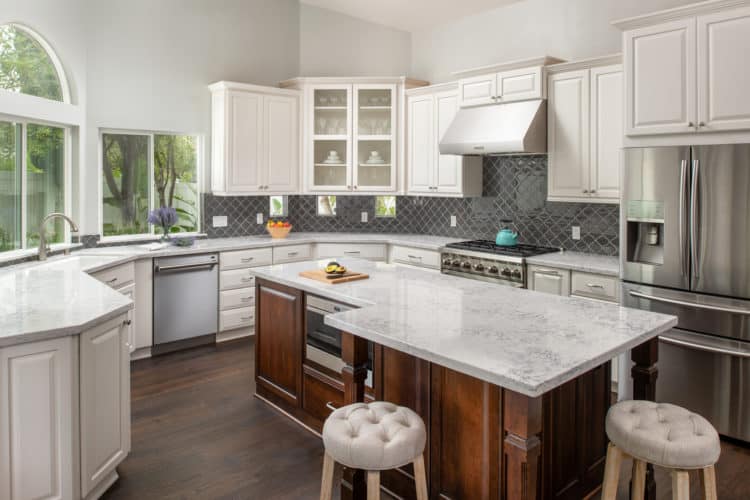
What kind of wood is used for cabinets?
Usually, kitchen cabinets are made from wood and wood-based materials. The most popular of these materials include hardwood, plywood, medium-density fiberboard, particleboard, and wood veneer. Let’s dive into the details about each of them:
1. Hardwood
A material that has been in use since cabinets were invented decades ago, and that is still the most popular one out there is – hardwood. This is a natural element, harvested directly from trees, which means that each panel slightly varies in pattern from the next one. Here are some of their pros and cons:
Advantages
Here are some traits that make hardwood such a beloved choice for cabinets:

- It has a unique appeal and beauty, in part because each panel is naturally unique in pattern.
- Hardwood is exceptionally durable, so cabinets made from it have a long lifespan.
- It’s easy to repair, sometimes even by yourself – though it’s always best to leave the job to a professional. Even in case of scratches, stains, and watermarks, just addressing the problematic spot or refinishing your kitchen cabinets usually fixes the issue.
- There’s a wide range of wooden materials to choose from, each with its own distinct look, color, and feel. Some of the popular ones include white oak, red oak, hard maple, hickory, cherry, birch, ash, and pine.
Disadvantages
Despite the appeal and all its positive sides, hardwood does have some cons you should consider:
- Wood is generally one of the more expensive materials, and because hardwood is highly sought after, the prices can be even higher. For example, wood or wood combination cabinets start at about $80 per linear foot, and that price can easily double if you’re considering custom-made cabinets.
- Hardwood is generally heavy, so if you want to use it for all parts of your cabinets, you need to make sure that the structure can hold their weight.
- Not all types of wood are equally durable. Red oak may be very strong, for example, but something like pine can be pretty soft.
- Changes in humidity and temperature cause wood to contract and expand, which may result in warping.
If this material is your preferred choice but you’re worried about the price tag, an easy way to skirt the high cost of hardwood is by employing a mix of materials. Consider using hardwood for the face frames, doors, and drawer fronts, and medium-density fiberboard or wood veneer parts to strengthen the cabinets and lighten up the cost. Knowing these shortcuts can make your kitchen remodeling journey much easier.
2. Plywood
Another popular cabinet material, plywood offers a host of benefits. It is created by laminating thin layers of wood on top of each other through a mix of glue, heat, and pressure, in alternating directions of grain to make it stronger. Here’s what you need to know about plywood:
Advantages
Here are some benefits of this versatile material:
- Unlike hardwood, plywood resists moisture, it’s also flexible, durable, and easy to install. It’s considered to be the best option by many, if not for entire cabinets, then for sides, backs, shelves, and drawer bottoms.
- Due to its unique construction, plywood has the highest strength-to-weight ratio of all of the best cabinet materials. It is very strong and quite resilient.
- Plywood is easy to repair and replace, and it also withstands drilling better than many other materials. It’s basically a homeowner’s ideal cabinet material.
- In terms of affordability, plywood is highly accessible. It’s much less expensive than hardwood and costs more only when compared to lower-end materials.
Disadvantages
Despite the numerous benefits, there are some drawbacks of plywood that should be considered as well:
- You need to make sure you are using the right thickness of material for each area of the cabinets. Thinner plywood is typically used on cabinet backs, while thicker plywood is used on the sides and drawer bottoms.
- Plywood cabinets may lack consistency. There may be some gaps or holes where the boards were combined, which could make it more difficult to install plywood cabinets.
3. Particleboard
Also known as chipboard or low-density fiberboard (LDF), particleboard is another popular material usually brought up in comparison to plywood. This is an engineered wood product, and it’s made by pressing recycled products such as wood chips and sawmill shavings together to form them into sheets.
Since these sheets alone aren’t particularly good-looking or resilient, particleboard is usually sealed in with wood veneer or laminate for a nicer, better finish. Here are some things to consider:
Advantages
Here’s a summary of the major benefits of particleboard:
- Particleboard is one of the most affordable cabinet material types available for purchase. This is because particleboard is made with scrap materials. If we’re comparing the price of a higher-grade cabinet set made from plywood with medium-grade ones made from particleboard, the cost savings are usually between 10 and 20%.
- If you make sure you’re using a high-quality option, particleboard can be quite sturdy and durable.
- Particleboard is one of the best choices for cabinet and drawer interiors. It’s lightweight, cost-effective, and easy to fit into all the necessary spaces.
Disadvantages
Let’s now take a look at some potential drawbacks:
- Unless you find a very high-quality variation of it, particleboard is not very durable for the most part. Due to its construction, particleboard is generally weak under tension and compression.
- Particleboard is not moisture-friendly and can degrade and discolor if it comes into contact with water.
- If cabinets or drawers are overfilled, cabinet shelves and drawer bottoms made from particleboard can fall victim to sagging.
4. Medium-density fiberboard
If you need a material that falls somewhere between particleboard and plywood when it comes to quality, then medium-density fiberboard (MDF) may be right for you. This is a composite material made from recycled fibers, resin, and wax, pressed together and sealed in a high-pressure system.
MDF became popular due to mainstream IKEA cabinets that feature it, and the smaller size of its wood fibers makes it more resilient than particleboard. Here are some of the notable pros and cons of using it as a cabinet material:
Advantages
Here’s what you need to know about this popular material:
- This material is strong and durable because of its special composition and small fibers.
- MDF resists warping and expansion resulting from changes in moisture or temperature.
- Since the surface of medium-density fiberboard has a smooth finish, it handles painting and staining well.
- MDF offers superior screw-holding power and, as far as cabinet materials go, it’s fairly easy to manipulate.
Disadvantages
In addition to the advantages listed above, there are some drawbacks you should know about before opting for this material:
- MDF is not as strong as other cabinet materials, like plywood or hardwood. It is susceptible to sagging and damage if cabinets and drawers are overloaded.
- Some people have concerns about MDF due to its high formaldehyde emissions, the highest among pressed woods according to the National Kitchen and Bath Association. If you’re worried about materials used in your home, you’ll want to do some extra research before moving forward with this option.
5. Wood veneer
Another option for kitchen cabinet materials is wood veneer, which is a very thin layer of solid hardwood peeled from a log. This type of material has many similar benefits to hardwood, but since it is used in much smaller amounts, it has some other qualities that should be observed.
Another option for kitchen cabinet materials is wood veneer, a very thin layer of solid hardwood peeled from a log. These layers are usually thinner than 2mm and are most commonly used in tandem with other materials. Usually, they come glued and pressed to particle board or fiberboard. This material has many benefits similar to those of hardwood but, since it is used in much smaller amounts, it also comes with some differences. Let’s take a look at them:
Advantages
- Due to its unique structure of materials that feature it, wood veneer allows homeowners to reap the aesthetics and durability of hardwood, but with some additional perks.
- Since it is lightweight yet stable, wood veneer is preferred over other top finishes.
- Wood veneer is also an affordable variation of true hardwood.
Disadvantages
While there aren’t many true disadvantages of wood veneer, keep this in mind:
- Wood veneer is a finish material, so it shouldn’t be used for cabinet interiors (e.g. the box or frame), only for cabinet doors. You will have to choose another material option, such as plywood, particleboard, or MDF to construct the interior of the cabinets.

What are kitchen cabinets made of if not wood?
If you’re not sold on the materials listed above, or if you’d like to exhaust your list of options, here are a few other cabinet materials for you to consider.
1. Laminate
A highly affordable and versatile option, laminate continues to be a popular choice for various kitchen surfaces, from cabinets to countertops and even floors. But similar to wood veneer, laminate isn’t used for cabinetry shelves or drawers – it’s only a good option for kitchen cabinet doors, drawer faces, and only some interior surfaces.
Laminate used for cabinets is made of three layers: a paper base layer, a printed and colored layer, and a protective transparent layer. All of them are saturated with resin and fused together to create a durable cabinet face alternative.
Cabinets made from this material can be quite durable, especially if you opt for a higher-quality option. The price may be higher than that of low-grade options, but they also come with a lower tendency to crack, chip, and scuff.
2. Thermofoil
Another non-wood option for kitchen cabinet materials is thermofoil. Similar to laminate, this material involves a layer being applied to a substrate, in this case – vinyl film.
This material is preferred by many as it mimics the appearance of wood even better than laminate, and comes at an affordable price. Thermofoil finishes are usually white or light in color, which can give your updated kitchen a fresh look. They are durable, less prone to damage, and overall easy to take care of.
Both thermofoil and laminate are affordable options, with an average price of $50 – 75 per linear foot. If you’re on a budget, you have the option to choose particleboard or another affordable option for interiors and use one of these non-wood materials to finish the surfaces.
Final notes
As promised, this was a summary of the best and the most popular materials used for cabinetry. Before you choose your kitchen cabinets, take time to learn as much as you can about these materials. Weigh all options carefully, and see how each fits your budget, design, and functional needs, carefully think about whether you want custom cabinetry or some additional features or improvements.

Which company specializes in quality kitchen remodeling in San Diego?
If you’re looking to transform your kitchen with perfect new or updated cabinets, count on Remodel Works to make it happen. Whether you want to refresh the feel of your space, open up the kitchen to the dining room, or renovate another part of your home, we can make your vision a reality.
Our dedicated professionals have the knowledge and experience to tailor any project to your specific needs and deliver results that exceed your expectations. From downtown San Diego to the farthest corners of the city and beyond, we serve the entire metro area and can help wherever you are. Contact us today to start your dream remodel!