
Designing your dream kitchen can seem like an intimidating process that requires a multitude of important decisions, but instead of viewing the interior design process as a hurdle, it is vital that it be considered a creative outlet to tailor a space to your needs. If you love colonial kitchen design, then viewing many different colonial kitchen ideas will help you begin to decide what you would like your space to look like and what finishes meet your needs. Some may be asking themselves, what is a colonial kitchen?
A colonial kitchen often draws its style from the seventeenth and eighteenth centuries, which is how it earned its moniker. This distinctive style often includes elements such as exposed brick walls, white cabinetry, muted paint tones, and natural wood flooring. This is considered a classic design style and its popularity has endured through the years. To help you design your dream kitchen or do a kitchen remodel, we have put together seven mid-century modern colonial kitchen ideas.
- Farmhouse Sink: A farmhouse sink can be a wonderful addition to a colonial kitchen that gives it an air of both simplicity and functionality. A farmhouse sink can tie together a modern colonial kitchen and make the space feel both clean and classic. It can not only hold all of your dishes when being used, but it also is a design element that enhances a modern colonial kitchen.
- Updated Hardware: If you are looking for a classic colonial style kitchen with a modern twist, one of the simplest ways to tailor your space is to pick an updated hardware style. For a modern colonial kitchen, it can be beautiful to pair white cabinetry with a sleek metal bar pull style hardware in gold, rose gold, silver, or copper. By incorporating a touch of metal into the space, it balances between the classic colonial design and the sleek accents of modern styling.
- Marble or Quartz Countertops: Countertops will be one of the largest design decisions you make in your kitchen. In a modern colonial kitchen, it is important to incorporate materials that are natural, functional, and beautiful. Marble and quartz are both great choices for a modern colonial kitchen, but each come with their own pros and cons. Marble countertops are often more expensive and require routine maintenance, but are high quality, classic, and beautiful. On the other hand, quartz countertops are often more affordable and durable, but may not have the same natural look as marble.
- Built-In Refrigerator: A built-in refrigerator can be a great way to incorporate modern colonial style into your kitchen. Built-in refrigerators are seamless within the kitchen space and allow visitors to naturally focus on more significant design elements within the space, such as countertops or cabinetry.
- Open Shelving: In a traditional colonial kitchen, open shelving was often utilized to store goods. In many modern kitchens, floating shelves have made a resurgence in their popularity and can often be a distinct design element to incorporate into a space. To create your dream modern colonial kitchen, incorporate some open, floating shelving within the space to highlight dishware, glass drinkware, and décor.
- Large Range Hood: A range hood is a design element that you can customize to fit your tastes. To fit with a modern colonial kitchen style, there are a number of different approaches to incorporate a range hood. You can clad the range hood in a similar material to that of the kitchen cabinets to have it blend within the space, or can incorporate a stainless-steel range hood to add a modern twist. In some modern colonial kitchens, having a rough sawn wood cladded range hood can add a natural and beautiful design element to the space.
- Glass Upper Cabinets: If you are looking for colonial kitchen design ideas, incorporating upper cabinetry that has fogged or clear inset glass offers a modern colonial kitchen a dose of elegance. Depending upon the type of glass selected, this can also offer individuals to display their dishware or glassware while still having it within the protection of a cabinet. Glass upper cabinetry works extremely well in conjunction with open shelving to achieve a modern colonial kitchen design aesthetic.
There are many different ways you can incorporate colonial design elements with a modern flare into your kitchen. Use the above ideas as inspiration for your brand new kitchen space!

Latest Posts
How to Make a Small Kitchen Feel Twice as Large
Affordable Bathroom Remodel Ideas That Look High-End
How to Plan a Kitchen and Bathroom Remodel at the Same Time
Get your in-home free estimate today!

When it comes to redoing floors in your home, you have a wide variety of options to choose from. If you’re looking at remodeling your kitchen, specifically, you certainly want to choose a floor that’s durable, but also pleasing to the eye. Add affordability to the mix and one of the best options you’ll find is vinyl flooring. Vinyl flooring has become an increasingly popular floor choose for homeowners, and it’s easy to see why.
But with any choice, there are pros and cons to be considered before moving forward with this type of flooring. Here are the top vinyl flooring pros and cons.
What is Vinyl Flooring?
Before we overview vinyl flooring pros and cons, it may be helpful to understand the origins of vinyl flooring. Originally invented in the 1930s, vinyl flooring first made an impact on the architectural world in the years following World War II, and by the 1950s had become a major competitor against other flooring options, specifically linoleum (which up until that point had been considered the best low-cost water-resistant flooring option for kitchens and bathrooms).
And the popularity of vinyl flooring has only been steadily trending upwards since then. According to DoItYourself.com, vinyl still accounts for around 15 percent of annual flooring expenditures in the country.
Types of Vinyl Flooring
Unbeknownst to many homeowners, there are many different kinds of vinyl flooring. Typically, when people reference vinyl flooring, they’re thinking about sheet flooring, which is arguably the most popular type. However, there are other forms of flooring made from vinyl, such as tiles and planks.
In sheet flooring, the vinyl flooring material is laid down, expectedly, in sheets. These sheets can range from 6 or 12 feet wide. Due to the larger pieces, sheet flooring is more water-resistant than other types of vinyl flooring. It also is easier to install.
Another type of vinyl flooring is tile flooring, which uses tiles of 9×9” or 12×12″. Many homeowners prefer vinyl tile, which replicates the look of a ceramic tile floor at a more affordable cost.
There is also vinyl plank flooring, which is designed to resemble hardwood and comes in strips. One of the advantages to plank flooring is the range of styles that are out there for homeowners to choose from, all mimicking different types of wood (such as oak, hickory, elm, bamboo, and so much more). Since vinyl plank so closely resembles hardwood (without the cost), you’re sure to find a version that fits your desired aesthetic.
Pros of Vinyl Flooring
The pros to vinyl flooring are numerous, from water resistance to affordable pricing. Here are some of the things we love about vinyl flooring.
Water-Resistance
One of the biggest draws of vinyl flooring is the durability – specifically its resistance to water. Most vinyl flooring is 100% moisture-resistant. This element alone makes it ideal for use in kitchens, as well as bathrooms and even basements.
Compared to other flooring options, vinyl is much better at sealing against water damage than laminate and hardwood. In fact, some vinyl options are waterproof.
As well as being water-resistant, vinyl flooring is also a highly stain-resistant option. Specifically, printed vinyl tiles and sheets have a clear wear layer that acts as a surface barrier, which helps protect against stains and spills. Some vinyl tiles do not have this level of surface protection and may be more susceptible to stains, so be sure to read the fine print before deciding on which vinyl to add to your home.
Affordability
When it comes to cost, vinyl is one of the most affordable flooring options out there, especially compared to options like stone, tile or hardwood. At the low range, vinyl can cost as little as fifty cents per square foot, and most never exceed moderate cost levels. Very high-end premium vinyl flooring can cost as much as ten dollars per square foot, though this is still less expensive than premium flooring choices, such as stone. The difference in price of resilient vinyl products is determined by the quality of the material and the design options found in the surface.
Durability
Vinyl is generally considered to be a highly durable material. If well-taken care of, your vinyl floors can last anywhere between 10 and 20 years.
Printed vinyl tiles and sheets have a clear wear layer that acts as a surface barrier, protecting the floor from stains and spills. These materials are very easy to clean and maintain. Solid and composite vinyl tiles do not have this surface protection and will be more susceptible to stains, requiring occasional stripping and polishing.
Depending on what type of vinyl flooring you choose, however, you can expect different levels of durability. For example, “Solid vinyl and composite vinyl tiles are homogenous, with colors permeating every layer—a feature that makes them more resistant to damage from scratches. Printed vinyl will be only as durable as the clear wear layer that protects the surface. Fiberglass-reinforced vinyl sheets are extremely durable, while also being pliable and resistant to damage”.
Another durability “pro” of vinyl is that many types of vinyl are composed of individual pieces that can easily be replaced if damaged. This more the case with plank or tile vinyl, since the pieces are smaller.
Comfort
Next to carpet, vinyl flooring may be one of the softer flooring options out there. It is generally softer beneath your feet than options like wood or ceramic tile. Because of the softer nature, vinyl floors have a little more flexibility and give, which makes it easier to stand on for long periods of time.
In addition, many models of vinyl flooring, specifically vinyl plank flooring, are backed with a padded felt product. “When installed, this feature translates to a softer floor with more give. The top will look like hardwood and have that strong feel, but standing on vinyl for long periods of time is easier than standing on real wood. Additionally, objects are less likely to break when dropped on vinyl, which is good news for glasses and mugs”.
Another comfort “pro” of vinyl is that it doesn’t get cold in the winter, so you won’t have to worry about arming your feet with slippers to avoid the chill that colder weather inevitably brings to hard surfaces!
Easy Maintenance
When it comes to general upkeep, vinyl floors are some of most low-maintenance flooring options out there. The product requires only light routine cleaning — grit and dirt should be swept free to maintain the surface of the floor, and mop or Swiffer can be used to remove stains. There are also approved vinyl floor cleaners for stain removal, but these only have to be used on occasion.
The bottom line: few flooring options out there are easier to maintain than vinyl.
Ease of Installation
Vinyl can be installed directly on almost any subfloor, which makes the installation process quick and relatively easy. And unlike other flooring types, vinyl flooring is easy for the layperson to install – you can often get away without having to hire an installation professional or contractor.
Vinyl flooring is also a great choice if you are dealing with an imperfect subfloor. Even if the subfloor is suboptimal, vinyl flooring can often be forgiving, helping to smooth out imperfections.
However, when you remove your old flooring, you should always inspect the subfloor to make sure it’s in good shape before adding vinyl on top. Some types of vinyl flooring, such as tiles or large sheets require an extra level surface because any flaws and imperfections will show through as bumps and indentations on your floor. Usually the best subfloor is a layer of well-sanded plywood. Vinyl flooring “can be laid on top of concrete, but again, uniformity and smoothness can be a problem. Also, a plywood layer will give you a better feel under foot”.
Assortment of Design Options
From a design standpoint, a huge benefit of vinyl flooring is that options are available in a huge assortment of colors and styles, with some designs even mimicking the look of stone tiles or wood planks. This difference is only really noticeable up-close, so you can get away with the look of a luxury product for the affordable price of vinyl.
Long-Term Value
Vinyl is a long-lasting flooring product and can last up to 20 years. Once it’s installed, you can rest easy knowing you will have solid floors for years to come. Vinyl flooring can also be glued down which is something that may be attractive to homeowners.
Another interesting aspect of vinyl flooring can increase your home’s value and luxury factor — you can install in-floor heating beneath a number of vinyl flooring options.
Cons of Vinyl Flooring
While vinyl flooring is low maintenance and highly durable, as with any product, there are a handful of “cons” to be aware of. Here are some potential cons of vinyl flooring.
Hard to Remove
This “con” really only applies if you choose to glue down your flooring (which is an option with vinyl). If you choose to glue down your vinyl flooring, the removal process is known to be very difficult. If you are installing vinyl as a temporary solution, it is recommended you avoid glue to make the removal as easy as possible.
Warp Capabilities
Because vinyl products are so soft, they have a tendency to warp to any particles left beneath them during installation. For example, a trapped bit of dirt could eventually become a bump in your vinyl floor. These bumps are not only unsightly, they are also more prone to rips and tears. For this reason, you must take extra care during installation to ensure absolutely no particles are left on the subfloor, which means extra cleaning in the preparation phase. Not doing this level of cleaning would be a major mistake in your kitchen or bathroom remodel that you certainly want to avoid.
Not Impossible to Damage
While vinyl flooring is incredibly durable, it is not impervious to damage. If certain objects, such as knives or other sharp object, are dropped with enough velocity, they can damage vinyl floors, leaving dents, punctures or scars.
Another damage hazard to look out for with vinyl floors is the process of moving furniture. Moving heavy furniture can result in scuffs and gouges that are difficult to remove. If you do rearrange furniture, be sure to cover the feet with felt, or lift the piece off the ground before moving it.
Not Authentic Wood Feel
If you’re a wood floor purist, then you likely will not be satisfied with the texture of vinyl. Vinyl flooring does not have the wood feel of laminate or especially hardwood. When walking on vinyl flooring with shoes, it does not have the rich wooden sound a natural wood floor would (BestLaminate.com).
In that same vein, you also will not get the same investment value with vinyl as you would with material like hardwood. So, if you’re renovating your floors in order to increase the value of your home, vinyl may not be your best option.
Not Environmentally Friendly
Environmental advocates may balk at vinyl flooring when hearing that it is not biodegradable and does not break down naturally into the environment in a short period of time. It is also difficult to recycle, which means that byproducts and old floors often end up in landfills. Vinyl floors also consume non-renewable natural resources such as petroleum and natural gas during the manufacturing process.
For environmentally conscious consumers, laminate flooring might be a better option since is it fully recyclable.
In conclusion, there is no shortage of options out there for kitchen flooring, but it’s imperative to choose the right material for you. Knowing the vinyl flooring for kitchens pros and cons will help you make the right choice for you and your family.
Latest Posts
How to Make a Small Kitchen Feel Twice as Large
Affordable Bathroom Remodel Ideas That Look High-End
How to Plan a Kitchen and Bathroom Remodel at the Same Time
Get your in-home free estimate today!

If you’re exploring floor options for your home, engineered wood floors should definitely be on your radar. Developed as an innovation of traditional wood floors (but with many of the same positive properties), engineered wood floors are gaining sweeping popularity in homes across the country. Here’s exactly what you need to know about engineered wood floors, including how they stack up to a few other popular flooring options, and how to keep them clean.
What is Engineered Wood Floors?
Engineered hardwood is a variation of true hardwood, but unlike conventional hardwood, which comes straight out of a tree and into your home, engineered hardwood is a more complex product that consists of several layers.
Unlike true hardwood, only the top and bottom layers of engineered hardwood consist of real wood or a manufactured a hardwood veneer that’s less than ⅛ of an inch thick. In some cases, the inner layers are made of plywood, high density fiberboard, or hardwood. The core layers make the hardwood more stable than regular hardwood, and the outer surface adds a uniqueness.
Due to this unique construction aspect, engineered wood floors tend to be more stable than other flooring options, as well as more resistant to moisture.
Origins of Engineered Wood Floors
Originally, engineered wood floors were developed for use on the first floor of a home built on a concrete slab or in a basement. However, according to popular home design resource, Houzz, engineered wood flooring technology has exploded over the last 20 years, and its products can be used just about anywhere.
Engineered Wood Flooring vs Hardwood
It used to be that solid hardwood flooring was the gold standard for flooring in homes, but over the last several years, engineered wood flooring has certainly risen as a competitor.
Today, engineered wood comprises a majority share of the wood floor market, and the two types of flooring are often mentioned in the same breath. While solid wood is still preferred for by purists who have long-time prospects in mind, engineered wood is a more practical choice that provides many of the same luxuries.
Here is a detailed breakdown of the primary differences between for engineered wood flooring vs laminate.
Material
As previously mentioned, engineered wood flooring is a layered product comprised of a thin slice of hardwood or veneer on top of a base of high-quality plywood. Solid hardwood, as you’d expect, is made up of hardwood, and is a completely homogeneous product from top to bottom.
Thickness
Solid hardwood is usually 3/4 inch thick, while engineered wood flooring is typically thinner, ranging from 3/8-1/2 inch thick. Because of the thicker nature of solid hardwood, it retains the traditional “solid” sound that has come to be associated with true hardwood floors.
Engineered floors, in contrast, can sound more hollow than solid under-foot, but that can be addressed by stapling down the planks instead of floating them. Premium engineered flooring is usually thick enough to look and sound just like “real hardwood”.
Wood Options
Natural hardwood offers significantly more choices of wood species than engineered wood. The most popular wood choices for natural wood are oak (red and white), maple, hickory, and pine.
Engineered wood flooring, in contrast, offers fewer choices than with solid hardwood. Oak, maple and hickory are also popular, plus softer species like birch, cherry and walnut, and exotic woods like African Mahogany, Acacia and Tigerwood.
Installation
Solid hardwood floors require traditional installation and are nailed or stapled down. Solid hardwood is never installed on a floating basis.
Engineered wood floors, on the other hand, are much easier than solid hardwood and provide a wide range of installation methods, such as stapling or nailing, click, or glue. The newest, thinnest engineered floors use an advanced system that locks them in place. These thin floor, or “floating floors,” can be overlayed on an older subfloor and are the easiest installation option.
Where to Install
There are a few inherent qualities of solid and engineered wood floors that specifically dictate where in the house they should (and should not) be installed. Solid wood flooring is best used in living areas, bedrooms, hallways, dining rooms. Solid wood is a great choice for the first and second floors, enhancing living spaces such as living rooms, dining rooms, kitchens and bedrooms.
It is recommended that solid wood not be used in kitchens or bathrooms, and if you are dead-set on doing so, waterproof mats are placed near sink and dishwasher. An important rule of thumb of solid wood floors is to never install them below grade.
For engineered hardwood, you should follow many of the same room recommendations as solid wood, but there is more slightly flexibility. Engineered wood is an excellent choice for areas where solid hardwood cannot be installed, like in basements, over concrete floors or over radiant heating systems. Engineered hardwood can be installed below-grade, in basements, with proper subfloor and as long as there are no significant moisture issues.
Durability
Solid hardwood is known for its endurance. Because it is solid through and through, it can be sanded and refinished multiple times during a lifetime. Moisture is definitely the enemy of solid hardwood, which is why this material is never recommended for bathrooms, basements, or other areas where moisture is prevalent or even expected. Solid hardwood can resist some moisture, especially site-finished wood flooring (as opposed to pre-finished), which has a sealed top layer to help expel some moisture. Do not make the easily avoidable mistake of installing a floor type that’s not compatible with the room you’re remodeling.
If your durability concerns are around moisture, humidity or temperature, engineered wood floors are the way to go, since their layered construction provides stability against environmental changes. Engineered wood is a better option for rooms exposed to lots of moisture — the plywood base of engineered hardwood is dimensionally stable, meaning that it warps and flexes less easily upon contact with moisture than solid wood. Fibers in plywood run in cross-wise layers, which creates a far more stable structure than solid wood’s parallel fibers.
Price
Solid is the gold standard in flooring, and it’s usually the most expensive flooring option out there. Solid hardwood can vary, depending on finish and warranty, but in general, you can expect to pay more for this material.
As a whole, engineered wood floors tend to be less expensive than solid hardwood. But in comparison to other flooring materials, engineered floors are still considerably more expensive than laminate, tile, and carpet. Engineered wood flooring prices range from $3 to $18 per square foot.
Investment Value
Solid hardwood is traditionally the best floor choice for investment value. It’s a classic choice for floor purists, and a traditional, beautiful flooring option that will extend the life and value of any home.
Engineered wood floors are a sneakier option for investment value. Because engineered wood floors are real wood, they can be advertised as such in real estate marketing materials, making them more attractive to buyers.
Engineered Wood Flooring vs Laminate
Another common comparison that’s often made of floor material contenders is engineered wood flooring vs laminate.
What’s the Difference?
Unlike engineered wood floors, which typically contain some aspect of real hardwood, laminate is a purely synthetic flooring product. The top layer has an imprinted textured image made to look like real wood.
The core layer of laminate flooring is manufactured from melamine resin and fiber board material. The flooring material is usually 1/3 inch thick, which makes it thinner than both solid hardwood and engineered hardwood. Because of the thinner nature, laminate can be laid over existing floors with relative ease.
In essence, while engineered hardwood flooring is typically manufactured from real wood and preserves the unique textured grain and appearance of natural wood, laminate flooring is only an imitation. Some high quality laminate floors will look truer to real wood than other, cheaper options.
Aesthetic
Regarding appearance, the difference between hardwood and laminate floors is pretty easy to spot.
One of the defining characteristics of engineered hardwood is its resemblance to true wood floors, specifically, a telltale texture variation of the wood grain, which is why no two planks of engineered wood flooring (or, of course, hardwood flooring) appear exactly alike.
In laminate flooring, though, pre-designed patterns that imitate the look of wood texture, are imprinted onto the floor surface. For this reason, identical patterns are repeated on average every 5 boards. This repetition of texture is an easy way to spot manufactured flooring like laminate, against the more realistic looking solid or engineered wood.
Moisture-Tolerance
An advantage of laminate floors against engineered wood floors is that they have high resistance to moisture. For this reason, they are often used for kitchens, bathrooms, and basements. There are waterproof variations of laminate flooring that are made completely of plastic.
Maintenance
Regular sweeping, dry mopping, or wiping with a damp cloth is all that’s necessary for cleaning and maintaining laminate flooring. Solid and engineered hardwood floors require a little more care – they should be cleaned using special hardwood flooring cleaners (preferably manufacturer recommended ones) that preserve and restore the finish.
Ease of Repair
Laminate flooring varies in its ease of repair. In floating laminate flooring, damaged planks can easily be removed and replaced with new planks. There is, of course, the possibility that the new plank will not match the rest of the floor, in terms of wear and tear, but generally, this installation option is preferable for the ease of floor replacement.
If laminate flooring was installed using the glue-down method, then repair and replacement is much more difficult and intensive. Laminate flooring cannot be sanded or refinished at all.
In general, engineered hardwood flooring is significantly easier to repair than laminate. If the surface damage is significant, then the entire floor can be sanded and refinished. If damage is localized, then it can be repaired by removing and replacing individual planks. Spot repairs can also be managed by manually sanding, staining and refinishing the problem area (depending on the type of finish). Spot repairs are especially easy with wire brushed and oiled hardwood floors and can be done DIY-style within a couple of hours.
Cost
Undoubtedly, the biggest advantage of laminate flooring is the price. The material itself is cheaper, and with the ease of installation, you can avoid installation costs altogether. Also, since laminate is pressed wood, it’s even more durable and resistant to scratches and dents, which also reduces the cost of maintenance and repair down the line.
How to Clean Engineered Wood Flooring
Before making the decision to add engineered wood flooring to any level of your house, it’s important to be clear about the biggest ongoing factor: maintenance.
Since engineered hardwood is made from wood, it requires almost the same cleaning methods as any other type of wood flooring. The great news about engineered wood flooring specifically is that the material typically smooth enough to not trap dust and allergens. It’s also easy to clean with a damp mop and special wood cleaner.
Step by Step Guide to Cleaning Engineered Wood Floors
Check out the below step-by-step instructions for taking care of your engineered floors:
- Keep your engineered flooring swept, clean, and dry on a daily basis using a vacuum cleaner with a soft flooring attachment, or a broom.
- Use a dry microfiber dust mop to pick up dirt and debris from the floor.
- Wipe up spills as soon as they occur. Excessive water or liquid can cause irreversible damage to engineered hardwood flooring.
- Place floor mats and rugs at all entrances to limit the amount of surface debris on your floors.
- This will help keep the upper wear layer and finish of your floor safe and intact for a longer period of time.
- Do not use wax-based cleaners, harsh detergents, or steel wool to clean engineered hardwood flooring.
- Consider periodic waxing and refinishing to keep your floors in top shape.
- Use furniture pads to prevent unsightly scratches.
Ultimately, your wood flooring choice is going to be determined by where you are planning to install the product and what you’re looking for regarding design aesthetic. Engineered wood flooring is a great choice for lower levels of the home, or areas where moisture is high.
The bottom line is this: engineered wood floors offer a beautiful finish and will increase the value of your home.
Latest Posts
How to Make a Small Kitchen Feel Twice as Large
Affordable Bathroom Remodel Ideas That Look High-End
How to Plan a Kitchen and Bathroom Remodel at the Same Time
Get your in-home free estimate today!

Cork floors have been a popular choice for kitchen floor remodels and renovations for years and years. And with the flexibility, sustainability and ease of installation that this option provides, it’s easy to see why! Here are some of the top cork flooring for kitchen pros and cons for you to consider before choosing this type of flooring for your home.
What is Cork Flooring?
Cork flooring is, as you may have guessed, made from cork. Cork is a natural and renewable material that is harvested from the bark of cork oak trees, which are native to Spain, Portugal and Tunisia. It has been used sustainably in construction for centuries. For flooring products, cork is harvested, ground up, compressed, and formed into sheets bonded with resins.
Pros of Cork Flooring
For comfort-conscious homeowners, cork is a great flooring choice. Its inherent softness creates a more comfortable environment, and makes standing for long periods much easier on backs, legs, and feet, which is key for a busy room of your home like the kitchen.

Cork flooring has gained popularity in the United States as a flooring material because of its durability, eco-friendliness and high comfort factor. Here are some of the top advantages to choosing cork flooring for kitchens.
Durability
Cork flooring has one of the longest lifespans of any kitchen flooring options, with some of the best materials able to last 40 years of more with proper care and maintenance. It’s an incredibly durable material — it resists cracking and abrasions and is impermeable to gas and liquid.
This quality is a reason why cork flooring is a great choice for large family homes, or homes that experience a lot of foot traffic. Cork flooring bounces back easily, so indentations caused by furniture or human activity won’t be permanent.
Maintenance
Although it’s not quite as low maintenance as other flooring options, like luxury vinyl flooring, for example, cork flooring is relatively easy to take care of.
Especially when installed correctly with multiple layers of a quality water barrier sealer applied to the surface, cork flooring will require sweeping or vacuuming to remove dirt or dust. One thing to note though – spills need to be wiped up quickly to avoid staining, so be sure not to overlook messes that may occur as you cook and prepare meals.
Cleanliness
Cork flooring is a dream floor for the hygiene-obsessed. Cork is naturally resistant to mold, mildew and termites. Unlike carpet, cork tends to repel dust, hair, and other small particles from its surface, which makes it easier to get completely clean. Because of this, and the fact that cork does not off-gas or shed microfibers, cork floors tend to promote higher indoor air quality.
In addition, cork actually has antimicrobial properties – Cork contains a waxy substance called “suberin,” which naturally repels small vermin and insects. This makes cork floors resistant to insects and can help keep a clean environment.
Safety
Another family-friendly factor – core flooring is generally a very safety-friendly choice. Cork is fire-resistant, which makes it especially great for kitchens. It will melt or ignite only at very high temperatures. And furthermore, even if it does ignite, cork generates less smoke and doesn’t release any toxic gases or chemicals when burned accidentally.
Comfort
One of the most recognizable and distinguishing characteristics, as far as cork flooring in kitchen pros and cons, is the comfort factor.
A cork floor provides a comfortable cushion underfoot because it “gives” when compressed. One of the best things about this material is how noticeably soft it feels beneath your feet, especially compared to harder floor materials like hardwood or tile. Cork flooring also eases stress on your back and legs, making it a good fit for any place in your home where you’ll be standing for long periods of time, like kitchens or laundry rooms.
And if you run cold, you’ll be pleased with the touch of cork flooring. If you usually wear socks or slippers around the house to avoid cold floors under your feet, you’ll appreciate cork’s ability to stay at room temperature and therefore feel warm to the touch.
Natural Insulation
Cork is also a natural thermal and acoustic insulator, which means rooms with cork flooring are naturally warm and quiet. This is because the inside of a piece of cork is made up of millions of tiny air-filled chambers, which act as barriers against the transmission of noise, effectively insulating any room. For this reason, cork is a great choice for kitchen flooring, but also for second floor rooms in multi-story houses, since cork will reduce noise from being transmitted through the floor to the ceiling below.
Cork flooring can also help you save money on heating and cooling bills. That same property that insulates the floor against noise will reduce transmission of heat into a room in the summer or out of a room in the winter.
Flexible Design
The look of cork flooring is certainly a draw for those looking to create a truly unique space. Unique look aside, cork flooring is widely available in a variety of styles, colors, and sizes, so you can can completely customize your kitchen’s look.
Cork comes in both planks and tiles for installation – planks create a seamless-looking floor, and tiles provide a more nontraditional effect. Similar to ceramic tiles or paint, cork has the fun benefit of being able to create just about any floor motif! From stripes to chevrons to intricate patterns or even mimicking hardwood – cork provides a world of possibilities.
Materials-wise, cork flooring is sold with two types of finishes: polyurethane/acrylic-based and water-based. Polyurethane/acrylic finishes are more durable, therefore, will protect the flooring better, while water-based finishes are more environmentally friendly and also less likely to fade with exposure to light. Water-based finishes are, however, slightly more expensive than their polyurethane/acrylic counterparts.
Flexibility of Installation
As far as installation goes, cork is fairly easy to set up in your home. It also offers the added benefit of being able to be installed on uneven surfaces, or even over existing flooring. So, if you’re dealing with a particularly uneven or old subfloor, cork may be an excellent choice. In addition to being used as surface flooring, cork can be used as an underlayment for hardwood, laminate and ceramic tiles to reduce room noise.
Environmentally-Friendly
As a building material, cork has little negative impact on the environment. In fact, one of the reasons cork has seen a resurgence in recent years is because of its quality as a “green” renewable resource that can be used without the guilt associated with using luxury hardwoods that must be harvested by rainforests.
For starters, the harvesting practices for cork are sustainable: a tree should be at least 25 years old before its bark can be harvested. Cork can be harvested every eight to 14 years without killing the tree. So, homeowners can feel good about their environmental impact (or lack thereof), by choosing cork flooring.
Another environmental “pro” of cork is that the actual manufacturing process for cork flooring generates almost no waste. The residuals from the stopper production are collected, ground finely, and mixed with binders that hold the cork together. These binders typically include natural ingredients and proteins. Once complete, the cork is dyed and shaped to achieve the desired visual effect.
Cons of Cork Flooring
While cork is comfortable, insulative and generally a very family-friendly option, there are some “cons” to be aware of before deciding what kind of floor to install. Here are some of the disadvantages to choosing cork flooring for kitchens.
Easily Damaged
While is can be a “pro” for comfort, the softness of cork, unfortunately, makes cork flooring more susceptible to damage. Especially in a room like the kitchen, which sees lots of movement, if a sharp or heavy object is dropped, it can easily puncture the floor. Even small dirt particles can act like sandpaper grits and leave marks on the surface of the floor.
Furniture is also an issue for cork flooring. The legs of tables and chairs can scrape or damage cork flooring, and if you have heavy appliances in your kitchen, then you may also have a problem with them sinking permanently down into the cork. Fortunately, using furniture coasters, or placing particularly heavy furniture pieces on top of support pieces, like plywood, can help to offset this problem.
In addition, if you have pets, you can expect to deal with cat and dog nail scratches on cork flooring. Keeping your pet’s nails trimmed can help, but pet scratches are an inevitable side effect of cork flooring.
Maintenance Nuances
While cork is relatively easy to maintain, there are certain aspects that may prove to be too “high-maintenance” for the average homeowner. In general, cork flooring can be stained by oil, dirt, and spills if not properly protected, so it is not the best floor to have in a kitchen.
While cork has waterproof properties, they are not permanent – cork flooring must be sealed every 5 years to keep its waterproof characteristics. And furthermore, every five to eight years, you should have the entire floor recoated in polyurethane.
Variable Cost
Generally, cork flooring is not an expensive material and sometimes can be as cheap as $1.10 per square foot. But it can also be as high as $7.25, depending on the characteristics and color of the material. Furthermore, the warranty offered by the manufacturer and the insulation and soundproofing characteristics of the flooring material will also affect the cost of cork flooring pieces.
And if you choose to get your cork floor professionally installed, you can expect an additional cost that you may be able to easily avoid with other, self-installation-friendly flooring options. Not remembering to include installation hours into your budget is one of the top kitchen and bathroom remodeling mistakes, and can easily be avoided with the right pre-planning. In some cases, installation for kitchen flooring can easily cost more than 50 percent of the project’s cost! So don’t forget to factor this in if you are getting your cork floor professionally installed.
In addition, since many cork materials originate outside of North America, this can increase production and shipping costs.
Fading
If direct sunlight is allowed to beam down on cork materials every day, then discoloration may occur and a patch of the floor can end up taking on a different color than surrounding areas. This tends to be an issue specifically with kitchens, which many homeowners prefer to flood with natural light and big windows. While this fading can be prevented by blocking sunlight with curtains or blinds, it will definitely require constant attention.
In conclusion, cork is a fun, comfortable and safe option for any home. Although it has varying qualities that affect its use in the kitchen, by knowing the cork flooring kitchen pros and cons, you’ll be able to make the most informed decision possible and create a beautiful, functional kitchen for your home.
Latest Posts
How to Make a Small Kitchen Feel Twice as Large
Affordable Bathroom Remodel Ideas That Look High-End
How to Plan a Kitchen and Bathroom Remodel at the Same Time
Get your in-home free estimate today!
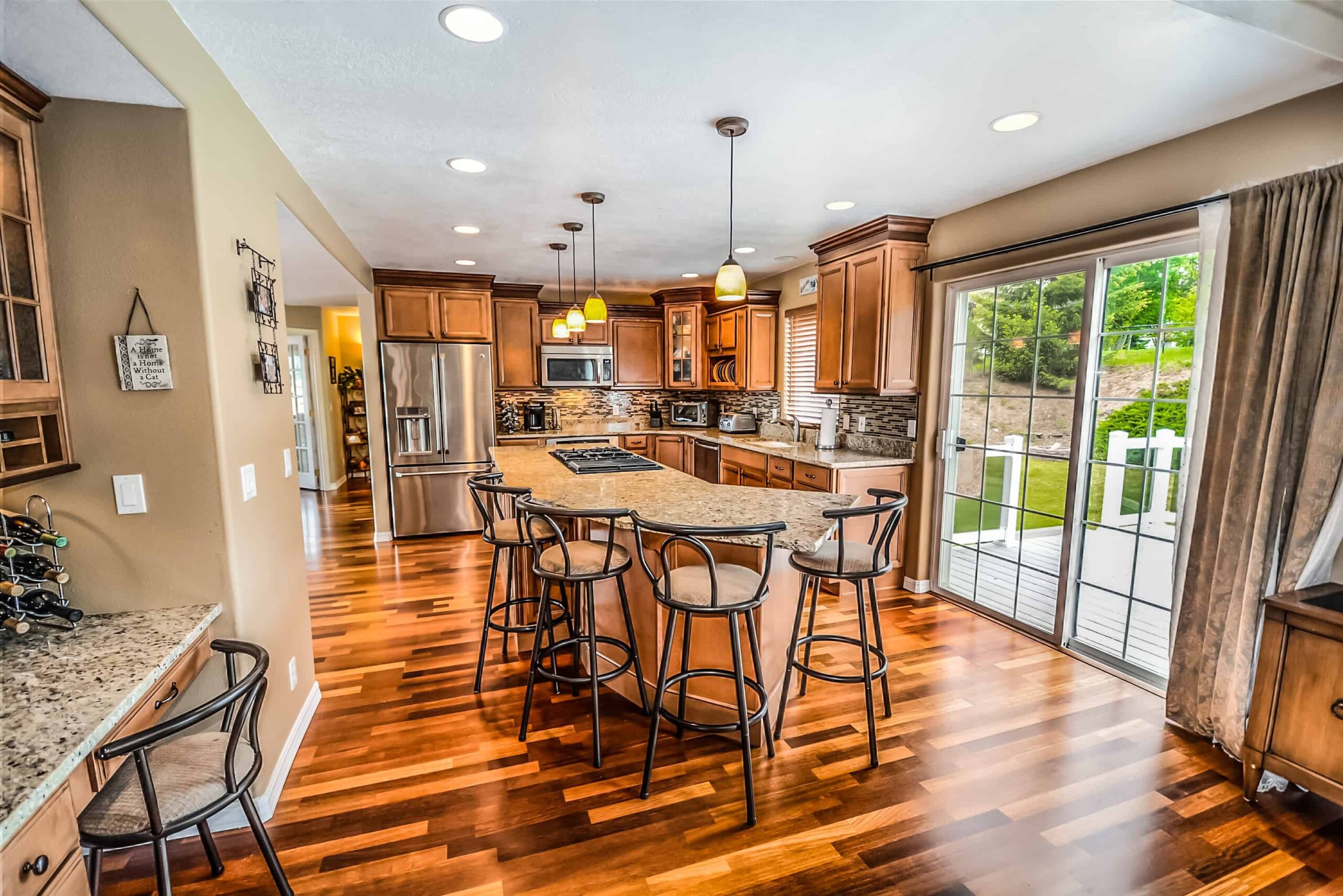
If you’ve chosen to redo your kitchen floors, the great news is, you have a ton of options to choose from. But that variety of choices can definitely prove overwhelming! Here are our recommendations for the best flooring options for kitchen remodels, with an overview of the pros and cons for each.
What Should I Look For in Kitchen Floors
Before we dive into the numerous options of floors for kitchens, it may be helpful to understand some of the key consideration factors for your kitchen remodel, as well as mistakes to avoid.
Water-Resistant or Waterproof
Considering that a lot of cooking, cleaning and general messiness happens in the kitchen, water-resistance or, even better, waterproofing is a key consideration in weighing your floor options. “Water-resistant” on the label is essential, otherwise you’ll spend just as much time wiping liquids off your kitchen floor as you will actually using it. If you want to go a step further and you’re going to invest in a room with waterproof floors, the kitchen (or bathroom) is a good place to do it.
Durable
Kitchens are full of appliances, pots, pans, cookware, and lots of other heavy items. Investing in a floor that’s durable and will withstand moderate drops and cookware tumbles is necessary. For this reason, it’s better to opt for an extremely durable floor, that is more resistant to scrapes, scuffs, and gouges from dropped kitchen materials.
Comfort
For many of the same reasons as listed above, choosing a floor that’s slightly softer may save the lives of many plates and coffee mugs that may suffer an unfortunate slip. If you opt for an extremely hard floor, you’re likely to see more kitchen casualties.
Safety
By nature, your kitchen will see a lot of movement. Combine moving bodies with a pretense for spills and liquid on the floor and counters, and kitchens present a potentially unsafe situation. Doing your research on your new kitchen floor safety factor (such as slickness) will help create a safer space.
Style
Take it from HGTV and choose floors that complement your kitchen, whether it’s rustic and country-style or cutting-edge contemporary. “Consider the kitchen’s size, as well as existing colors, textures, and patterns. Should the large surface underfoot serve as a neutral backdrop or a vivid focal point?”
Popular Types of Kitchen Floors
Below we’ll review some of the most popular types of kitchen floors, as well as reasons to choose or not choose each one.
Engineered Wood Floors
A kitchen floor trend that has grown in popularity in recent years in engineered hardwood. Here’s everything you need to know about this flooring option for kitchens.
What is Engineered Hardwood?
Engineered hardwood is a variation of true hardwood, but only the top and bottom layers of the material consist of real wood. The inner layers are made of plywood, high-density fiberboard or, sometimes, actual hardwood. The top layer is usually hardwood veneer, but can also be composed of true hardwood.
Engineered Hardwood Benefits
Engineered hardwood is especially good at handling moisture and dampness, which is why it’s very common for below-grade installations, like basements. It is very stable and versatile, especially compared to softer options, like laminate flooring.
In addition, engineered hardwood has the advantage of being easy to maintain, as well as a more affordable flooring choice. Since engineered hardwood flooring requires only a thin slice of the desired wood as the top layer, the cost is less than solid hardwood, but looks virtually the same.
Engineered Hardwood Drawbacks
While engineered hardwood is cheaper than solid hardwood, it’s not cheaper than laminate or carpet, so it’s not the most affordable kitchen flooring option out there. In addition, you have to be extra careful with your brand selection – some veneers are poorly made and can prematurely warp or fade. Furthermore, some manufacturers try to cut corners by using fiberboard, which could compromise the stability of your floor.
Tile Floors
Perhaps one of the most classic trends for kitchen floors, and one of the most long-standing options is tile floors. Here’s why this option typically ranks among the best flooring for kitchen remodels.
What Are Tile Floors?
Tile flooring is a natural choice for kitchens because it’s durable, water-resistant, and easily keeps stains at bay. Plus, there are so many options within the tile flooring world that it’s incredibly easy to find the exact look you desire for your kitchen.
Types of Tile Flooring
Kitchen floor tile comes in three types: porcelain, ceramic and stone. Prices of each type run the gamut, from $2 to $100 per square foot.
Porcelain tile carries the added benefit of being “certified” as porcelain. It also has an incredibly low water absorption rate. It is one of the most durable tile options because “porcelain clays are denser and thus less porous than ceramic clays,” which makes porcelain tile harder and more impervious to moisture than ceramic tile. Ceramic tile floors are slightly softer than porcelain, and also tends to be a slightly cheaper option.
Natural stone tile is produced from natural materials that are quarried, slabbed, finished, and cut to size. Common types of stone used as flooring tile include granite, marble, limestone (including travertine), and slate.
Tile Floor Benefits
Tile floors are a great choice for kitchens because they can withstand heavy foot traffic, water, spills and they don’t absorb odors or bacteria, which makes tile floors one of the most hygienic kitchen floor options. And in addition to there being thousands of styles of tile flooring to choose from, you can also add another layer of customization to your home, since tile can be arranged in a multitude of patterns.
Tile Floor Drawbacks
The hardness that makes tile so desirable as a kitchen floor surface can also be a drawback. People who spend a lot of time in the kitchen will want to put down floor mats or rugs since standing on tile for long periods of time can be tough on the body. In addition, tile is sure to be cold on brisk winter mornings, and the hard surface will not be forgiving on any dropped items.
Vinyl Flooring
Accounting for around 15% of annual flooring expenditures in the country, vinyl flooring has become an increasingly popular floor choose for homeowners, and it’s easy to see why.
What Is Vinyl Flooring?
Vinyl flooring was originally invented in the 1930s following World War II, and by the 1950s had become a major competitor against other flooring options, specifically linoleum.
Types of Vinyl Flooring
There are three major types of vinyl flooring: sheet flooring, tile flooring, and plank flooring. With sheet vinyl flooring, the vinyl flooring material is laid down in sheets that can range from 6 or 12 feet wide. Due to the larger pieces, sheet flooring is more water-resistant than other types of vinyl flooring. It also is easier to install.
Another type of vinyl flooring is tile flooring, which uses tiles of 9×9” or 12×12″. Many homeowners prefer vinyl tile, which replicates the look of a ceramic tile floor at a more affordable cost.
The last type of vinyl flooring is vinyl plank flooring, which has become an increasingly popular option. Vinyl plank flooring is designed to resemble hardwood, and comes in strips. One of the advantages of plank flooring is the range of styles that are out there for homeowners to choose from, all mimicking different types of wood, but without the large price tag.
Benefits of Vinyl Flooring
One of the biggest draws of vinyl flooring is the durability – specifically its resistance to water. Most vinyl flooring is 100% moisture-resistant. In addition, vinyl flooring is wildly affordable. When it comes to cost, vinyl is one of the most affordable flooring options out there, especially compared to options like stone, tile or hardwood. At the low range, vinyl can cost as little as fifty cents per square foot, and most never exceed moderate cost levels.
Vinyl is also very durable as well as relatively easy to maintain. If well-taken care of, your vinyl floors can last anywhere between 10 and 20 years.
Drawbacks of Vinyl Flooring
Because vinyl products are so soft, they have tend to warp to any particles left beneath them during installation. For example, a trapped bit of dirt could eventually become a bump in your vinyl floor. This means that homeowners need to be extra cautious in the installation process, and do a significant amount of prep work.
And although vinyl is durable, it is not impossible to damage – dropping sharp knives or other heavy objects in your kitchen is likely to leave a mark.
Luxury Vinyl Flooring
Luxury vinyl flooring is one of the fastest-growing flooring types in the world right now — it is a modern, beautiful, durable and affordable flooring solution that can stand against some of the most expensive flooring options out there.
What Is Luxury Vinyl Flooring?
Luxury vinyl flooring bears some similarities to regular vinyl flooring, but “luxury” vinyl flooring (LVF) differs from standard vinyl flooring in its ability to closely mimic the look of natural materials, such as wood or stone.
Typically luxury vinyl flooring is thicker than other types of vinyl flooring, and looks much more realistic in its resemblance to classic hardwood. It accomplishes this resemblance with a surface layer that has a very realistic photo-created image of real wood, combined with textures that resemble that of the real materials.
Types of Luxury Vinyl Flooring
There are a few specific types of luxury vinyl flooring. One of the most popular options is Luxury Vinyl Tile (LVT), which has a wide range of design options, and can replicate the look of natural stone or wood flooring, without the extensive installation or maintenance costs associated with either.
Another popular type of luxury vinyl is Luxury Vinyl Plank (LVP). As the name implies, Luxury Vinyl Planks look like planks of hardwood floors, especially since they are individual pieces of vinyl, not sheet vinyl.
There is a subset of Luxury Vinyl Plank called Engineered Vinyl Plank (or EVP). EVP is incredibly durable, and has a realistic hardwood look and feel. Perhaps the biggest differentiator of EVP from other vinyl or floor types is that it is waterproof.
Benefits of Luxury Vinyl Flooring
Arguably the biggest “pro” of luxury vinyl flooring is that with it, you can achieve a near-perfect hardwood look for a fraction of the cost – the average hardwood floor costs between $8-$25/square foot, while luxury vinyl costs around $2-$5/square foot.
While vinyl flooring offers the clear benefit of being water-resistant, only luxury vinyl flooring can offer the added benefit of being completely waterproof. For this reason, engineered luxury vinyl is a great selection moisture-prone areas in the home, such as kitchens, bathrooms, laundry rooms and mudrooms.
Luxury vinyl flooring, specifically engineered vinyl planks, are much more comfortable on your feet than other cheaper options. Plus it carries the added benefit of both temperature and sound insulation, so you won’t have to worry about cold winter floors or extra loud footsteps.
Cons of Vinyl Flooring
While vinyl flooring is low maintenance and highly durable, as with any product, there are a handful of “cons” to be aware of. For example, like regular vinyl flooring, luxury vinyl flooring is durable but not impossible to damage. Perhaps the biggest loophole to be aware of is that, despite the name of the product, luxury vinyl flooring won’t improve the value of your home in the same way that hardwood or tile does.
Cork Flooring
For those prioritizing comfort in their kitchen floor selection, cork is a great option.
What Is Cork Flooring?
Cork is “harvested from the bark of the cork oak tree—a beech relative that grows primarily in the Mediterranean. The material is ground, mixed with resins, and cut into floors. Cork flooring straddles the line between resilient and engineered floor categories”.
Benefits of Cork Flooring
Cork is the most comfortable kitchen floor choice. Its inherent softness and springiness make standing for long periods much easier on backs, legs, and feet. And, if you drop a glass or coffee mug, they are less likely to shatter on cork than on other, harder surfaces.
In addition, cork works as a natural insulator – not only is it warmer under foot than other flooring choices, but it also muffles sound and helps to reduce energy bills. This quality makes cork a great floor selection for large family homes.
Drawbacks of Cork Flooring
While cork flooring comes in a variety of styles and colors, there is slightly more limited array than with other popular flooring choices, like luxury vinyl. Also, cork flooring is susceptible to fading, especially when placed in the path of direct sunlight. For this reason, many homeowners elect to have their cork floors refinished every few years. This quality, in combination with the fact that cork floors must be kept free of dirt and sand (since they can scratch the surface over time), make core flooring more high maintenance than some other flooring options.
Cork flooring is also not sustainably waterproof, which makes it a difficult choice for the kitchen – it must be sealed every 5 years to keep it water resistant.
Latest Posts
How to Make a Small Kitchen Feel Twice as Large
Affordable Bathroom Remodel Ideas That Look High-End
How to Plan a Kitchen and Bathroom Remodel at the Same Time
Get your in-home free estimate today!

To add an island or not… Take this quiz to find out if you should add an island to your kitchen!
Latest Posts
How to Make a Small Kitchen Feel Twice as Large
Affordable Bathroom Remodel Ideas That Look High-End
How to Plan a Kitchen and Bathroom Remodel at the Same Time
Get your in-home free estimate today!

Designing a bathroom layout or completing a bath remodel that is both functional and stylish can be difficult in any scenario. This is especially so when that space also needs to be American with Disabilities Act (ADA) compliant. The ADA was put in place in an effort to ensure that disabled people have equal access and convenience in public spaces. Maintaining compliance with the ADA is mandatory for businesses and public establishments, but is not required in private home spaces.
However, it can still be beneficial and prudent to incorporate within private residences as well. The focal point of ADA guidelines for bathroom layouts is measurement and spacing of several elements within the bathroom, such as the shower. It is vital that an accessible bathroom layout allow any person to be able to move freely around the space and access the fixtures, even when confined to a wheelchair. It is also important that fixture and door locations be within ADA guidelines to allow ease of maneuvering.
In addition to these elements, the ADA also mandates that grab bars be included in the bathroom by both the toilet and in bathtubs or showers. Whether you are looking to create an ADA bathroom design to make your private residence more inclusive or to have an ADA compliant bathroom design within your business, there are a number of different ADA bathroom layout items to consider that will allow your space to be both accessible and stylish. To help you create an aesthetically pleasing ADA bathroom, we have put together ten ADA bathroom layout ideas that maintain style while still being compliant.
- Curbless Walk-In Shower: Incorporating a curbless walk-in shower will make a space feel modern, sophisticated, and appealing, while also making it possible for people confined to a wheelchair to easily enter the shower without assistance.
- Occupancy Sensors for Lights and Fans: When generating an ADA bathroom layout, it is important to consider how individuals will access all switches and fixtures within the space. To minimize interaction with switches and automate processes, using occupancy sensors for lights and fans will allow you to have a space that feels technologically savvy, stylish, and ADA compliant.
- Modern, Lowered Height Toilet: In order to make all fixtures and elements within the bathroom accessible, some heights may have to be adjusted, including that of the toilet. To incorporate a toilet that still adds style to the space, target a modern, lowered height toilet.
- Wall-Mounted Sink: The inclusion of a wall-mounted sink within an ADA bathroom layout allows for both functionality and style to coexist. A wall-mounted sink will allow disabled persons confined to a wheelchair to be able to access the sink with ease, while also incorporating a design piece within the space.
- Unique Grab Bars: To create an ADA compliant bathroom layout, it is necessary to have strategically placed grab bars in the space in accordance with ADA guidelines. However, these grab bars do not need to be an eyesore within the space but rather can be a stylistic addition that enhances the space. To combine safety with elegance, select unique grab bars that have high-end finishes, such as stainless steel or brass, with a creative design. One unique grab bar that can add a stylish flair to a bathroom is a “wave” style grab bar, which possesses a flowing shape that offers the support needed while enhancing the style of the bathroom.
- Automated Sinks/Toilets: The most efficient ADA bathroom layouts incorporate the latest technological advancements to enhance the ease of use and prevent any potential compliance issues. One technological advancement to incorporate within an ADA bathroom layout is automated sinks and toilets. Automated sinks and toilets will simplify use and prevent the need to move handles, while also adding to the style and efficiency of the space.
- Large, Open Shower with Seating: Having a shower seat is not only ADA compliant but can be a design feature within the space that makes it seem inviting and relaxing. Pick a modern, sleek tile in the shower layout to further enhance your bathroom space.
- Unique Towel Bars: When creating an ADA bathroom layout, it is important to consider how an individual will dry their hands. Towel bars may need to be mounted at a lower level to be accessible, but can be a stylistic addition by choosing an ornate, unique towel bar and decorative towels to accompany it.
- Wall Mounted Vanity with Side Cabinet Storage: In order to make sure a bathroom vanity is still accessible without sacrificing storage space, including a wall-mounted vanity with side cabinet storage accomplishes both ADA compliance with the addition of useful storage space.
- Open Floor Space with Unique Flooring: As mentioned above, one of the main tenants of ADA regulations for bathroom layouts is the measurements and spacing of various bathroom element. This often requires open floor space to accommodate disabled people confined to a wheelchair to ensure all elements are accessible. While open floor space can seem like it would make the space awkward, it can actually become a design accent when incorporating unique flooring, such as a patterned tile.
As you can see, it is easy to incorporate style with ADA compliance. These 10 layout ideas can help you enhance your current design while also creating an easy to use bathroom for everyone.
Latest Posts
How to Make a Small Kitchen Feel Twice as Large
Affordable Bathroom Remodel Ideas That Look High-End
How to Plan a Kitchen and Bathroom Remodel at the Same Time
Get your in-home free estimate today!

If you’re deciding between the numerous types of kitchen and bathroom countertop materials, you’re aware that you have several options. Soapstone is one of the most popular options for countertops and for good reason. Here’s why you should consider soapstone countertops and an overview of the soapstone pros and cons.
Why Choose Soapstone?
Soapstone is an incredibly popular countertop and household material, and it has been for centuries. With an elegant milky appearance, soapstone is a naturally occurring stone material that instantly creates a rustic look where installed. Many homeowners love the natural charm of soapstone, which has driven the material up in popularity over the last several years.
When it comes to soapstone, you have a lot of options. There are two different materials popularly referred to as “soapstone” including talc and steatite. Slabs with lots of talc have been used by sculptors through the ages due to its softness. Steatite with less talc is hard enough for use in countertops and fireplace surrounds.
All are types of metamorphic rock and largely composed of the mineral talc, and are used for modern household countertops. Soapstone is softer than most other naturally occurring minerals, but it is dense and non-porous, even more so than slate, marble, and surprisingly even granite. Soapstone, like granite, is heat, stain and liquid resistant, making soapstone countertop care relatively easy.
Pros of Soapstone
The highly resistant quality of soapstone is one of the major “pros” of choosing this material for your countertops. Although it is soft in comparison to other countertop types, it still is largely stain, chip, and damage-resistant. As long as you avoid placing heat directly on soapstone countertops, refrain from dropping heavy glass objects or cast iron on it, and avoid cutting directly on top of it, soapstone is a durable enough material to last you years.
For this reason, soapstone countertop care is a light task. Since soapstone is extremely dense, it’s difficult for liquids to absorb into the countertop, which helps with stain prevention. In most cases, all you’ll need to do is to wipe up any spills right away with a damp cloth. All that’s needed to keep soapstone counters clean is a common household cleaner, a soft pad, and usually a water-dampened cloth and dry towel to finish off the job.
Another considerable advantage of choosing soapstone for your countertops is the aesthetic appeal. Soapstone has a very natural look and provides warmth to the environments it’s installed within. These are the primary reasons why soapstone countertops are especially popular in country kitchens.
Furthermore, when it comes to any soapstone countertops, no two slabs are ever the same – it’s the unique nature of the material. The one that you have decorating your kitchen will never be duplicated in any other home.
And, if you’re an advocate of environmental sustainability, soapstone countertops may be your best bet. Soapstone countertops are naturally harvested from the earth and simply custom cut to fit kitchens and living spaces. It’s a truly all natural option and requires no manufacturing to make it beautiful or finished.
Cons of Soapstone
The softer quality of soapstone is what sets it apart from other quartz-based countertops materials, but it can be considered a weakness for homeowners who are looking for the most durable material for their countertops. In general, the softer nature of soapstone makes it nice to the touch but also represents its one main weakness.
While soapstone is relatively easy to clean on a day-to-day basis, it does require some unique long-term care. The primary care that soapstone requires, which is really more for aesthetic than performance reasons, is a periodic oiling that keeps it looking its best and produces a natural patina as the years go by.
Other potential drawbacks of soapstone countertops are the limited color and variety options. Soapstone is naturally grey, with colors ranging from white to charcoal, so you won’t find some of the more colorful options offered in granite, marble, or of course, tile.
If you are looking for a durable yet pliable countertop option that will last you for upwards of 20 years with minimal cleaning required, soapstone will make a great choice.
For other countertop material options, check out our comparison guide to kitchen and bathroom countertops.
Latest Posts
How to Make a Small Kitchen Feel Twice as Large
Affordable Bathroom Remodel Ideas That Look High-End
How to Plan a Kitchen and Bathroom Remodel at the Same Time
Get your in-home free estimate today!
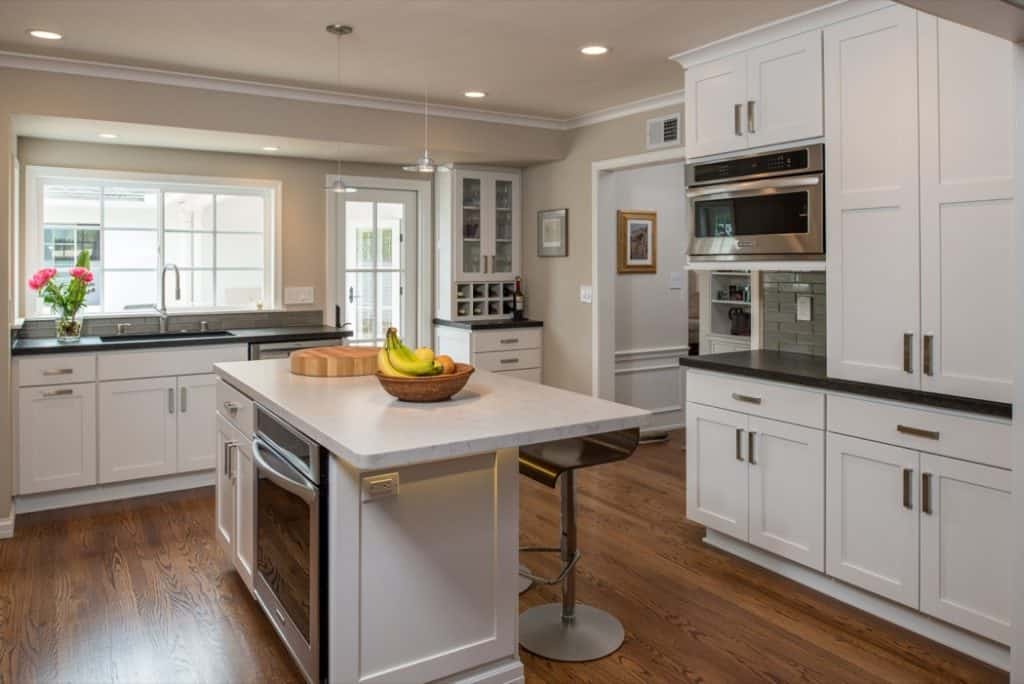
As you may have discovered, when it comes to materials for countertops, there’s no short supply of options. Two of the most popular countertop options that have arisen over the years are silestone and granite. But what are the differences between the two? And which one should you choose for your home? In this article, we will be diving into the differences between Silestone vs. granite.
Structural Differences
The first material, Silestone, a combination of natural quartz and other raw materials, is extremely hard and resilient. Silestone offers the beauty of natural stone in a wide range of colors and varying textures. Just like natural stone countertop materials, Silestone is great for both kitchens and bathrooms because it’s non-porous which makes it resistant to staining. The non-porous structure also makes this an extremely sanitary material that won’t absorb liquids or external influencers over time.
The other material, granite, is a hard and sturdy natural stone material that is naturally resistant to heat. When properly sealed, granite countertops are resistant to stains from acid, oil, and food. Due to their durability as a solid surface, granite countertop cleaning and maintenance can be a breeze. Granite also offers endless modern color options and unique slabs since every slab of granite is different from the next.
Required Maintenance
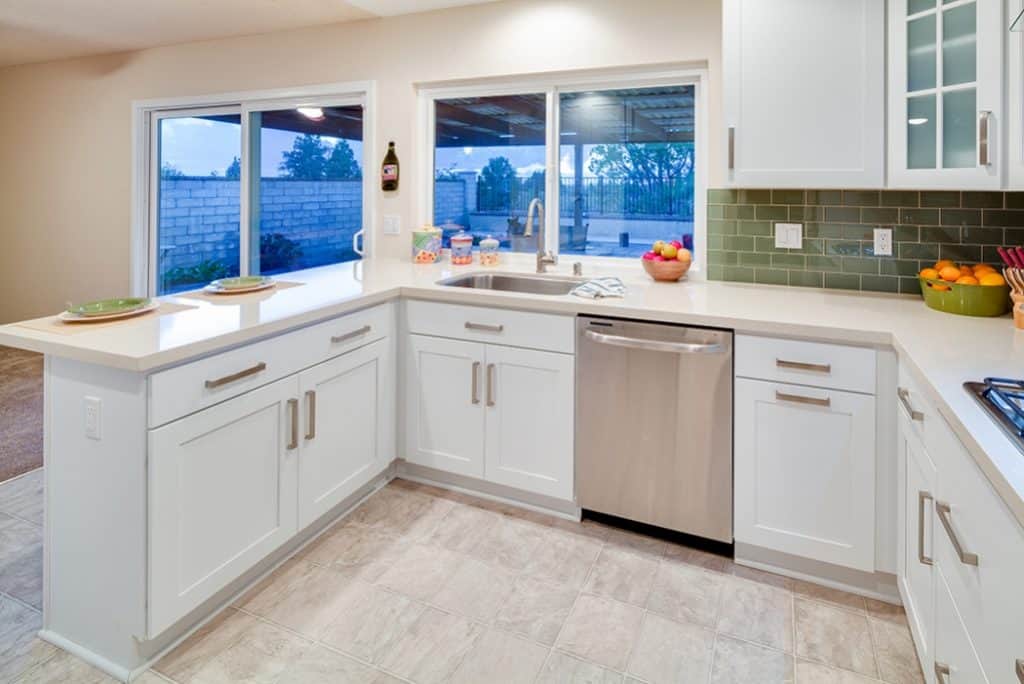
With any countertop material, one of the most important considerations for the material you choose is the amount of maintenance required. Especially for areas with high potential for dirt and grime, like kitchen and bathroom countertops, the amount of ongoing maintenance you’re going to have to put in is important.
Silestone may be a better choice for those looking to do little to no maintenance. Since it is made of quartz, silestone is naturally non-porous, which makes it resistant to spills and staining caused by messy kitchen and bathroom items, like food, wine, or even makeup. For more tips on cleaning and maintaining Silestone countertops, check out our blog post.
Granite, on the other hand, is a porous stone, which makes it more susceptible to not only stains, but also bacteria and germs. For maintenance purposes, granite needs to be sealed at least once a year to keep it protected, and it will require more general upkeep to keep countertops sanitary and safe.
Resilience
Both Silestone and granite are incredibly strong materials, but when it gets down to the nitty-gritty, Silestone is a stronger material, but not by much. Granite is slightly weaker only because since it contains crystalline material, which allows for fissures and small spaces.
Because of the resilience of both of these materials, they both make for excellent investments in your home’s value. Whether you plan to sell your home anytime in the near future or not, using granite or Silestone for the kitchen countertops will increase any home’s resale value significantly.
Aesthetic Appeal
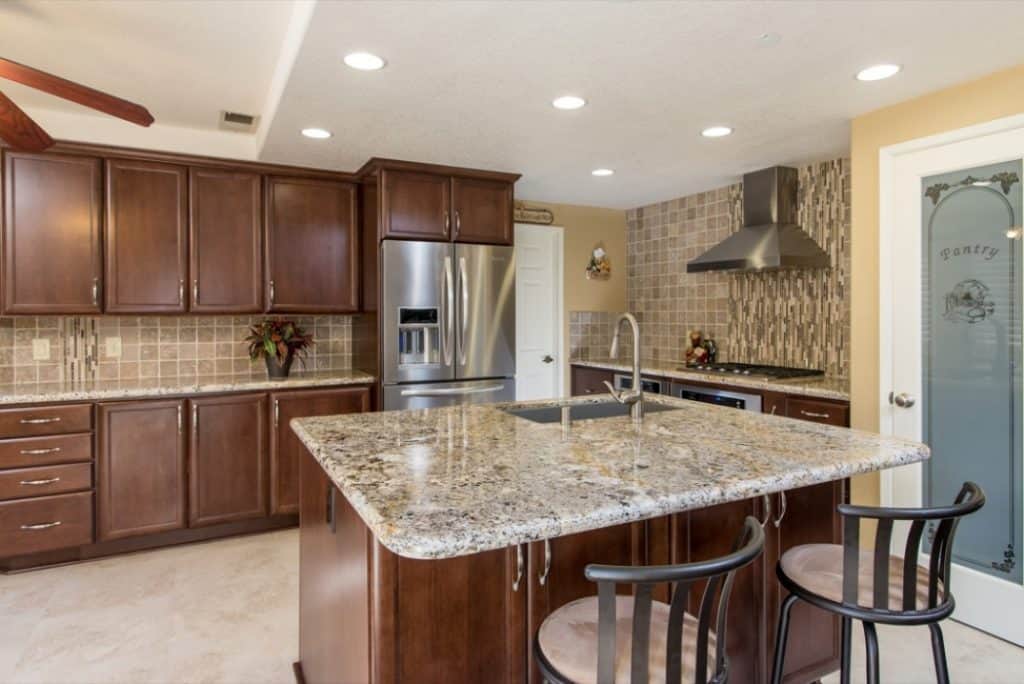
Both granite and Silestone offer their advantages when it comes to look and feel. With Silestone and other quartz materials, “small amounts of glass or metallic flecks are added to create variety, resulting in beautiful countertops” (SilestoneUSA.com). Silestone is also a very beautiful material, and offers a wide variety of color options for your selection – every color from natural tones such as whites, blacks and browns to other varieties such as golds or blues.
Granite countertops are some of the most popular out there. Because it is natural stone, granite doesn’t provide as wide of a range of color options and each piece is different, therefore, often times kitchens need to be planned around the slab that is chosen. While this will make your kitchen or bathroom truly unique, if you choose granite countertops, you should plan to be extra cautious with your design since no two granite slabs are identical. And if more than a single slab is needed, make sure all slabs are from the same quarry batch so colors and textures will match.
Both Silestone and granite are great high-end options for building in your home, but they each have their own sets of pros and cons. Silestone offers slightly more durability and less required maintenance, but granite has universal appeal and will make your home truly unique. Either way – you can’t go wrong when comparing silestone vs granite!