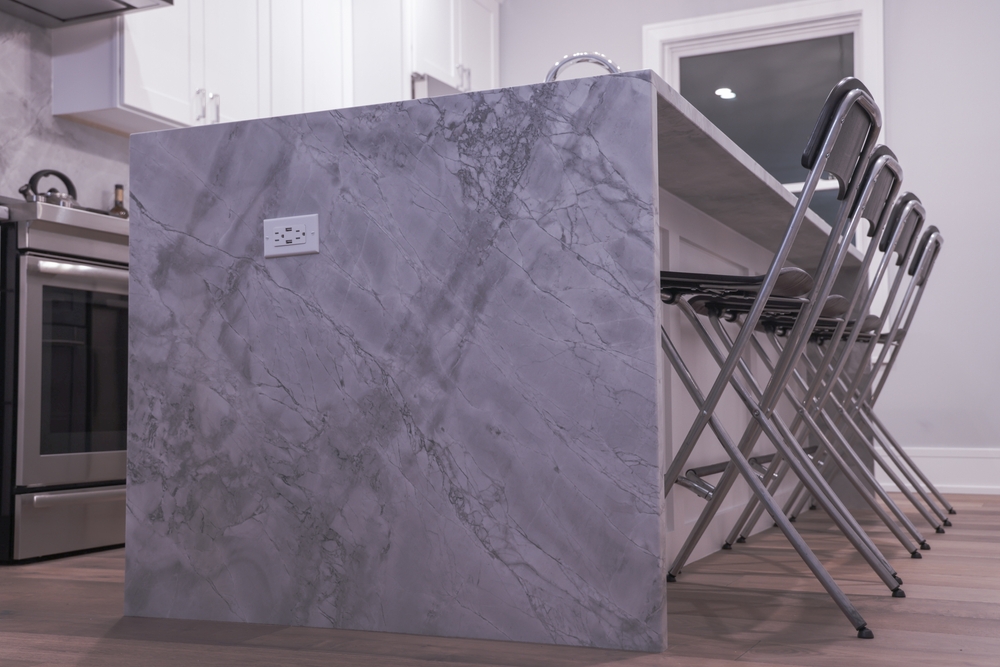
The Kitchen And Bathroom Countertop Showdown: Quartz, Quartzite, Porcelain, Or Granite?
(858) 413-2305 Request a quote- Quartz is usually the easiest countertop material to maintain because it is nonporous, does not require sealing, and works well for busy kitchens and bathrooms.
- Quartzite offers a more natural, one-of-a-kind look, making it a strong choice for statement islands, luxury vanities, and homeowners who want real stone movement.
- Porcelain is a sleek, low-maintenance option for modern kitchen and bathroom renovation projects, especially when homeowners want stain resistance and visual continuity.
- Granite remains a durable natural stone choice, but the final look and care needs depend heavily on the specific slab, pattern, and finish.
- The best countertop choice depends on how the space is used daily, so homeowners should compare maintenance, moisture exposure, heat habits, design goals, and overall luxury interior finishes before deciding.
Choosing a countertop can feel simple until every sample starts looking beautiful for a different reason. Quartz promises easy care. Quartzite brings natural movement. Porcelain feels sleek and modern. Granite still has that timeless stone appeal. For homeowners planning efficient home remodeling in Bonita, the right choice depends on more than color or price. It should support the way the room is used every day. If your next renovation includes new surfaces, it helps to compare design-build renovation options before choosing a slab. The best counter is the one that looks refined and lives well.
Why do countertop choices deserve more thought?
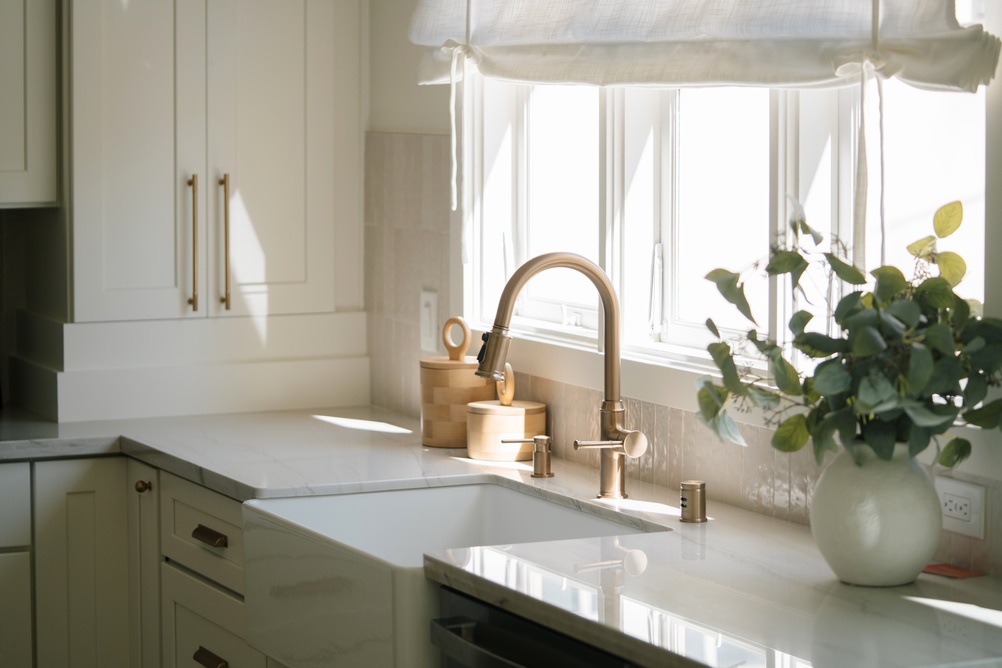
Countertops shape how a kitchen or bath looks, works, and ages. They sit at eye level, catch daily use, and influence almost every other finish around them. Cabinets, flooring, tile, fixtures, lighting, and hardware all respond to the surface you choose.
That is why countertop materials should not be picked as a standalone decision. A surface that looks striking under showroom lights may feel too busy beside patterned tile. A soft white slab may look perfect until a busy family starts using it daily.
A countertop is both a work surface and a design feature
The best counters do two jobs well. They support daily tasks and help define the mood of the room.
In a kitchen, that means meal prep, cleanup, hosting, coffee, groceries, and family routines. In a bath, it means moisture, skincare products, grooming tools, toothpaste, and daily wiping.
For many kitchen and bathroom renovation projects, the counter becomes the bridge between performance and beauty.
The four big questions to ask first
Before choosing between quartz, quartzite, porcelain, or granite, answer these questions:
- How heavily will the surface be used? A main kitchen island needs different durability than a powder room vanity.
- How much maintenance feels realistic? Some homeowners want low-maintenance countertops. Others gladly care for natural stone.
- Should the counter feel quiet or dramatic? Some surfaces support the room. Others become the main event.
- How long do you want the design to feel current? Timeless finishes often age better than trend-driven choices.
What is the difference between quartz and quartzite?
Quartz is engineered, while quartzite is natural stone. That one difference explains why they look, perform, and age differently. Their names sound similar, but they are not interchangeable.
1. Quartz is manufactured for control
Quartz counters are made with mineral content, resins, and pigments. This creates a more controlled surface with consistent color and pattern.
That consistency is a major advantage when a room needs balance. A homeowner can choose a soft white surface, a marble-inspired pattern, or a deeper tone with fewer surprises.
Quartz is also nonporous. It does not need sealing, which makes it one of the most popular low-maintenance countertops for busy households.
Best uses for quartz
Quartz works especially well for:
- Main kitchen counters
- Large islands
- Shared baths
- Laundry rooms
- Guest suites
- Family-friendly spaces
It also pairs beautifully with many luxury interior finishes, including custom cabinetry, natural wood, handmade tile, and statement lighting.
2. Quartzite is natural and one-of-a-kind
Quartzite is formed when sandstone changes under heat and pressure. The result is a hard natural stone with unique veining, tone, and movement.
No two slabs are exactly alike. That is part of its appeal.
Quartzite often attracts homeowners who want natural character without choosing marble. It can feel organic, elegant, and quietly dramatic.
For a high-end kitchen and bathroom renovation, quartzite can bring depth that manufactured surfaces may not fully match.
Best uses for quartzite
Quartzite is a strong choice for:
- Statement kitchen islands
- Primary bath vanities
- Bar areas
- Powder rooms
- Feature surfaces
- Designs with natural stone as the focal point
It works best when the homeowner understands the care needs before installation.
How quartz and quartzite compare
Here is the simplest comparison:
| Quartz | Quartzite |
| More consistent, easier to maintain, and usually better for daily family use. | More unique, more natural, and often better for a one-of-a-kind design moment. |
| Should be protected from direct heat because of resin content. | Generally handles heat better, but still benefits from trivets and common-sense care. |
| Great for predictable countertop material planning. | Great for natural variation and upscale character. |
How to choose between them
Use this quick decision path:
- Choose quartz if you want easy care first.
- Choose quartzite if you want natural beauty first.
- Choose quartz if you prefer consistent samples.
- Choose quartzite if you enjoy unique slab movement.
- Choose quartz if the room gets heavy daily use.
- Choose quartzite if the surface is part of the design story.
Which countertop material is easiest to maintain?

Quartz is usually the easiest surface to maintain. Porcelain is also a strong low-care option.
Ease of care matters because counters are not decorative objects. They are touched, cleaned, spilled on, leaned against, and used every day.
For many homeowners comparing countertop materials, maintenance is the detail that decides the final choice.
1. Quartz is the everyday winner for simple upkeep
Quartz is often the easiest option because it does not need sealing. Routine cleaning is usually enough for daily care.
A mild soap, warm water, and a soft cloth can handle most messes. This makes quartz especially appealing for anyone who wants low-maintenance countertops without giving up a polished look.
What to avoid with quartz
Quartz is easy, but it still needs basic care. Avoid:
- Placing hot pans directly on the surface
- Using harsh abrasive pads
- Cutting directly on the counter
- Leaving strong cleaning chemicals to sit
- Treating it as damage-proof
Quartz is forgiving, not invincible.
2. Porcelain is sleek and very low effort
Porcelain slabs are nonporous and highly resistant to everyday stains. They also handle heat well compared with many other options.
That makes porcelain appealing for modern kitchens, baths, wet bars, and feature walls. It can create the look of marble, concrete, limestone, or dramatic stone with easier upkeep.
For luxury interior finishes, porcelain can feel clean, architectural, and sophisticated.
The porcelain caution
Porcelain depends heavily on skilled fabrication.
Because it is hard and often thinner than stone slabs, corners, edges, and cutouts need experienced handling. A poor installation can make even a premium surface feel disappointing.
3. Granite is durable but may need care by slab
Granite remains popular because it is durable, natural, and available across many colors and patterns.
Some granite slabs are dense and may not need frequent sealing. Others benefit from periodic sealing to reduce staining risk. The specific stone matters.
Granite is not difficult to maintain, but it is not always as effortless as quartz or porcelain.
4. Quartzite care depends on the exact material
Quartzite can be durable and beautiful, but the care level varies.
Some slabs are very dense. Others are more absorbent and need sealing. That is why quartzite should be selected with guidance from a knowledgeable design and fabrication team.
For a kitchen and bathroom renovation, the question is not just “Do I like this slab?” It is “Will this slab fit my habits?”
How to keep any counter looking better
No matter which surface you choose, these habits help:
- Use trivets under hot cookware. Heat-resistant does not mean damage-proof.
- Use cutting boards for prep. This protects both the surface and your knives.
- Wipe spills promptly. This matters most for natural stone.
- Choose gentle cleaners. Harsh products can dull or damage some finishes.
- Ask about sealing before installation. Natural stone care should be clear from day one.
These small habits help protect low-maintenance countertops and higher-care natural surfaces alike.
What’s the best choice for kitchen countertops?
The best kitchen counter depends on how you cook, gather, clean, and entertain. A kitchen surface has to carry more than style. It supports the daily rhythm of the room.
1. Start with how the kitchen actually functions
Before looking at slabs, think about the zones in the kitchen. A kitchen usually includes:
- A prep zone
- A cooking zone
- A cleanup zone
- A serving zone
- A storage zone
- A coffee or beverage zone
- A casual dining zone
This is why layout and material selection should work together. When you plan kitchen zones around real cooking habits, the counter choice becomes part of a larger design strategy.
That matters for countertop materials because every area may face different use.
2. Best for active family kitchens: quartz
Quartz is often the strongest choice for a heavily used kitchen.
It is easy to clean, does not require sealing, and comes in many colors and patterns. It also works with both warm traditional designs and crisp modern spaces.
For families, frequent cooks, and busy households, quartz offers a practical balance. It feels elevated but does not ask for constant attention.
When quartz makes the most sense
Choose quartz when:
- You cook often
- You want simple cleaning
- You prefer predictable patterning
- You have kids or frequent guests
- You want low-maintenance countertops
- You want the backsplash or cabinetry to be the main feature
Quartz is especially helpful when the design already has several strong elements.
3. Best for a statement island: quartzite
Quartzite shines when the counter is meant to be noticed.
A dramatic quartzite island can anchor an open kitchen and make the space feel custom. It works beautifully with soft cabinetry, warm metal finishes, and layered lighting.
For luxury interior finishes, quartzite brings natural depth and individuality.
When quartzite makes the most sense
Choose quartzite when:
- You want a natural slab
- You like movement and variation
- The island is the focal point
- You are comfortable with stone care
- You want a surface that feels unique
- You value character over perfect consistency
Quartzite is not the best choice for everyone, but it can be stunning when selected thoughtfully.
4. Best for a sleek modern kitchen: porcelain
Porcelain is a strong choice when the design calls for clean lines and visual continuity.
It can be used for counters, backsplashes, waterfall edges, and vertical surfaces. That creates a refined, seamless look.
Porcelain can also mimic natural stone while offering easier cleaning. This makes it useful for homeowners who want drama without as much maintenance.
When porcelain makes the most sense
Choose porcelain when:
- You like a modern look
- You want large-format surfaces
- You want strong stain resistance
- You prefer sleek luxury interior finishes
- You want a coordinated counter and backsplash
- You have access to an experienced installer
Porcelain is a design-forward choice, but fabrication quality matters.
5. Best for classic natural stone appeal: granite
Granite still deserves a place in the conversation. It is durable, familiar, and available in many looks. Some slabs feel traditional, while others are quiet, simple, and current.
Granite can work especially well in kitchens that need natural stone without the softer care concerns of marble.
When granite makes the most sense
Choose granite when:
- You want natural stone
- You like mineral variation
- You want a durable work surface
- You prefer a familiar option
- You find a slab with the right pattern
- You do not mind basic stone care
The key is choosing a granite that fits the full design. Busy stone, busy backsplash, and ornate cabinetry can quickly compete.
Which material should you choose for bathroom countertops?
Bathroom counters need to handle water, grooming products, cleaning routines, and daily use.
They may not face hot pans or food prep, but they have their own challenges.
1. Bathrooms need moisture-friendly surfaces
Moisture is the big issue in bathrooms. Water splashes around sinks. Steam collects after showers. Products sit on counters. Cleaning happens often.
That is why countertop materials for baths should be chosen with both beauty and moisture behavior in mind.
2. Best for shared baths: quartz
Quartz is excellent for shared bathrooms because it is easy to clean and does not require sealing.
It works well around sinks, toothbrushes, soap, skincare, and everyday clutter. It also creates a calm finished look without adding maintenance.
For a family bath or guest bath, quartz is often one of the most practical low-maintenance countertops.
Use quartz when the bath gets daily traffic
Quartz is a smart fit for:
- Kids’ baths
- Guest baths
- Hall baths
- Secondary vanities
- Pool baths
- Frequently used powder rooms
It gives the room a finished look without adding another care task.
3. Best for spa-like primary baths: porcelain or quartzite
Primary baths often have more design flexibility.
Porcelain can create a clean spa-like effect, especially when repeated on walls or shower surrounds. Quartzite can bring softness and natural movement to a vanity.
Both can support elevated luxury interior finishes, but they create different moods.
Porcelain feels clean and architectural
Porcelain is a good choice when the bath design includes:
- Large-format tile
- Floating vanities
- Wall-mounted faucets
- Minimal grout lines
- Marble-inspired surfaces
- Clean contemporary lighting
It can make the entire room feel intentional.
Quartzite feels organic and elevated
Quartzite is a good choice when the bath design includes:
- Warm cabinetry
- Natural textures
- Soft stone movement
- Decorative mirrors
- Layered lighting
- A custom vanity moment
It feels especially refined when the rest of the room is edited and quiet.
4. Best for powder rooms: make a statement
Powder rooms can handle bolder choices. Because they usually see less water and less daily grooming, they are a great place to use a more expressive surface. Quartzite, porcelain, and dramatic granite can all work well.
A powder room is also a smart place to use memorable luxury interior finishes without overwhelming the rest of the house.
How to choose a bath counter step by step
Use this process before picking a slab:
Step 1: Decide how the bath is used
A primary bath, guest bath, and kids’ bath all have different needs.
Step 2: Choose the maintenance level
Decide whether you want simple cleaning or are comfortable with natural stone care.
Step 3: Review moisture exposure
Think about sinks, showers, ventilation, and daily humidity.
Step 4: Coordinate with the full palette
Look at cabinet color, tile, fixtures, flooring, and lighting together.
Step 5: Confirm fabrication details
Ask about seams, edges, overhangs, cutouts, and sealing needs.
This keeps the kitchen and bathroom renovation focused on both beauty and performance.
How to compare quartz, quartzite, porcelain, and granite side by side?
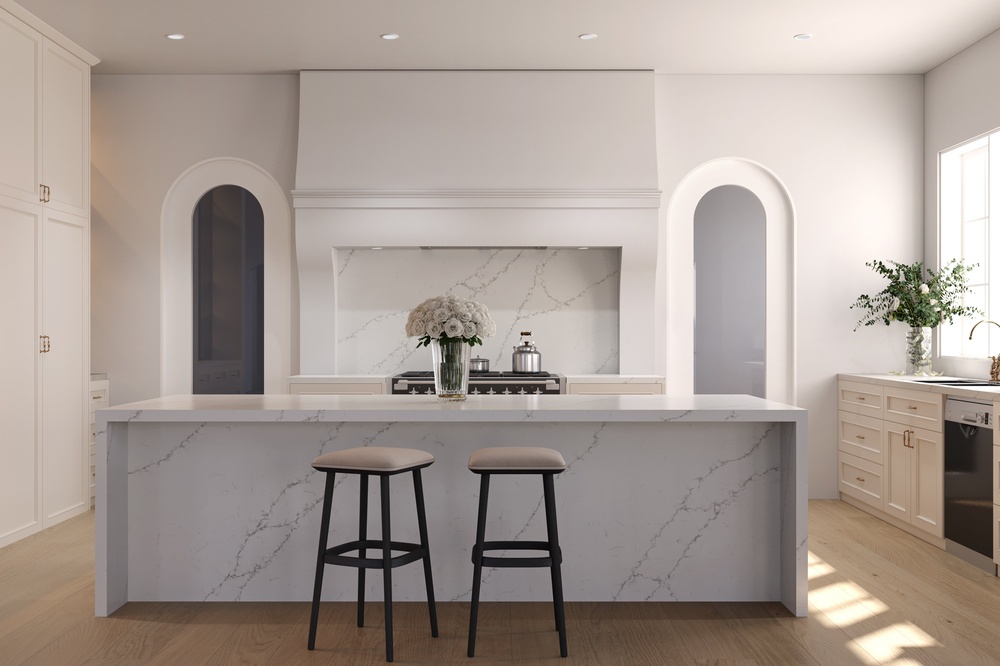
A side-by-side comparison makes the decision less overwhelming. Each option has strengths. The goal is to match those strengths to the room.
Quartz at a glance
Quartz is best for simple care and consistent design.
Pros
- Easy to clean
- No sealing required
- Many colors and patterns
- Good stain resistance
- Great for busy households
Cons
- Not ideal for direct heat
- Less unique than natural stone
- Can look too uniform for some tastes
Quartzite at a glance
Quartzite is best for natural beauty and visual movement.
Pros
- Unique natural slabs
- Strong design impact
- Good heat resistance
- Elegant stone character
- Excellent for focal points
Cons
- Often needs sealing
- Slab performance varies
- Usually requires more careful selection
- Can cost more than simpler options
Porcelain at a glance
Porcelain is best for sleek design and low porosity.
Pros
- Very low porosity
- Strong stain resistance
- Good heat resistance
- Works for counters and walls
- Excellent for modern designs
Cons
- Needs skilled fabrication
- Exposed edges can be vulnerable
- May feel less substantial to some homeowners
Granite at a glance
Granite is best for durable natural stone with classic appeal.
Pros
- Durable
- Natural variation
- Strong heat resistance
- Wide range of colors
- Familiar and proven material
Cons
- Some slabs need sealing
- Busy patterns can feel dated
- Quality and look vary widely
How to make the final countertop decision?
The best decision comes from matching the material to the room, not chasing the most popular option. A successful kitchen and bathroom renovation should feel personal, practical, and cohesive.
1. Use this simple decision guide
Choose based on your top priority:
- Least maintenance: Quartz
- Most natural movement: Quartzite
- Sleekest modern look: Porcelain
- Classic stone durability: Granite
- Best family-friendly option: Quartz
- Best statement surface: Quartzite or porcelain
- Best powder room drama: Quartzite, porcelain, or bold granite
- Best all-around bath vanity: Quartz
2. Think about the rest of the space
Counters should work with everything around them. Before approving the final slab, compare it with:
- Cabinet samples
- Flooring
- Wall tile
- Backsplash options
- Plumbing fixtures
- Hardware finishes
- Paint colors
- Lighting temperature
This is especially important with luxury interior finishes, where small mismatches can make expensive materials feel disconnected.
3. Avoid choosing from a sample alone
Small samples can be misleading.
A tiny piece may not show large veining, color shifts, mineral deposits, or pattern repetition. Whenever possible, view full slabs before making a final decision.
This is especially true for quartzite and granite. Natural stone changes across the slab, and that variation is part of the final design.
4. Ask these questions before signing off
Before installation, ask:
- Does this material need sealing?
- How should it be cleaned?
- Can it handle daily heat exposure?
- Where will seams be placed?
- What edge profile works best?
- Is the slab suitable for the planned overhang?
- How will cutouts affect strength?
- What happens if the surface chips or stains?
These questions help make countertop materials easier to compare beyond appearance.
Where do moisture, cleaning, and longevity fit into the decision?
Long-term performance depends on the room as much as the material.
Bathrooms need ventilation. Kitchens need smart work zones. Both need surfaces that support real use.
For baths, moisture control is especially important. The EPA notes that managing moisture helps reduce conditions that allow mold growth, which makes ventilation and material selection part of the same planning conversation.
For kitchens, cleaning habits matter just as much. Even low-maintenance countertops last longer when homeowners use trivets, cutting boards, gentle cleaners, and quick spill cleanup.
Countertops should make daily life easier
The right counter should not make you nervous. You should be able to cook, host, get ready, clean up, and live normally. A surface that looks beautiful but feels stressful may not be the right fit.
That is the real value of thoughtful design. The final space should feel elevated without becoming precious.
Who delivers efficient home remodeling in Bonita and the surrounding area?
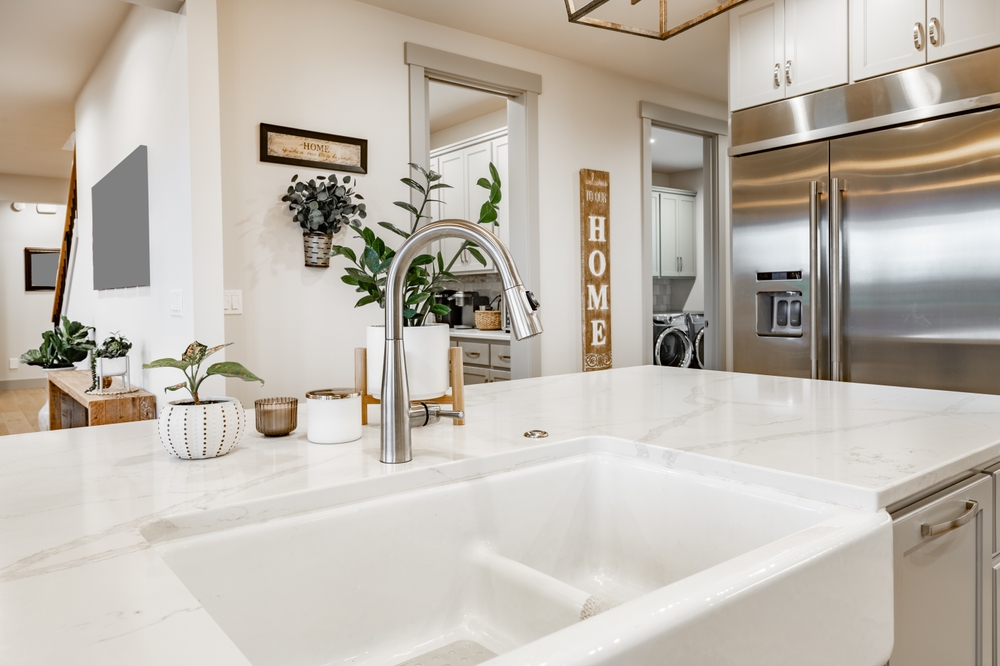
Remodel Works helps homeowners make confident design choices for kitchens, bathrooms, and full home updates with a process built around planning, product guidance, and skilled project management. Our team brings award-winning experience, premium material selections, 3D design support, fixed pricing after final design, and a 5-year workmanship warranty to each project.
From Sweetwater Regional Park to the rest of Bonita, we’re here to help. Whether you are comparing quartz, quartzite, porcelain, or granite, we can help you choose surfaces that fit both your style and daily routine. Reach out to us to start planning your remodel.